5-Amino-1MQ: The Complete Guide to the NAD+ Thief Stopper
Your body is running an energy deficit, and you do not even know why. You eat well. You exercise. You take supplements. But the fatigue persists. The stubborn fat will not budge. Your metabolism feels broken.
The problem might not be what you are adding. It might be what your body is draining away.
Deep inside your fat cells and liver, an enzyme called NNMT is quietly stealing your NAD+, the cellular fuel that powers everything from energy production to DNA repair to longevity pathways. The more metabolically stressed you become, the more active this enzyme gets. It creates a vicious cycle where the worse you feel, the more NAD+ gets wasted.
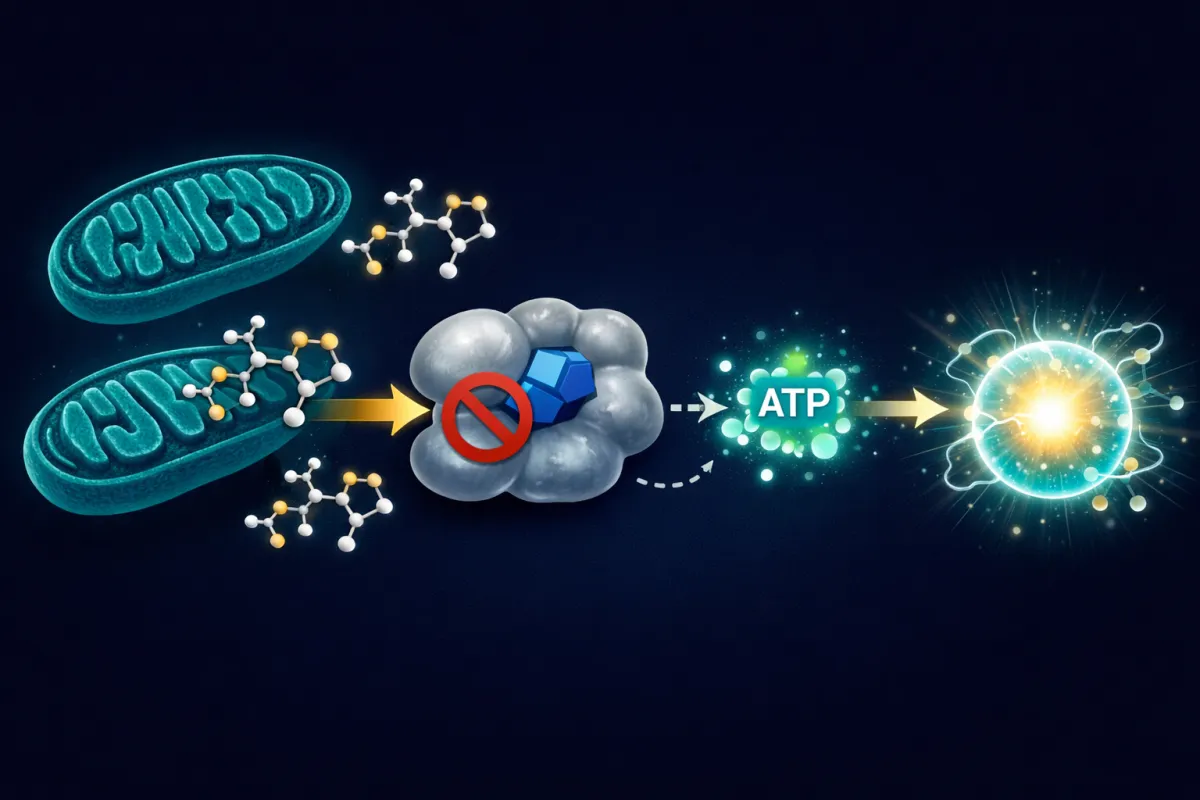
5-Amino-1MQ stops the thief. By inhibiting NNMT, this small molecule preserves your NAD+ stores, shifts your metabolism toward fat burning, and makes every other intervention you are running work better. It is like plugging a leak in your gas tank rather than just adding more fuel.
KEY FACTS
Definition: 5-Amino-1MQ is a small molecule NNMT inhibitor that preserves NAD+ by blocking the enzyme that converts nicotinamide into a metabolic waste product
Primary Use: Metabolic optimization, fat loss, enhanced cellular energy, and NAD+ preservation
Mechanism: Competitively inhibits nicotinamide N-methyltransferase (NNMT), preventing NAD+ precursor depletion
Typical Timeline: 2-4 weeks for energy improvements, 6-12 weeks for body composition changes
Best For: Metabolic dysfunction, stubborn fat loss, those taking NAD+ precursors, longevity optimization
Not For: Those seeking stimulant-based fat burners or appetite suppressants, individuals currently fighting infection
What Is 5-Amino-1MQ?
5-Amino-1-methylquinolinium (5-Amino-1MQ) is a synthetic small molecule developed by researchers at the University of Texas in 2017. They were searching for ways to inhibit NNMT, an enzyme that had been linked to obesity and type 2 diabetes.
Unlike most peptides that require injection, 5-Amino-1MQ is orally bioavailable. It passes through cell membranes easily and reaches its target without requiring needles. This makes it one of the most accessible compounds in the metabolic optimization space.
The development story matters. Scientists noticed that obese individuals and those with metabolic syndrome had dramatically elevated NNMT expression in their fat tissue and liver. This enzyme was creating a metabolic bottleneck, consuming the very substrates cells need to produce energy.
Think of NNMT as a toll booth on your metabolic highway. Every NAD+ precursor that passes through gets taxed. The more congested the highway (the more metabolically stressed you are), the higher the toll. Eventually, not enough fuel gets through to power your cells properly.
5-Amino-1MQ shuts down that toll booth. The substrates that were being wasted now flow freely into NAD+ production pathways.
What makes 5-Amino-1MQ unique is its selectivity. It inhibits NNMT without affecting related methyltransferases or enzymes in the NAD+ salvage pathway. This precision targeting means it fixes the specific problem without creating new ones.
The Science: How NNMT Inhibition Works
Understanding 5-Amino-1MQ requires understanding the enzyme it targets.
The NNMT Problem
NNMT (nicotinamide N-methyltransferase) is a cytosolic enzyme that methylates nicotinamide (NAM) using S-adenosyl-methionine (SAM) as a methyl donor. The products are 1-methylnicotinamide (1-MNA) and S-adenosyl-homocysteine (SAH).
Here is why this matters: nicotinamide is the precursor your body uses to make NAD+. When NNMT converts nicotinamide into 1-MNA, that precursor is gone. It cannot be recycled back into NAD+.
In healthy, lean individuals, NNMT activity stays moderate. But in obesity and metabolic dysfunction, NNMT expression increases dramatically. Research shows NNMT protein expression is approximately 37-fold higher in differentiated adipocytes compared to pre-adipocytes. The enzyme becomes hyperactive precisely when you need NAD+ most.
The Three-Way Drain
NNMT creates a triple metabolic problem:
NAD+ Depletion: By consuming nicotinamide, NNMT starves the NAD+ salvage pathway of its primary substrate. Cellular NAD+ levels drop.
Methyl Group Consumption: NNMT uses SAM as a methyl donor. When NNMT is overactive, it depletes SAM reserves needed for DNA methylation, neurotransmitter synthesis, and countless other reactions.
Metabolic Shift: Low NAD+ and SAM trigger cells to favor fat storage over fat oxidation. NNMT activity correlates with lower GLUT4 expression, meaning glucose uptake into muscle decreases while fat storage increases.
What 5-Amino-1MQ Does
5-Amino-1MQ competitively inhibits NNMT. It binds to the enzyme and blocks nicotinamide from being methylated.
The downstream effects:
Intracellular NAD+ increases (substrates are preserved)
SAM levels rise (methyl groups stop being wasted)
GLUT4 expression improves (glucose uptake increases)
Lipogenesis decreases (less new fat is made)
Fat oxidation increases (existing fat gets burned)
Research in diet-induced obese mice showed that 5-Amino-1MQ treatment significantly reduced body weight and white adipose mass, decreased adipocyte size by 30-40%, and lowered plasma total cholesterol. Critically, this happened without any impact on food intake.
The compound does not suppress appetite. It does not act as a stimulant. It simply fixes a broken metabolic pathway and lets your body function normally again.
Research Evidence: What the Studies Show
5-Amino-1MQ research is primarily preclinical, but the mechanistic data is robust and the mechanism is highly conserved across species.
The Original Obesity Reversal Study
The landmark 2018 study from UT Health San Antonio established 5-Amino-1MQ as a viable anti-obesity agent. Diet-induced obese mice received subcutaneous injections for 11 days.
Results:
5.1% body weight loss from baseline
35% reduction in white adipose tissue mass
Significant decrease in adipocyte size
Lowered plasma total cholesterol
No change in food intake
No observable adverse effects
The study authors concluded that 5-Amino-1MQ validates NNMT as a viable target to treat obesity and related metabolic conditions.
The Microbiome Connection
A 2022 study in Scientific Reports examined what happens when 5-Amino-1MQ treatment is combined with diet modification in obese mice.
The combination of NNMT inhibition plus low-fat diet produced dramatic results: body weight and fat mass rapidly normalized to levels of mice that had never been obese. Diet switch alone could not achieve this in the same timeframe.
Interestingly, the treatment created a distinct microbiome profile. Lactobacillus (associated with weight loss) increased uniquely in the treated group, while Erysipelatoclostridium decreased. This suggests 5-Amino-1MQ may have gut-level effects beyond direct metabolic modulation.
The Liver Protection Data
Additional research showed 5-Amino-1MQ treatment attenuated hepatic steatosis (fatty liver) and reduced macrophage infiltration in liver tissue. Treated mice showed:
Reduced liver weight and size
Lower liver triglyceride levels
Normalized alanine transaminase (ALT)
Normalized aspartate transaminase (AST)
Normalized ketone body levels
This supports an overall improvement in liver function alongside metabolic benefits.
The NAD+ Mechanism Confirmation
In vitro studies confirmed the mechanistic pathway. 5-Amino-1MQ treatment:
Significantly reduced intracellular 1-MNA (the NNMT reaction product)
Increased intracellular NAD+ levels
Increased SAM availability
Suppressed lipogenesis in adipocytes
These findings validate that 5-Amino-1MQ works exactly as proposed: by blocking NNMT, it preserves NAD+ and shifts cellular metabolism away from fat storage.
Human Translation Potential
While human clinical trials have not been completed, the NNMT pathway is highly conserved. Human studies show:
NNMT expression in adipose tissue correlates positively with insulin resistance
NNMT expression increases with BMI
NNMT levels are elevated in type 2 diabetes
The same dysregulated pathway seen in mice exists in humans, supporting translation potential.
Practical Protocols: How to Use 5-Amino-1MQ
5-Amino-1MQ comes in both oral capsules and injectable forms. Most users prefer oral for convenience, though some practitioners report injectable formulations may be more potent.
Protocol 1: Conservative Entry (Recommended Start)
Week 1-2: 50mg once daily in the morning Week 3-4: 50mg twice daily (morning and early afternoon) Week 5+: 100mg daily (single morning dose or split)
Duration: 8-12 weeks minimum Timing: Morning with or without food, avoid late afternoon/evening dosing
This protocol allows assessment of tolerance before increasing dose. Most people notice effects are subtle initially.
Protocol 2: Standard Metabolic Optimization
Week 1: 50mg daily Week 2+: 100mg daily
Duration: 12 weeks Timing: Morning, consistent daily timing
This is the most commonly recommended protocol for fat loss and metabolic improvement goals.
Protocol 3: Enhanced Protocol (With NAD+ Precursors)
5-Amino-1MQ: 100mg daily (morning) Plus NMN: 250-500mg daily Or NR: 300mg daily
Rationale: 5-Amino-1MQ preserves NAD+ precursors while supplementation increases the supply. The combination may be more effective than either alone.
Duration: 12-16 weeks
Cycling Considerations
Animal studies show no desensitization with continuous NNMT inhibition. Benefits are sustained throughout treatment without requiring dose escalation.
Most practitioners recommend:
8-12 weeks on, 4 weeks off as standard cycling
Some users run continuously with periodic breaks
No evidence of dependency or rebound
Administration Notes
Oral bioavailability is good but injectable may be more potent
Morning dosing preferred to avoid potential sleep interference
Can be taken with or without food
Consistent timing helps maintain steady NNMT inhibition
What to Expect: Realistic Timeline
5-Amino-1MQ works at the cellular level. Effects are metabolic, not acute. Do not expect stimulant-like energy spikes.
Week 1-2: Subtle Cellular Shifts
Most people notice very little initially. This is normal. Cellular NAD+ pools are rebuilding. You might notice:
Slight improvement in baseline energy
Fewer afternoon crashes
Marginally better sleep quality
No dramatic weight changes yet
Week 3-4: Energy Stabilization
As NAD+ levels normalize:
Mental clarity improves
Workout recovery gets faster
Energy becomes more stable throughout the day
Glucose tolerance may improve
Some users report other supplements and interventions seem to work better during this period.
Week 6-8: Body Composition Shifts
For those in caloric deficit with exercise:
Scale weight begins trending down
Stubborn fat areas may start responding
Metabolic rate feels normalized
Exercise performance improves
Without diet and exercise, changes will be minimal. 5-Amino-1MQ fixes metabolic machinery but does not override thermodynamics.
Week 8-12: Full Effects Realized
Body composition changes become measurable
Metabolic markers may improve (if tested)
Effects plateau at optimized cellular function
Benefits maintain with continued use
What 5-Amino-1MQ Will NOT Do
Suppress appetite (no anorectic effects)
Cause stimulant-like energy (no jitters or crashes)
Work without diet and exercise (enhances but does not replace)
Produce dramatic overnight results (this is metabolic repair, not magic)
Advanced Stacking Strategies
5-Amino-1MQ has potentiation effects. When you preserve NAD+, you amplify every intervention that depends on cellular energy.
Stack 1: The Longevity Foundation
5-Amino-1MQ + NAD+ (or NMN) + Epithalon
This combination addresses NAD+ from multiple angles. 5-Amino-1MQ stops the drain. NAD+/NMN increases the supply. Epithalon supports telomere maintenance and circadian regulation.
Protocol:
5-Amino-1MQ: 100mg daily (morning)
NAD+: 100-250mg SubQ 2x weekly (or NMN 500mg oral daily)
Epithalon: 3mg daily for 10-day cycles
Stack 2: The Metabolic Reset
5-Amino-1MQ + MOTS-C + SR9009
Triple approach to metabolic optimization. MOTS-C builds new mitochondria (hardware upgrade). 5-Amino-1MQ optimizes fuel utilization (software patch). SR9009 enhances circadian metabolic rhythm.
Clinical insight: This combination produces synergy where "1 + 1 = 11, not 2." MOTS-C creates new mitochondria, 5-Amino-1MQ floods those new mitochondria with NAD+.
Protocol:
5-Amino-1MQ: 100mg daily (morning)
MOTS-C: 10mg SubQ daily (morning)
SR9009: 20mg daily (split dosing)
Stack 3: The Fat Loss Accelerator
5-Amino-1MQ + AOD-9604 + L-Carnitine
Different mechanisms targeting fat loss. 5-Amino-1MQ fixes metabolic machinery. AOD-9604 stimulates lipolysis without growth effects. L-Carnitine shuttles fatty acids into mitochondria for burning.
Protocol:
5-Amino-1MQ: 100mg daily
AOD-9604: 300mcg daily (morning fasted)
L-Carnitine: 500-1000mg injectable 2-3x weekly
Stack 4: The Cognitive Metabolic Stack
5-Amino-1MQ + Semax + NAD+
Brain tissue is highly metabolically active and depends on NAD+ for function. This stack supports both systemic metabolism and cognitive performance.
Protocol:
5-Amino-1MQ: 100mg daily
Semax: 200-400mcg intranasal daily
NAD+: 100mg SubQ 2x weekly
Stack 5: The Insulin Sensitivity Stack
5-Amino-1MQ + MOTS-C + Berberine
For those specifically targeting glucose metabolism and insulin resistance. MOTS-C improves insulin sensitivity directly. 5-Amino-1MQ increases GLUT4 expression. Berberine provides additional glucose-lowering effects.
Protocol:
5-Amino-1MQ: 100mg daily
MOTS-C: 10mg daily
Berberine: 500mg 2-3x daily with meals
Stacking Warning
5-Amino-1MQ has spillover potentiation effects. When adding it to an existing protocol, consider reducing doses of other compounds by 20-30% for the first 2 weeks. The enhanced NAD+ availability can make other interventions hit harder.
Safety, Side Effects, and Contraindications
5-Amino-1MQ has a favorable safety profile in preclinical studies with no observable adverse effects reported in animal models.
Reported Side Effects (Anecdotal Human Use)
Common:
Mild headache (usually first few days)
Slight GI upset if taken without food
Sleep disruption if dosed too late in day
Rare:
Persistent headache
Irritability
Increased body temperature
Most side effects are mild and transient.
What 5-Amino-1MQ Does NOT Cause
Based on available data:
No appetite suppression or increase
No cardiovascular stimulation
No hormonal disruption
No liver toxicity at standard doses
No kidney issues
Contraindications
Relative contraindications:
Active infection or illness: NNMT inhibition while fighting infection could theoretically preserve NAD+ in cells you do not want preserved (senescent cells, potentially infected cells). Wait until healthy.
Active cancer: Similar theoretical concern about cellular preservation. NAD+ supports both healthy and unhealthy cells.
Pregnancy and breastfeeding: No safety data available
Children: Not studied in pediatric populations
Drug Interactions
No significant drug interactions documented. However, 5-Amino-1MQ may enhance the effects of:
NAD+ precursors (NMN, NR)
Metformin (both affect metabolic pathways)
Other metabolic interventions
Monitoring
No specific monitoring required for healthy individuals. Those with metabolic conditions may want to track:
Fasting glucose
Lipid panel
Liver enzymes (baseline and periodic)
Frequently Asked Questions
Is 5-Amino-1MQ a peptide?
Technically no. It is a small molecule, not a peptide. However, it is commonly discussed alongside peptides because it targets similar metabolic optimization goals and is sold by peptide suppliers.
Oral or injectable: which is better?
Oral is more convenient and has good bioavailability. Some practitioners report injectable (SubQ) formulations may be more potent because they bypass first-pass liver metabolism. Most users do fine with oral.
Will this work without diet and exercise?
Minimally. 5-Amino-1MQ fixes broken metabolic machinery, but you still need to create conditions for fat loss (caloric deficit, movement). Think of it as removing a roadblock, not as a magic pill.
How does this compare to GLP-1 drugs like semaglutide?
Completely different mechanisms. GLP-1 agonists work primarily through appetite suppression. 5-Amino-1MQ does not suppress appetite at all. It fixes underlying metabolic dysfunction. They could theoretically be combined but serve different purposes.
Can I take this with NMN or NR?
Yes, this is actually an ideal combination. 5-Amino-1MQ preserves NAD+ precursors while NMN/NR increases the supply. The combination may be more effective than either alone.
How long until I see results?
Energy improvements: 2-4 weeks Body composition changes: 6-12 weeks (with diet/exercise) Without lifestyle changes: minimal results regardless of duration
Is there a loading phase?
No. Start at 50mg and work up to 100mg. No need for high initial doses.
Trusted Sources
Quality matters with research compounds. Third-party testing ensures you are getting what you paid for.
Vetted suppliers carrying 5-Amino-1MQ with COAs:
Modern Aminos - Code: zach10 (10% off)
Optimum Formula - Code: BHACK (10% off)
ResearchChemHQ - Code: BHACK
LimitlessBioChem EU (Powder) - Code: BHACK (10% off)
LimitlessBioChem EU (Capsules) - Code: BHACK (10% off)
BioSLab Canada - Code: BHACK (10% off)
Limitless Life Nootropics (Capsules) - Code: BHACK (15% off)
Limitless Life Nootropics (Powder) - Code: BHACK (15% off)
BioLongevity Labs - Code: BHACK (15% off)
For complete vendor comparison and additional resources: biohackblueprint.io
The Bigger Picture
5-Amino-1MQ represents a shift in how we think about metabolic optimization. Rather than adding more stimulants or suppressants, it fixes a broken pathway that was draining cellular resources.
The NAD+ Preservation Paradigm
Most longevity and metabolic interventions focus on increasing NAD+: take more NMN, more NR, get NAD+ IVs. But what if the problem is not insufficient supply but excessive drainage?
5-Amino-1MQ addresses the drain. By stopping NNMT from wasting nicotinamide, it allows your body to actually use the NAD+ precursors you are consuming. This is why many practitioners report that NAD+ supplementation works better when combined with NNMT inhibition.
Who Benefits Most
5-Amino-1MQ provides greatest value for:
Those with metabolic dysfunction or insulin resistance
People taking NAD+ precursors who want better results
Individuals with stubborn fat that does not respond to diet/exercise alone
Anyone running longevity protocols focused on NAD+
Athletes seeking enhanced metabolic efficiency
Who Should Look Elsewhere
5-Amino-1MQ is not ideal for:
Those seeking appetite suppression (look at GLP-1 agonists)
People wanting stimulant-based energy (look at caffeine or other stimulants)
Anyone unwilling to address diet and exercise
Those currently fighting infection or illness
The Potentiation Effect
Clinical experience shows 5-Amino-1MQ has more spillover potentiation effects than almost any other compound in the optimization space. When you preserve NAD+, you enhance every intervention that depends on cellular energy.
This means your peptides work better. Your supplements work better. Your mitochondria function better. Everything downstream of NAD+ gets a boost.
The warning that comes with this: if you are running multiple compounds, you may need to reduce doses when adding 5-Amino-1MQ. The potentiation is real.
Final Thoughts
5-Amino-1MQ is not a fat burner. It is not a stimulant. It is not a magic pill.
It is a metabolic repair tool. By inhibiting NNMT, it stops your body from wasting the cellular fuel it desperately needs. NAD+ levels rise. Metabolic pathways normalize. Fat oxidation improves. Energy stabilizes.
If your metabolism feels broken despite doing everything right, the problem might not be effort. It might be an overactive enzyme draining your cellular resources before they can be used.
5-Amino-1MQ plugs that leak. Everything else works better once the drain stops.
Disclaimer: This content is for educational and research purposes only. 5-Amino-1MQ has not been approved for human use by the FDA. Nothing here is medical advice. Consult a qualified professional for personalized guidance.
Discussion
Have you tried 5-Amino-1MQ? What protocols or stacks have you found most effective? Drop your experiences below.
