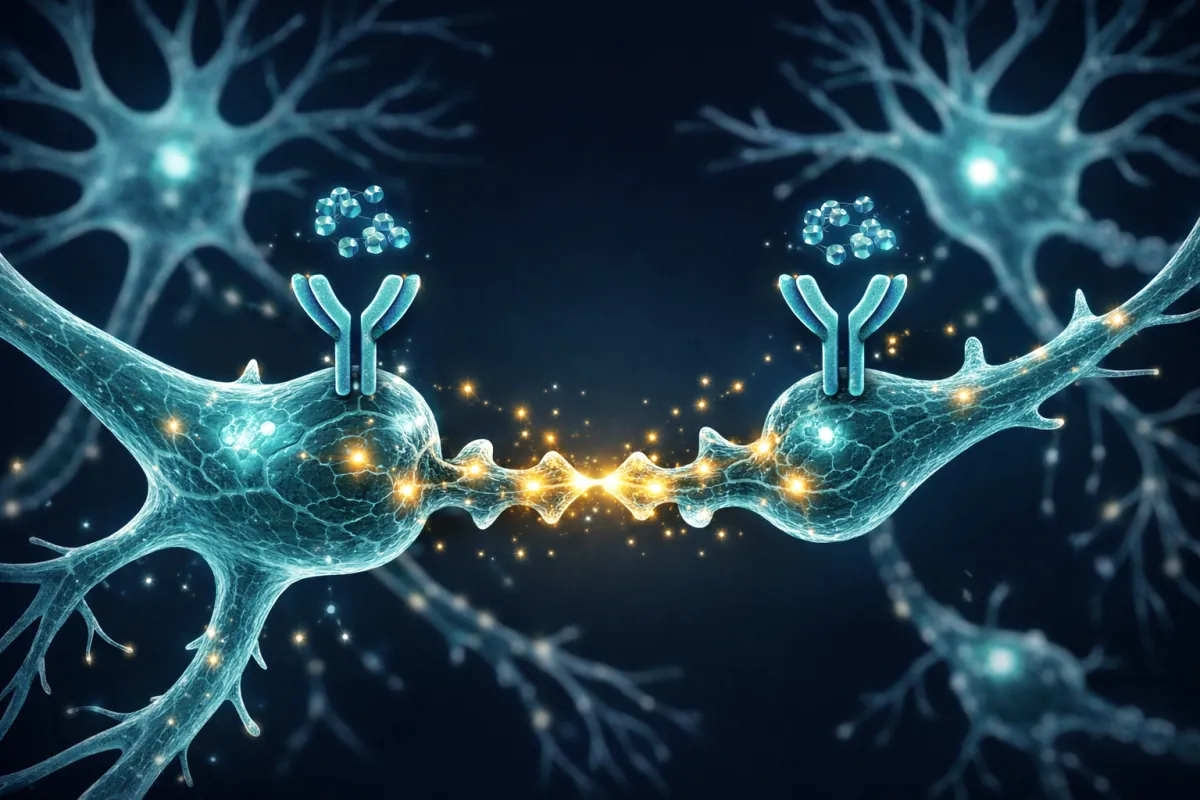
Dihexa: The Complete Guide to the Synapse Builder
Your brain has approximately 100 trillion synaptic connections. Every thought, memory, and skill you possess exists because neurons successfully communicate across these junctions. When synapses degrade, so does cognition. When synapses form, learning accelerates.
Most nootropics optimize existing neural communication. They tweak neurotransmitter levels or improve blood flow. Dihexa does something fundamentally different: it builds new synapses.
Developed at Washington State University as a potential Alzheimer's treatment, Dihexa has emerged as one of the most potent neurogenic compounds available to researchers. In preclinical studies, it stimulated new synaptic connections at rates up to seven times faster than BDNF, the brain's primary growth factor. It crosses the blood-brain barrier. It works orally. And it operates through a mechanism entirely distinct from traditional cognitive enhancers.
This is not subtle optimization. This is structural brain remodeling.
KEY FACTS
Definition: Dihexa is a synthetic oligopeptide derived from angiotensin IV that activates the HGF/c-Met pathway to promote synaptogenesis and neurogenesis
Primary Use: Cognitive enhancement, memory improvement, potential treatment for neurodegenerative conditions
Mechanism: Binds to hepatocyte growth factor (HGF) and amplifies c-Met receptor signaling to promote new synaptic connections
Typical Timeline: 1-2 weeks for initial clarity, 4-8 weeks for structural synaptic changes
Best For: Age-related cognitive decline, learning enhancement, recovery from brain injury, neurodegenerative conditions
Not For: Individuals with cancer history (HGF/c-Met pathway involvement), those seeking mild nootropic effects
What Is Dihexa?
Dihexa (N-hexanoic-Tyr-Ile-(6) aminohexanoic amide), also known as PNB-0408, is a synthetic peptide with molecular formula C27H44N4O5 and molecular mass of 504.28 Daltons. It was developed by Dr. Joseph Harding and his team at Washington State University specifically to address the synaptic loss that characterizes Alzheimer's disease and other neurodegenerative conditions.
The compound is derived from angiotensin IV, a naturally occurring peptide in the renin-angiotensin system typically associated with blood pressure regulation. However, angiotensin IV also showed mild cognitive benefits. The Washington State team modified its structure to dramatically enhance potency and brain penetration.
What makes Dihexa remarkable is its oral bioavailability. Most peptides are destroyed by stomach acid and cannot reach the brain through oral administration. Dihexa survives digestion, enters systemic circulation, crosses the blood-brain barrier, and reaches neural tissue in therapeutic concentrations. This is exceptionally rare for a peptide compound.
The structural modifications that enable this include increased lipophilicity (fat solubility) for membrane penetration and metabolic stability to resist enzymatic breakdown. The result is a compound that can be taken as a simple oral capsule yet still directly influence brain structure.
Classification-wise, Dihexa belongs to the neurotrophic peptide category. Unlike neurotransmitter modulators that optimize existing communication, neurotrophic agents fundamentally alter brain architecture by promoting new growth. This places Dihexa in a different class than conventional nootropics like racetams, stimulants, or cholinergics.
The Science: How Dihexa Rebuilds Neural Architecture
Dihexa operates through a distinct mechanism that directly promotes structural brain changes.
The HGF/c-Met Pathway
Dihexa's primary action involves hepatocyte growth factor (HGF) and its receptor, c-Met. Despite the name suggesting liver involvement, HGF is a powerful neurotrophic factor throughout the nervous system.
When Dihexa enters the brain, it binds to HGF with high affinity. This binding does not simply occupy the receptor. It creates a Dihexa-HGF heterodimer that amplifies HGF activity beyond what HGF alone can achieve. The complex then activates c-Met receptors on neurons.
c-Met activation triggers cascading intracellular signaling through PI3K/Akt and MAPK/ERK pathways. These are master switches for cellular growth and survival. When activated in neurons, they initiate programs for:
Synaptogenesis (new synapse formation)
Dendritic spine growth (the protrusions where synapses form)
Neurogenesis (new neuron creation in specific brain regions)
Neuroprotection (survival of existing neurons)
The Potency Question
In the original research publications, Dihexa was described as seven orders of magnitude more potent than BDNF in promoting new neuronal connections based on cell culture assays. This "million times more potent" claim requires context.
The comparison measured specific cellular outcomes in controlled laboratory conditions. BDNF and Dihexa work through different mechanisms (BDNF through TrkB receptors, Dihexa through c-Met), so direct potency comparisons are complicated. What is clear is that Dihexa produces robust synaptogenic effects at very low concentrations.
More practically relevant: animal studies showed Dihexa produced measurable cognitive improvements and increased synaptic density in brain tissue. These structural changes correlated with functional improvements in learning and memory tasks.
What This Means Practically
When you take Dihexa, you are not simply optimizing neurotransmitter levels. You are signaling neurons to enter a pro-growth, pro-connectivity state. New dendritic spines form. New synapses develop. Neural networks literally restructure.
This is fundamentally different from taking a stimulant (which increases dopamine/norepinephrine), a racetam (which modulates glutamate), or a cholinergic (which increases acetylcholine). Those compounds work within existing architecture. Dihexa changes the architecture itself.
The implications cut both ways. The potential for cognitive enhancement is substantial. But so is the potential for unintended changes if the compound is misused or used in inappropriate contexts.
Research Evidence: What the Studies Show
Dihexa research is primarily preclinical, but the mechanistic and behavioral data is compelling.
The Original Cognitive Enhancement Studies
The foundational 2013 paper published in the Journal of Pharmacology and Experimental Therapeutics established Dihexa's cognitive effects. Researchers used scopolamine-induced amnesia in rats (a standard model for memory impairment) and tested whether Dihexa could restore function.
Results showed Dihexa completely reversed the cognitive deficits. Animals performed normally on Morris water maze tests (spatial memory) despite the amnestic drug. Critically, an HGF antagonist blocked this effect, confirming the mechanism was HGF/c-Met dependent.
The Synaptogenesis Confirmation
Follow-up studies examined whether the cognitive improvements reflected actual structural changes. Researchers found:
Increased dendritic spine density in hippocampal neurons
Elevated levels of synaptic proteins (PSD-95, synapsin-1)
Enhanced spinogenesis in cultured neurons
Synergistic effects when Dihexa was combined with subthreshold HGF
These were not just functional improvements. Dihexa produced measurable physical changes in brain structure.
The Alzheimer's Model Research
Studies in APP/PS1 mice (a genetic model of Alzheimer's disease) showed Dihexa improved cognitive performance and protected neurons. The compound activated the PI3K/AKT signaling pathway, which supports synaptic protein expression and cellular survival.
This research supports the original development goal: treating neurodegenerative conditions by rebuilding lost synaptic connections rather than simply managing symptoms.
Pharmacokinetic Profile
In vivo studies in rats revealed remarkable pharmacokinetic properties:
Half-life of 12.68 days after IV administration
Half-life of 8.83 days after intraperitoneal administration
Effective brain penetration after oral dosing
Sustained tissue presence supporting prolonged effects
This extended half-life means Dihexa continues working long after administration. It also means the compound accumulates with repeated dosing, which has implications for protocols.
The BDNF Connection
Gene expression studies showed Dihexa upregulates BDNF expression and activates CREB (a transcription factor essential for memory formation). This means Dihexa does not just activate its own pathway; it amplifies the brain's endogenous neurotrophic systems.
What We Do Not Know
No human clinical trials have been completed. Long-term safety data does not exist. The cancer risk question (discussed below) remains theoretically concerning but empirically untested. Optimal dosing for humans is extrapolated from animal data rather than established through controlled trials.
Practical Protocols: How to Use Dihexa
Dihexa dosing protocols are based on preclinical research and anecdotal user reports rather than clinical trials. Approach with appropriate caution.
Protocol 1: Conservative Cognitive Enhancement
Week 1-2: 10mg daily (oral) Week 3-4: 10-20mg daily Week 5-8: 20mg daily (if well tolerated)
Duration: 4-8 weeks Cycling: 8 weeks on, 4-8 weeks off
This protocol prioritizes caution given the compound's potency and long half-life. Start low to assess tolerance before increasing.
Protocol 2: Standard Nootropic Protocol
Week 1: 10mg daily Week 2+: 20-30mg daily
Duration: 6-8 weeks Cycling: Equal time off as on
This represents a middle-ground approach used by many researchers. The 20-30mg range appears to be where most users report noticeable cognitive effects.
Protocol 3: Intensive Neural Repair
For those addressing specific cognitive deficits (post-injury, age-related decline):
Week 1: 10mg daily Week 2-4: 20mg daily Week 5-8: 30mg daily
Duration: 8-12 weeks Cycling: Extended break (8-12 weeks) before repeating
Higher doses and longer duration for more significant neural repair goals. This should only be considered under medical supervision.
Administration Notes
Oral: Dihexa can be taken orally as capsules. Take with or without food. Morning dosing is typical to align with cognitive demands.
Sublingual: Some users prefer sublingual administration for potentially faster absorption. Hold under tongue for 1-2 minutes before swallowing.
Injectable: Less common but available. SubQ injection bypasses first-pass metabolism. Doses may need adjustment (typically lower).
Cycling Rationale
Given the long half-life (potentially days), Dihexa accumulates with repeated dosing. Cycling allows:
Clearance of accumulated compound
Assessment of sustained effects (benefits may persist after discontinuation)
Reduction of potential risks from prolonged HGF/c-Met activation
Many users report cognitive benefits persist for weeks after discontinuing, suggesting the structural changes outlast the compound's presence.
What to Expect: Realistic Timeline
Dihexa produces both acute and structural effects on different timescales.
Week 1-2: Initial Response
Some users report subtle changes within days:
Improved mental clarity
Enhanced focus during demanding tasks
Slightly sharper memory recall
Possible mild headaches (typically transient)
These early effects may reflect immediate neuronal activation rather than structural changes.
Week 3-4: Building Effects
As synaptic remodeling begins:
Learning new information feels easier
Verbal fluency may improve
Working memory capacity increases
Dream vividness often increases (a common nootropic effect)
Week 5-8: Structural Changes
The full synaptogenic effects require time:
Measurable improvements in memory tasks
Enhanced ability to acquire new skills
Improved pattern recognition
Greater cognitive stamina
Post-Cycle: Sustained Benefits
Unlike many nootropics that stop working when you stop taking them, Dihexa's structural changes may persist:
Many users report benefits lasting weeks to months after discontinuation
New synapses do not immediately disappear
The brain has been physically changed
This persistence is both a benefit (sustained improvement) and a consideration (changes are not easily reversed).
Individual Variability
Response to Dihexa varies significantly. Factors include:
Baseline cognitive status (more impaired may show greater response)
Age (older individuals may respond differently)
Concurrent medications or compounds
Genetic factors affecting HGF/c-Met pathway
Some users report dramatic improvements. Others notice subtle changes. Non-responders exist. This variability is common with compounds affecting complex biological systems.
Advanced Stacking Strategies
Dihexa can be combined with other compounds for synergistic effects, though stacking a compound this potent requires caution.
Stack 1: The Neurogenesis Stack
Dihexa + P21 + Lion's Mane
Two powerful neurogenic compounds plus a natural nerve growth factor stimulator. P21 works through CNTF pathways (different from Dihexa's HGF mechanism), potentially providing complementary synaptogenic effects. Lion's Mane provides NGF support.
Protocol:
Dihexa: 20mg daily
P21: 500-1000mcg intranasal daily
Lion's Mane: 500-1000mg daily
Caution: This is aggressive neurogenic stimulation. Start with lower doses of each.
Stack 2: The Complete Cognitive Stack
Dihexa + Semax + Alpha-GPC
Dihexa provides structural enhancement. Semax optimizes neurotransmitter function and provides additional BDNF support. Alpha-GPC ensures acetylcholine substrate availability for the new synapses.
Protocol:
Dihexa: 20mg daily (oral)
Semax: 200-400mcg intranasal daily
Alpha-GPC: 300-600mg daily
This combines structural remodeling with functional optimization.
Stack 3: The Neuroprotection Stack
Dihexa + NAD+ + Cerebrolysin
For those focused on brain preservation and recovery. NAD+ supports neuronal energy metabolism. Cerebrolysin provides broad neurotrophic factor support. Dihexa drives synapse formation.
Protocol:
Dihexa: 20mg daily
NAD+: 100-250mg SubQ 2x weekly
Cerebrolysin: 5ml IM daily (5-day cycles)
This stack is often considered for post-injury recovery or neurodegenerative conditions.
Stack 4: The Memory Stack
Dihexa + Selank + Bacopa
Focused specifically on memory enhancement. Selank reduces anxiety (which impairs memory formation) and supports BDNF. Bacopa has established memory-enhancing effects through different mechanisms.
Protocol:
Dihexa: 20mg daily
Selank: 200-400mcg intranasal daily
Bacopa: 300mg daily (standardized extract)
Stack 5: The Minimal Enhancement Stack
Dihexa + Omega-3s + Magnesium
For those wanting to support Dihexa's effects with basic brain nutrition rather than additional active compounds. Omega-3s provide membrane building blocks for new synapses. Magnesium supports neuronal function.
Protocol:
Dihexa: 20mg daily
Omega-3s: 2-3g EPA/DHA daily
Magnesium (threonate preferred): 200-400mg daily
Stacking Warnings
Do not combine Dihexa with other potent growth factor stimulators without understanding the risks. Excessive neurogenic stimulation could theoretically lead to maladaptive plasticity. The cancer risk concerns (HGF/c-Met pathway involvement in some tumors) may be amplified with additional growth factor activation.
Start any stack with individual compound testing first. Add one compound at a time. Monitor response carefully.
Safety, Side Effects, and Contraindications
Dihexa is a potent compound with limited long-term safety data. This section requires serious attention.
Reported Side Effects
From anecdotal reports and limited study data:
Common:
Headaches (especially initially)
Vivid dreams or sleep changes
Temporary brain fog (paradoxically, while adjusting)
Mild anxiety or overstimulation
Uncommon:
Mood changes
Irritability
Fatigue
Rare:
Persistent headaches
Significant mood alterations
Most side effects appear transient and resolve with continued use or dose adjustment.
The Cancer Risk Question
This is the most significant safety concern and requires honest discussion.
The HGF/c-Met pathway that Dihexa activates is also implicated in tumor progression. In cancer cells, HGF and c-Met are often overexpressed, and this overexpression correlates with tumorigenesis, metastasis, and poorer prognosis.
What this means: Activating HGF/c-Met could theoretically promote growth of existing cancer cells or pre-cancerous cells.
What it does not mean: Dihexa causes cancer. No studies have demonstrated carcinogenesis from Dihexa use.
The practical reality: No long-term safety studies exist in humans or animals examining cancer risk. The theoretical concern is real but empirically untested. Most researchers advise avoiding Dihexa in anyone with:
Current cancer diagnosis
History of cancer
Family history of HGF/c-Met driven cancers
Pre-cancerous conditions
This is a precautionary position based on mechanism, not documented harm.
Contraindications
Absolute:
Active cancer
History of cancer (especially brain, liver, lung where c-Met is prominent)
Pregnancy and breastfeeding
Relative:
Strong family history of cancer
Immunocompromised states
Concurrent use of other growth factor stimulators
Long-Term Unknowns
Dihexa has a very long half-life. The compound and its effects persist for extended periods. We do not know:
Effects of chronic HGF/c-Met activation over years
Whether structural brain changes are always beneficial
Potential for maladaptive plasticity
Effects on developing brains (avoid in those under 25)
Monitoring Recommendations
If using Dihexa:
Baseline cognitive assessment (to measure actual changes)
General health markers (basic bloodwork)
Self-monitoring for mood changes, headaches, or unusual symptoms
Consider imaging if using for extended periods (optional, expensive)
Frequently Asked Questions
How does Dihexa compare to other nootropics?
Dihexa operates through a completely different mechanism than most nootropics. Racetams, stimulants, and cholinergics optimize neurotransmitter function within existing brain architecture. Dihexa changes the architecture itself by promoting new synapse formation. This makes it more potent but also more consequential.
Is Dihexa safe for long-term use?
Unknown. No long-term studies exist. The extended half-life means the compound persists in the body for days. Most researchers recommend cycling rather than continuous use, and taking extended breaks to assess sustained effects.
Can Dihexa repair brain damage?
Preclinical studies suggest Dihexa can promote recovery from various forms of neural damage by stimulating synaptogenesis. However, human data is lacking. It may support recovery but should not be considered a proven treatment for brain injury.
Will I lose the benefits when I stop taking Dihexa?
Unlike many nootropics, Dihexa's structural changes may persist after discontinuation. New synapses do not immediately disappear when you stop taking the compound. Many users report sustained benefits for weeks to months after cycles.
How does Dihexa compare to P21?
Both are neurogenic compounds but work through different pathways. P21 works through CNTF mimicry. Dihexa works through HGF/c-Met. P21 is generally considered less potent but potentially safer for long-term use. Some researchers combine them for complementary effects.
Can I take Dihexa with other peptides?
Yes, but with caution. Combining multiple growth factor stimulators increases both potential benefits and potential risks. Start any combination at lower doses and monitor carefully.
Is oral or injectable better?
Oral works due to Dihexa's unique stability. Injectable (SubQ) bypasses first-pass metabolism and may be more efficient at lower doses. Most users prefer oral for convenience; injectable may be considered for those wanting precise dosing.
Trusted Sources
Quality and purity are essential with a compound this potent. Third-party testing should be non-negotiable.
Vetted suppliers carrying Dihexa with COAs:
Modern Aminos (5mg) - Code: zach10 (10% off)
LimitlessBioChem EU (10mg Lyophilized) - Code: BHACK (10% off)
LimitlessBioChem EU (10mg x 30 Capsules) - Code: BHACK (10% off)
For complete vendor comparison and additional resources: biohackblueprint.io
The Bigger Picture
Dihexa represents a fundamentally different approach to cognitive enhancement. Instead of optimizing neurotransmitter levels within existing brain architecture, it rebuilds the architecture itself.
The Promise
For conditions characterized by synaptic loss, Alzheimer's, Parkinson's, traumatic brain injury, stroke, or even age-related cognitive decline, the ability to stimulate new synapse formation could be transformative. Rather than managing symptoms, compounds like Dihexa could potentially restore lost function.
For healthy individuals seeking enhancement, Dihexa offers the possibility of genuinely expanding cognitive capacity rather than simply optimizing existing resources. New synapses mean new connections, new learning capacity, new cognitive potential.
The Caution
This power comes with responsibility. We are talking about fundamentally altering brain structure. The same mechanism that promotes beneficial synapse formation could theoretically promote unwanted growth in other contexts. The long half-life means effects persist well beyond dosing. The lack of human clinical data means we are extrapolating from animal studies and anecdotal reports.
Dihexa is not for casual experimentation. It is not for those seeking mild cognitive support. It is a serious compound with serious implications that should be approached with appropriate respect.
Who Should Consider Dihexa
Dihexa may be appropriate for:
Individuals with documented cognitive decline seeking aggressive intervention
Those recovering from brain injury or neurological insult
Researchers studying cognitive enhancement mechanisms
Advanced biohackers with full understanding of risks and benefits
Anyone under qualified medical supervision for neurodegenerative conditions
Who Should Look Elsewhere
Dihexa is not appropriate for:
Those seeking mild nootropic effects (try Semax, racetams, or adaptogens)
Anyone with cancer history or strong family cancer risk
Those unwilling to cycle or take appropriate breaks
Individuals seeking quick, reversible cognitive boosts
Anyone uncomfortable with limited human safety data
Final Thoughts
Dihexa sits at the frontier of cognitive enhancement. It does not simply optimize brain function; it restructures it. The potential is extraordinary. So are the unknowns.
If you choose to research Dihexa, approach it with the seriousness it deserves. This compound does not just tweak your brain. It rebuilds it. Start conservatively. Cycle appropriately. Monitor carefully. Understand the theoretical risks even if they remain empirically unvalidated.
For those with genuine cognitive decline or recovery needs, Dihexa may offer hope where other interventions have failed. For healthy individuals seeking enhancement, it represents a powerful tool that demands respect.
The brain you have after Dihexa may genuinely be different from the brain you had before. Make sure that is what you want.
Disclaimer: This content is for educational and research purposes only. Dihexa is not FDA-approved for any human therapeutic use. Nothing here is medical advice. The cancer risk discussion reflects theoretical concerns based on mechanism, not documented harm. Consult a qualified professional before using any research compound.
