GHK-Cu: Complete Guide to the Copper Peptide for Regeneration
Published: January 2025 Last Updated: January 2025 Reading Time: 18 minutes Category: Healing Peptides
GHK-Cu may be the most underrated peptide in biohacking. While it gained fame as a skincare ingredient, the real story runs much deeper. This copper peptide influences over 4,000 human genes, shifting cellular expression patterns from aged and damaged states toward healthier, more youthful function. It delivers the raw materials for tissue repair while simultaneously directing the genetic machinery that controls regeneration.
Think of GHK-Cu as the supply trucks arriving at a construction site. BPC-157 is the architect drawing up repair plans. TB-500 is the foreman coordinating workers. But none of that matters without the actual building materials. GHK-Cu delivers collagen, elastin, and glycosaminoglycans while also activating the genes that tell cells how to use them.
AI SUMMARY:
Definition: GHK-Cu is a naturally occurring tripeptide bound to copper that modulates gene expression and stimulates tissue regeneration
Primary Use: Collagen synthesis, wound healing, skin regeneration, and systemic anti-aging effects
Typical Timeline: Skin improvements in 3-4 weeks, tissue remodeling effects by weeks 8-12
Best For: Researchers focused on skin quality, wound healing, hair growth, or comprehensive tissue regeneration stacks
Not For: Those expecting immediate cosmetic results, researchers who want effects without consistent daily dosing, or anyone with copper metabolism disorders
What Is GHK-Cu?
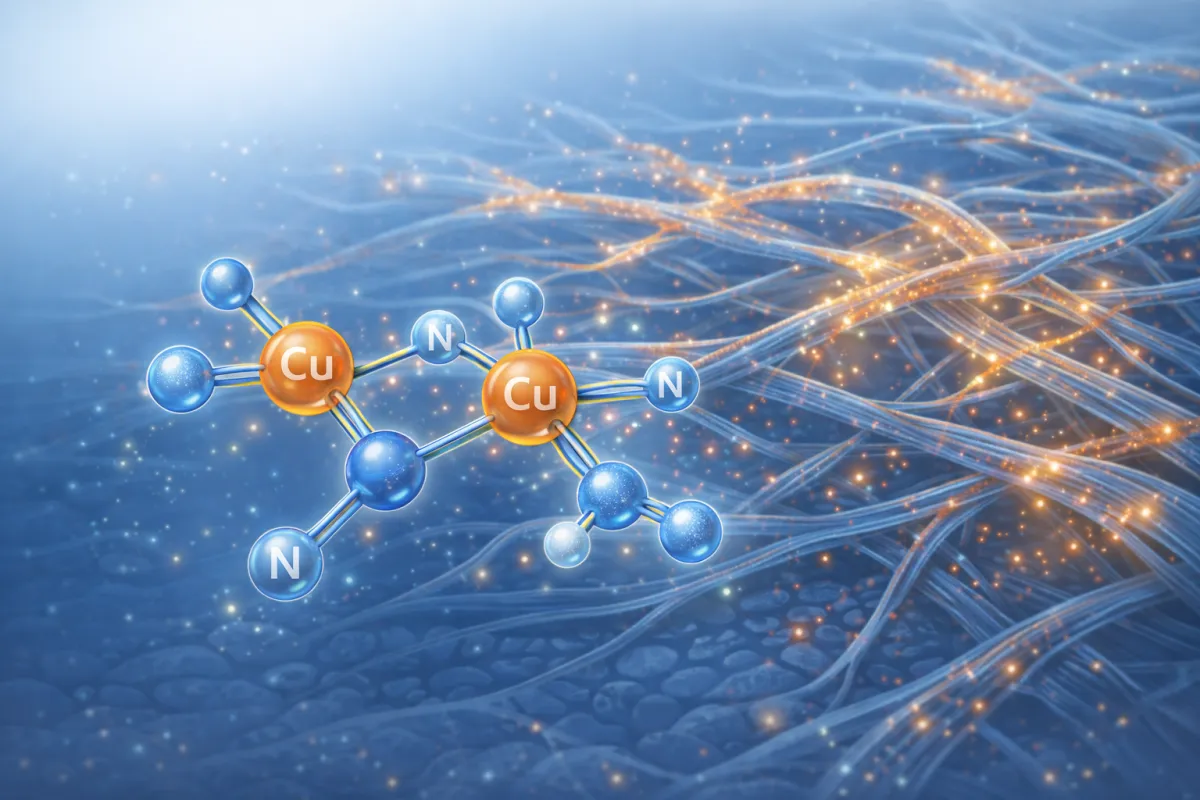
GHK-Cu is a tripeptide consisting of three amino acids (glycine, histidine, lysine) bound to a copper ion. It was discovered in 1973 by Dr. Loren Pickart, who noticed that liver tissue from older patients functioned more like younger tissue when incubated in plasma from younger donors. The active component responsible for this effect was identified as GHK-Cu.
The peptide occurs naturally in human plasma, saliva, and urine. Plasma levels average about 200 ng/mL at age 20 but decline to approximately 80 ng/mL by age 60. This 60% decline correlates with reduced healing capacity, diminished collagen production, and accelerated visible aging.
GHK-Cu is not a synthetic creation attempting to trick the body. It is restoration of a compound that declines naturally with age, bringing levels back toward youthful concentrations.
How GHK-Cu Works
GHK-Cu operates through multiple mechanisms that together create its regenerative effects.
Gene Modulation
The most significant discovery about GHK-Cu came from the Broad Institute's Connectivity Map, which revealed that this small peptide influences 31.2% of human genes. It stimulates 59% of affected genes while suppressing 41%, with changes of 50% or more in expression levels. This represents over 4,000 genes shifted toward healthier expression patterns.
Among the affected pathways, GHK-Cu upregulates 47 DNA repair genes while suppressing only 5. It reverses gene expression patterns associated with COPD lung damage and has shown ability to reverse 70% of metastatic colon cancer gene signatures in laboratory studies.
This gene modulation capability explains why GHK-Cu produces effects far beyond simple collagen stimulation. It literally reprograms cellular behavior toward regeneration.
Collagen and Extracellular Matrix Synthesis
GHK-Cu stimulates fibroblasts to produce collagen, elastin, and glycosaminoglycans. Research shows it can increase collagen synthesis by up to 70% when combined with LED therapy. Clinical trials found 70% of women using GHK-Cu saw increased collagen production, compared to 50% with vitamin C and 40% with retinoic acid.
The copper component serves as an essential cofactor for lysyl oxidase and lysyl hydroxylase, enzymes critical for proper collagen cross-linking. Without adequate copper, newly synthesized collagen remains structurally weak.
Wound Healing Acceleration
Multiple animal studies demonstrate GHK-Cu's wound healing effects. In ischemic rat wounds, treatment reduced wound size by 64.5% compared to 28.2% in untreated controls. Studies in diabetic rats showed ninefold increases in collagen synthesis at wound sites compared to controls.
GHK-Cu enhances all phases of wound healing: modulating the inflammatory response, stimulating the proliferative phase, and optimizing tissue remodeling.
Angiogenesis Regulation
GHK-Cu stimulates blood vessel formation during early wound healing stages but later helps normalize vascularization to prevent excessive growth. This balanced approach supports repair without creating problematic overgrowth.
Anti-Inflammatory Effects
The peptide reduces inflammatory markers including TNF-alpha and matrix metalloproteinases 2 and 9. It increases levels of protective compounds like glutathione and ascorbic acid at wound sites.
Research Evidence
GHK-Cu has been studied for over five decades, with research spanning wound healing, skin regeneration, hair growth, and systemic effects.
Clinical Skin Studies
A 2023 clinical trial by Yuvan Research tested GHK-Cu gel on 21 female volunteers over 3 months. High-resolution dermal ultrasound showed an average 28% increase in collagen density. The top quartile of responders experienced 51% collagen increases.
In a randomized double-blind trial, GHK-Cu reduced wrinkle volume by 31.6% compared to Matrixyl 3000 and reduced wrinkle depth by 32.8% compared to control serum. A 12-week facial cream study with 71 women showed improved skin density, thickness, firmness, and clarity.
Wound Healing Studies
Research in ischemic rat wounds demonstrated 64.5% wound size reduction with GHK-Cu treatment versus 28.2% in controls. The GHK-treated wounds showed significantly lower levels of TNF-alpha and elastin-degrading metalloproteinases.
Studies using biotinylated GHK-Cu incorporated into collagen wound dressings showed stimulated wound contraction, increased cell proliferation, and elevated antioxidant enzyme expression.
Hair Growth Research
Studies on mice genetically deficient in thymosin beta-4 found slower hair growth. Administration of GHK-Cu restored normal hair growth rates and even accelerated growth in normal mice. Research indicates GHK-Cu stimulates hair follicle stem cells, increases VEGF for blood flow to follicles, and prevents follicle miniaturization.
Lung Tissue Regeneration
In 2012, GHK-Cu was found to reverse gene expression associated with emphysema-related lung destruction in COPD tissue samples. This shifted tissue from destructive patterns toward healthy remodeling.
Nerve Regeneration
When severed nerves in rats were placed in collagen tubes impregnated with GHK-Cu, researchers observed increased nerve outgrowth, elevated production of nerve growth factor and neurotrophins NT-3 and NT-4, faster regeneration of nerve fibers, and increased Schwann cell proliferation.
The Protocol
GHK-Cu can be administered via injection or topically, with different protocols for each route.
Injectable Protocol
Phase Dose Frequency Duration Loading 1-2mg Daily 4-6 weeks Standard 1-2mg Daily 8-12 weeks Maintenance 1-2mg 3-5x weekly Ongoing
Protocol Summary (Text)
Standard injectable protocols use 1-2mg administered subcutaneously daily for 8-12 weeks. The short half-life of GHK-Cu makes daily dosing more effective than less frequent administration. Maintenance protocols typically reduce to 3-5 times weekly after the initial cycle.
Reconstitution
GHK-Cu typically comes in 50mg or 100mg vials.
For a 50mg vial: Add 2.5mL bacteriostatic water. This creates a concentration of 20mg/mL. Each 0.05mL (5 units on an insulin syringe) delivers 1mg.
For a 100mg vial: Add 5mL bacteriostatic water. This creates a concentration of 20mg/mL. Each 0.05mL (5 units) delivers 1mg.
Store reconstituted GHK-Cu refrigerated. Use within 30 days.
Topical Application
Topical GHK-Cu at concentrations of 0.01-0.1% can be applied once or twice daily to target areas. Effects accumulate over 8-12 weeks of consistent use. Topical application works for localized skin improvements but does not provide systemic benefits.
Injection Site Considerations
GHK-Cu can sting upon injection due to copper ion irritation. Strategies to reduce discomfort include diluting with additional bacteriostatic water, taking 25-50mg zinc 30-60 minutes before injection, and rotating injection sites.
What to Expect: Timeline
Week 1-2
Initial adaptation period. Some researchers notice mild improvements in skin hydration and texture. The peptide is accumulating and beginning to influence gene expression.
Week 3-4
Skin improvements become more noticeable. Texture refinement, improved elasticity, and enhanced glow often appear during this period. Minor wounds may heal faster than usual.
Week 5-8
Significant changes in skin quality. Fine lines may soften. Hair quality improvements (texture, thickness) often appear for those using GHK-Cu for hair growth. Tissue repair effects become more apparent.
Week 9-12
Continued structural remodeling. Collagen density improvements become measurable. Deeper wrinkles may begin responding. Full tissue regeneration effects manifest.
Important Note: GHK-Cu works through gene modulation and structural rebuilding, not surface-level cosmetic effects. Patience and consistency are required.
Stacking Strategies
GHK-Cu pairs exceptionally well with other healing and regeneration compounds.
GLOW Stack (Tissue Repair + Aesthetics)
GHK-Cu combined with BPC-157 and TB-500 for comprehensive healing with aesthetic benefits. GHK-Cu provides the building materials while BPC-157 and TB-500 direct repair processes.
Protocol: BPC-157 250-500mcg daily, TB-500 2.5mg twice weekly loading then weekly maintenance, GHK-Cu 1-2mg daily. Run for 8-12 weeks.
Anti-Aging Stack
GHK-Cu combined with oral collagen peptides and vitamin C for comprehensive skin regeneration. GHK-Cu stimulates collagen production at the genetic level while collagen peptides provide amino acid building blocks.
Protocol: GHK-Cu 1-2mg daily injectable plus topical application, collagen peptides 10-20g daily oral, vitamin C 1000mg daily (separate from GHK-Cu by 4+ hours as vitamin C may interfere with copper binding). Run for 12+ weeks.
Hair Growth Stack
GHK-Cu as the foundation for follicle stimulation, combined with topical application directly to the scalp.
Protocol: GHK-Cu 1-2mg daily injectable for systemic benefits plus topical GHK-Cu applied to scalp daily. Add minoxidil 5% topically if desired. Run for 6-12 months minimum as hair growth is slow.
Safety and Side Effects
GHK-Cu demonstrates an excellent safety profile with decades of cosmetic and research use.
Reported Side Effects
Most researchers report minimal side effects. Those that occur tend to be mild:
Injection site stinging or burning (due to copper ions). Temporary redness at injection sites. Mild fatigue during initial use. Rare headaches.
The "Copper Uglies" Phenomenon
A rare paradoxical reaction where skin appears to age rather than improve. The theory suggests excessive MMP (matrix metalloproteinase) activation may tip the balance toward collagen breakdown rather than synthesis in some individuals.
Prevention: Start with lower doses (0.5-1mg) and increase gradually. If skin worsens rather than improves, discontinue use.
Contraindications
Wilson's disease or other copper metabolism disorders. Active cancer (theoretical concern due to angiogenic properties). Pregnancy or breastfeeding (no safety data).
Drug Interactions
GHK-Cu may interact with copper chelating medications. Those taking medications affecting copper metabolism should consult healthcare providers.
Age-Related Decline
Understanding GHK-Cu's natural decline provides context for supplementation.
At age 20, plasma GHK-Cu averages approximately 200 ng/mL. By age 60, levels drop to approximately 80 ng/mL. This 60% reduction correlates with diminished wound healing, reduced collagen production, thinning skin, and visible aging.
Supplementing GHK-Cu represents restoration rather than enhancement. The goal is returning levels toward youthful concentrations to support the body's intrinsic regenerative capacity.
Frequently Asked Questions
Is GHK-Cu just for skincare?
No. While skincare applications brought GHK-Cu to public attention, its effects extend far beyond cosmetics. Gene modulation affects wound healing, nerve regeneration, lung tissue repair, and systemic anti-aging processes.
Does injection location matter?
For systemic effects, no. GHK-Cu distributes throughout the body regardless of injection site. For targeted skin benefits, some researchers inject in proximity to the area of concern, though evidence for localized enhancement is limited.
Can I use topical and injectable together?
Yes. Many researchers combine systemic injectable GHK-Cu with topical application for enhanced local effects on skin or scalp.
How does GHK-Cu compare to retinoids?
Clinical studies show GHK-Cu outperforms retinoic acid for collagen stimulation (70% vs 40% of subjects showing improvement). Unlike retinoids, GHK-Cu does not cause photosensitivity or irritation in most users.
Why does GHK-Cu injection sting?
Copper ions cause localized irritation. Taking zinc before injection helps by competing for binding sites and reducing free copper activity at the injection site.
Is GHK-Cu legal?
GHK-Cu is sold as a research chemical and widely available in cosmetic formulations. Injectable forms are not FDA-approved for therapeutic use. Regulatory status varies by jurisdiction.
Regulatory Status
GHK-Cu occupies an interesting regulatory position. It is widely available in cosmetic products and has decades of safe use. Injectable forms are sold as research chemicals but are not FDA-approved for human therapeutic use.
The FDA's 2023 regulations on peptide compounding affected some forms of GHK-Cu availability through compounding pharmacies, though research chemical sources remain accessible.
Trusted Sources
Quality matters significantly for GHK-Cu, as copper binding must be maintained for biological activity.
Optimum Formula carries the GLOW Blend containing GHK-Cu along with BPC-157 and TB-500. Code "BHACK" for 10% off.
Modern Aminos stocks standalone GHK-Cu as well as the KLOW blend. Code "zach10" for 10% off.
Limitless Life Nootropics offers GHK-Cu in injectable, spray, and capsule formats. Code "BHACK" for 15% off.
LimitlessBioChem provides European researchers with GHK-Cu 100mg vials. Code "BHACK" for 10% off.
BioSLab offers Canadian researchers GHK-Cu 50mg vials and capsule options. Code "BHACK" for 10% off.
BioLongevity Labs carries GHK-Cu 50mg as well as the GLOW and KLOW blends. Code "BHACK" for 15% off.
Key Takeaways
GHK-Cu represents far more than a skincare ingredient. Its ability to modulate over 4,000 genes, stimulate collagen synthesis, accelerate wound healing, and support nerve regeneration makes it a cornerstone compound for comprehensive tissue regeneration protocols.
The natural decline of GHK-Cu with age correlates directly with reduced healing capacity and visible aging. Supplementation restores youthful levels rather than pushing the body into unnatural states.
Combined with BPC-157 and TB-500 in the GLOW Stack, GHK-Cu provides the building materials that complete the tissue repair toolkit. While BPC-157 architects repair and TB-500 coordinates systemic healing, GHK-Cu delivers the collagen, elastin, and glycosaminoglycans needed to actually rebuild tissue.
Consistency matters. Daily dosing for 8-12 weeks allows gene modulation effects to accumulate and tissue remodeling to occur.
Related Guides
Disclaimer: This content is for educational and research purposes only. Peptides are not approved for human use. Nothing here is medical advice. Consult a qualified professional for personalized guidance.
