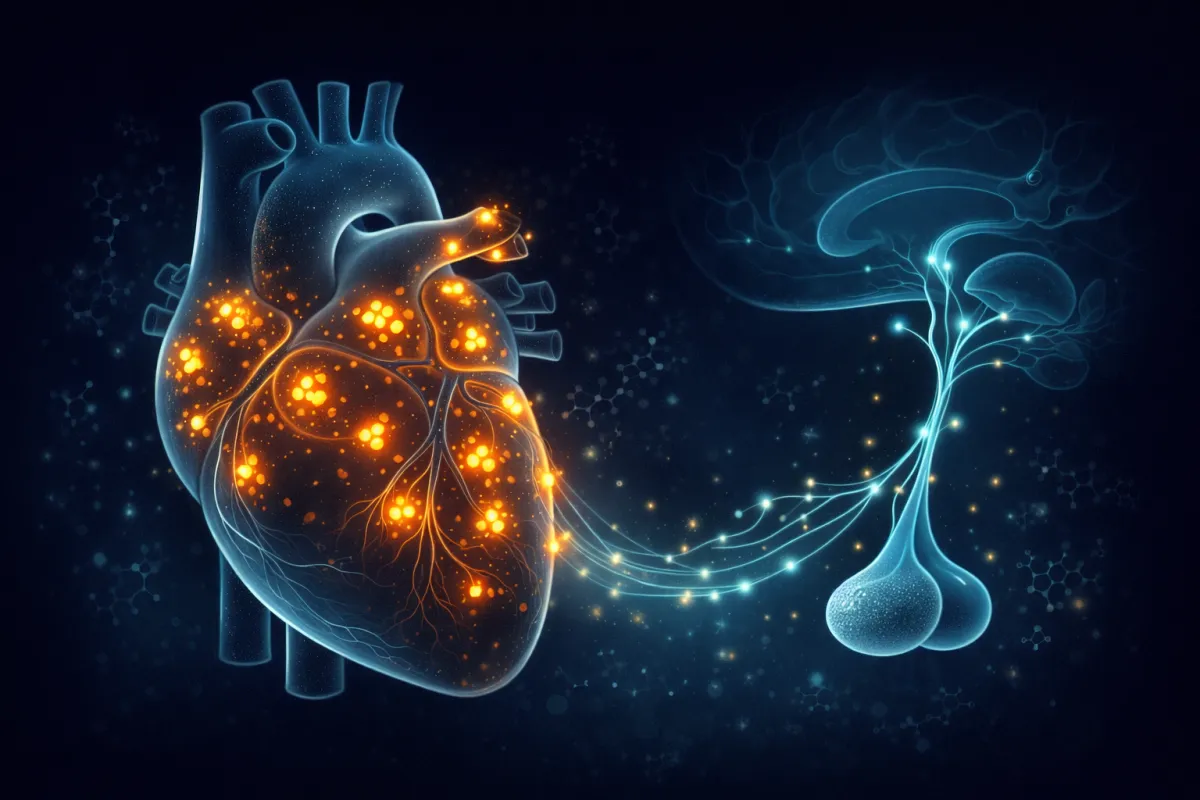
Hexarelin: The Cardiac Protector Among Growth Hormone Secretagogues
Your pituitary gland releases growth hormone in pulses. Not a slow drip. Bursts. Think of a sprinkler system that activates for 30 seconds every few hours rather than a garden hose left running all day. This pulsatile pattern matters because your body responds differently to hormone spikes versus constant exposure.
Most GH secretagogues work by triggering these pulses. Hexarelin does this better than almost anything else in its class. But here is what makes it genuinely unique: it also binds to receptors in your heart that have nothing to do with growth hormone. Receptors that protect cardiac tissue from damage during stress, improve blood flow, and reduce the scarring that accumulates after injury.
Two mechanisms. One peptide. That combination does not exist anywhere else in the secretagogue family.
KEY FACTS
Definition: Hexarelin is a synthetic hexapeptide growth hormone secretagogue that stimulates GH release while providing direct cardioprotection through CD36 receptor activation
Primary Use: Growth hormone optimization with cardiovascular protection in athletes, longevity protocols, and cardiac recovery
Typical Timeline: GH response within 30 minutes; body composition changes over 8 to 12 weeks; cardiac benefits accumulate with consistent use
Best For: Athletes wanting GH benefits plus heart protection, individuals with cardiovascular risk factors, those recovering from cardiac events
Not For: Those expecting sustainable results without cycling, anyone unwilling to manage desensitization, people seeking the mildest GH secretagogue option
What Is Hexarelin?
Hexarelin belongs to the growth hormone releasing peptide family, a class of synthetic compounds designed to stimulate your body's natural GH production. The name comes from its six amino acid structure: His-D-2-methyl-Trp-Ala-Trp-D-Phe-Lys-NH2.
Among GHRPs, Hexarelin sits at the top of the potency ladder. It produces larger GH pulses than GHRP-2, GHRP-6, and Ipamorelin. Clinical studies demonstrate GH peaks reaching 10 to 20 times baseline within 30 to 60 minutes of administration.
But potency alone does not make a peptide interesting. What makes Hexarelin genuinely remarkable is its dual receptor activity. Beyond the standard ghrelin receptor that all GHRPs target, Hexarelin binds to CD36, a scavenger receptor found in cardiac tissue, blood vessels, and various other organs. This binding triggers cardiovascular protective effects completely independent of growth hormone release.
Research published in Circulation Research identified CD36 as a unique cardiac receptor for Hexarelin, demonstrating that the peptide increases coronary perfusion pressure in a dose-dependent manner. Importantly, this effect disappears entirely in CD36-null mice, confirming that the cardiac benefits operate through a distinct pathway from GH stimulation.
The Science
Understanding Hexarelin requires following two parallel mechanisms that operate simultaneously.
The Growth Hormone Pathway
Hexarelin binds to GHS-R1a receptors in the hypothalamus and pituitary gland. This binding activates a cascade involving phospholipase C, protein kinase C, and intracellular calcium mobilization. The result is a rapid, powerful release of stored growth hormone from pituitary somatotroph cells.
Unlike exogenous HGH injection, this stimulated release maintains natural pulsatile patterns. Your body still controls the downstream signaling. The difference is larger, more frequent pulses than your aging pituitary would produce on its own.
Growth hormone then stimulates liver production of IGF-1, which mediates most anabolic effects: muscle protein synthesis, fat breakdown, tissue repair, and cellular regeneration.
The Cardiac Protection Pathway
CD36 is a multifunctional glycoprotein expressed in cardiomyocytes, microvascular endothelial cells, and throughout the cardiovascular system. When Hexarelin binds to CD36, several protective mechanisms activate.
First, it protects against ischemia-reperfusion injury, the damage that occurs when blood flow returns to tissue after a period of restricted circulation. Studies in rats undergoing coronary artery ligation showed Hexarelin treatment improved cardiac systolic function, decreased oxidative stress markers, and increased cardiomyocyte survival.
Second, Hexarelin reduces cardiac fibrosis by modulating matrix metalloproteinase activity. Fibrosis is the scarring process that gradually stiffens heart tissue after injury or chronic stress. Less fibrosis means better cardiac function over time.
Third, the peptide demonstrates anti-atherosclerotic effects. Research in Sprague-Dawley rats showed Hexarelin suppressed atherosclerotic plaque formation, improved HDL/LDL cholesterol ratios, and increased nitric oxide production, which supports healthy blood vessel function.
The critical insight from research: these cardiac benefits occur even when growth hormone release is blocked or in animals lacking functional GH pathways. The heart protection is genuine and independent.
Research Evidence
Human Clinical Studies
A study in patients with coronary artery disease undergoing cardiac bypass surgery examined acute Hexarelin administration. The peptide improved cardiac performance measures without changing systemic vascular resistance. Importantly, this effect was not replicated by GHRH or recombinant human GH, confirming the CD36-mediated mechanism rather than a growth hormone effect.
Research on GH release potency compared Hexarelin directly against other secretagogues. In healthy human subjects, Hexarelin produced significantly higher peak GH concentrations than GHRP-6 at equivalent doses, with the response maintained across repeated administrations within the same day, though the magnitude decreased by about 30% on the second dose.
Preclinical Cardiovascular Research
The most compelling cardiac evidence comes from ischemia-reperfusion models. Rats treated with Hexarelin following experimental heart attack showed improved ejection fraction, reduced infarct size, and decreased markers of cardiac cell death compared to untreated controls.
Long-term pretreatment studies demonstrated that Hexarelin protects hearts from ischemia-reperfusion damage and preserves vascular endothelium function even in GH-deficient animals, definitively establishing the growth hormone-independent nature of cardioprotection.
The mechanism involves IL-1 signaling pathway modulation. Hexarelin downregulates IL-1β expression while upregulating IL-1Ra, shifting the inflammatory balance toward protection rather than damage. This effect requires functional GHSR1a receptors in cardiac tissue, suggesting both receptor types contribute to heart protection through different mechanisms.
2025 Research Updates
Recent reviews consolidate Hexarelin's position as a promising therapeutic agent for cardiovascular conditions including cardiac fibrosis, ischemic heart disease, cardiac dysfunction, and atherosclerosis. The consensus from preclinical research supports further clinical investigation, though human trials remain limited.
Core Peptides published a comprehensive review in February 2025 summarizing the peptide's dual mechanism and noting that because Hexarelin demonstrates greater chemical stability and potency than its natural analog ghrelin, it represents a viable research alternative for cardiac applications.
Practical Protocols
Administration
Hexarelin requires subcutaneous injection. Oral administration destroys the peptide before absorption. Inject into abdominal fat, deltoid region, or outer thigh, rotating sites to prevent tissue irritation.
Standard Dosing
Most protocols use 100 to 200 mcg per injection, administered one to three times daily. Timing matters: inject on an empty stomach, either 60 minutes before eating or at least 3 hours after a meal. Food, particularly carbohydrates, blunts the GH response.
Optimal timing windows include morning upon waking (fasted), post-workout, and before bed. The pre-sleep dose may enhance the natural GH pulse that occurs during deep sleep.
The Desensitization Problem
This is where Hexarelin differs fundamentally from milder secretagogues like Ipamorelin.
Hexarelin's aggressive receptor activation triggers compensatory downregulation. Your pituitary adapts to the stimulus. By weeks 4 to 6 of continuous use, the same dose produces progressively smaller GH responses. Research at the cellular level showed marked desensitization of calcium signaling within 2 to 5 minutes of initial hexarelin exposure, indicating how quickly receptors adjust.
This is not a reason to avoid Hexarelin. It is a reason to use it correctly through cycling.
Cycling Strategies
Standard approach: 4 to 6 weeks on, 4 weeks off. Run Hexarelin for a defined period, then take a complete break to allow receptor recovery.
Weekly micro-cycling: 5 days on, 2 days off. Less studied but may slow desensitization while maintaining benefits.
Alternating GHRPs: Run Hexarelin for 4 to 6 weeks, switch to Ipamorelin for 4 to 6 weeks. Different receptor binding profiles may allow partial recovery while maintaining GH optimization.
PROTOCOL SUMMARY (TEXT): Hexarelin is administered subcutaneously at 100 to 200 mcg per injection, one to three times daily on an empty stomach. Cycles should not exceed 4 to 6 weeks of continuous use, followed by at least 4 weeks off to prevent receptor desensitization. Injection timing is optimal upon waking, post-workout, and before bed.
What to Expect
Week 1 to 2
Immediate GH response occurs with each injection. You will not feel the hormone release directly, but some users report improved sleep quality within the first week, likely from enhanced nighttime GH pulses. Minor water retention may occur as IGF-1 levels rise. Energy levels often stabilize.
Week 3 to 4
Body composition changes become noticeable. Fat loss accelerates, particularly in stubborn areas like the midsection. Recovery from training improves. Some users report increased appetite due to ghrelin receptor activation, though this effect is less pronounced than with GHRP-6.
Week 5 to 8
Peak benefits for most users occur in this window. Muscle fullness, reduced body fat, improved skin quality, and enhanced recovery are commonly reported. If desensitization is occurring, you may notice the post-injection flush or warmth diminishing.
Week 9 to 12
For those running extended cycles, monitor for reduced response. If benefits plateau despite consistent dosing, desensitization has likely occurred. This is the signal to begin your off period.
Cardiac benefits timeline
Unlike acute GH effects, cardiovascular protection accumulates over longer timeframes. The anti-fibrotic and anti-atherosclerotic effects require consistent exposure over months to manifest measurably. Do not expect to feel cardiac protection, but understand it is occurring at the cellular level.
Advanced Stacking
GH Maximizer Stack
Hexarelin 100 to 200 mcg combined with CJC-1295 No DAC (Mod GRF 1-29) 100 mcg creates synergistic GH release. GHRH analogs like CJC-1295 amplify the pituitary response to GHRP stimulation. Studies confirm the combined response exceeds the arithmetic sum of individual effects. Run 2 to 3 times daily for 4 to 6 weeks.
Cardiac Protection Stack
Hexarelin 100 mcg twice daily combined with SS-31 (Elamipretide) for mitochondrial support. Add CoQ10 supplementation at 200 to 400 mg daily. This stack targets both the CD36 cardioprotection pathway and cellular energy production in heart tissue. Appropriate for those with cardiovascular risk factors or recovery goals.
Body Recomposition Stack
Hexarelin 150 mcg twice daily with Ipamorelin 200 mcg pre-bed. The Hexarelin provides stronger daytime GH pulses while Ipamorelin maintains gentler nighttime stimulation without excessive desensitization. Add BPC-157 if pursuing injury recovery alongside recomposition.
Longevity Stack
Hexarelin 100 mcg twice daily during the on-cycle, combined with Epithalon 2 to 4 mg daily for telomere support and NAD+ optimization protocols. The cardiac and GH benefits of Hexarelin complement cellular aging interventions. Use Hexarelin in 4-week cycles with 4 weeks off.
Athletic Performance Stack
Hexarelin 200 mcg post-workout combined with TB-500 for tissue repair. The GH pulse supports recovery while TB-500 accelerates structural healing. Particularly relevant for athletes managing repetitive strain or returning from injury.
Safety and Side Effects
Common Effects
Water retention occurs in some users, particularly at higher doses. Typically mild and resolves when dosing stabilizes or during off periods.
Increased appetite affects some users due to ghrelin receptor activation. Less pronounced than GHRP-6 but more noticeable than Ipamorelin.
Flushing or warmth immediately after injection is common and indicates the peptide is active. This typically diminishes as desensitization develops.
Hormonal Considerations
Hexarelin stimulates prolactin and cortisol release alongside GH. The prolactin effect is generally mild but may concern those sensitive to elevated levels. Monitor for symptoms and consider dopamine agonist support if issues arise.
The cortisol response is more pronounced than with Ipamorelin, which is essentially cortisol-neutral. For most users this is not problematic, but those with existing HPA axis dysfunction should proceed cautiously.
Potential Concerns
Joint discomfort may occur with elevated IGF-1 levels, particularly in those predisposed to fluid retention in connective tissue.
Numbness or tingling in extremities has been reported, likely related to IGF-1 effects on nerve sensitivity. Usually transient.
Insulin sensitivity may decrease with prolonged high-dose use. Monitor glucose if combining with other compounds affecting metabolic function.
Contraindications
Active cancer or history of hormone-sensitive tumors contraindicates GH elevation. Growth hormone and IGF-1 can promote tumor growth.
Diabetic individuals should approach with caution due to potential glucose metabolism effects.
Pregnancy and breastfeeding are absolute contraindications.
Those with existing pituitary disorders should consult specialists before GH secretagogue use.
Frequently Asked Questions
How does Hexarelin compare to Ipamorelin?
Hexarelin produces stronger GH pulses but with faster desensitization and more hormonal side effects (prolactin, cortisol). Ipamorelin is gentler and sustainable for longer periods but lacks the cardiac protection benefits. Choose Hexarelin for shorter, more aggressive cycles with cardiovascular benefits; choose Ipamorelin for long-term, steady GH optimization.
Can Hexarelin be used long-term?
Not continuously. The desensitization issue is real and documented at the cellular level. Cycling is mandatory for sustained benefits. Some users run year-round with structured on/off periods, maintaining benefits while allowing receptor recovery.
Is Hexarelin safe for the heart?
The cardiovascular research is consistently positive. Hexarelin demonstrates cardioprotection, anti-atherosclerotic effects, and reduced cardiac fibrosis in preclinical models. It is one of the only secretagogues with documented cardiac benefits independent of growth hormone. However, human long-term cardiac data remains limited.
What about the hunger increase?
Hexarelin activates ghrelin receptors, which can increase appetite. This effect is less severe than GHRP-6 but more noticeable than Ipamorelin. For fat loss goals, manage timing and macronutrient intake accordingly. Some users find the increased appetite helpful for muscle-building phases.
Does Hexarelin work for anti-aging?
GH optimization supports many markers associated with aging: skin quality, body composition, sleep, recovery, and tissue repair. The added cardiac protection is particularly relevant for longevity since cardiovascular disease remains the leading cause of death globally. However, anti-aging claims should be viewed with appropriate skepticism regarding causation versus correlation.
Trusted Sources
Quality matters with research peptides. Third-party testing and proper handling make the difference between effective research and wasted effort.
Vetted suppliers carrying Hexarelin:
Modern Aminos Hexarelin 10mg | Code: zach10 (10% off)
Modern Aminos Hexarelin + CJC-1295 No DAC 5mg/5mg | Code: zach10 (10% off)
BioSLab Canada Hexarelin 5mg | Code: BHACK (10% off)
For stacking options:
Modern Aminos CJC-1295 No DAC + Ipamorelin | Code: zach10 (10% off)
LimitlessBioChem EU GHRP-2 | Code: BHACK (10% off)
For complete vendor comparison and additional options: biohackblueprint.io
The Bigger Picture
Hexarelin occupies a unique position in the peptide landscape. It is not the easiest secretagogue to use. Ipamorelin wins that category. It is not the most convenient, MK-677 oral administration beats injections for simplicity. It is not even the strongest pure GH releaser if you factor in desensitization over time.
But no other secretagogue protects your heart while optimizing your hormones.
The CD36 binding that makes Hexarelin interesting is not a marketing talking point or theoretical mechanism. It is documented in peer-reviewed cardiovascular research, confirmed through knockout animal models, and demonstrated in human cardiac surgery patients. When Hexarelin binds to those cardiac receptors, it triggers genuine protective signaling that reduces damage, improves blood flow, and limits the fibrosis that gradually degrades heart function with age and stress.
For athletes pushing their cardiovascular systems hard, that matters. For aging individuals watching cardiovascular risk climb with each passing decade, that matters. For anyone who has experienced a cardiac event and wants to support recovery while optimizing their hormones, that matters.
The cycling requirement is real. The desensitization is documented. The hormonal side effects exceed milder alternatives. These are trade-offs, not disqualifications.
Hexarelin is not the peptide for everyone. But for those who understand what it offers and are willing to use it correctly, it delivers something genuinely unique: growth hormone optimization with cardiovascular protection built in.
Final Thoughts
Hexarelin represents a powerful tool for those seeking both GH optimization and cardiac benefits. The requirement for cycling and the faster desensitization compared to gentler alternatives mean it demands more attention to protocol design than something like Ipamorelin. But the dual mechanism, potent GH release combined with genuine cardioprotection, justifies that additional complexity for the right use cases.
If you are considering Hexarelin, plan your cycles before you begin. Know when you will start, when you will stop, and what you will use during off periods. Monitor your response and adjust dosing based on how your body reacts rather than following generic recommendations blindly.
The research supports its cardiovascular benefits. The clinical experience supports its GH-releasing potency. The challenge is using it intelligently rather than continuously.
Have you used Hexarelin as part of a GH optimization protocol? How did you structure your cycling? Drop your experience in the comments.
Disclaimer: This content is for educational and research purposes only. Peptides are not approved for human use. Nothing here is medical advice. Consult a qualified professional for personalized guidance.
