Humanin: Complete Guide to the Mitochondrial Longevity Signal
Your mitochondria are dying. Every year after age 30, mitochondrial function declines by approximately 1-2%. By age 70, you have lost nearly half the cellular energy capacity you had in your twenties. This decline drives everything from fatigue and cognitive fog to heart disease and neurodegeneration. For decades, scientists viewed this as inevitable entropy. Then they discovered something remarkable: mitochondria fight back.
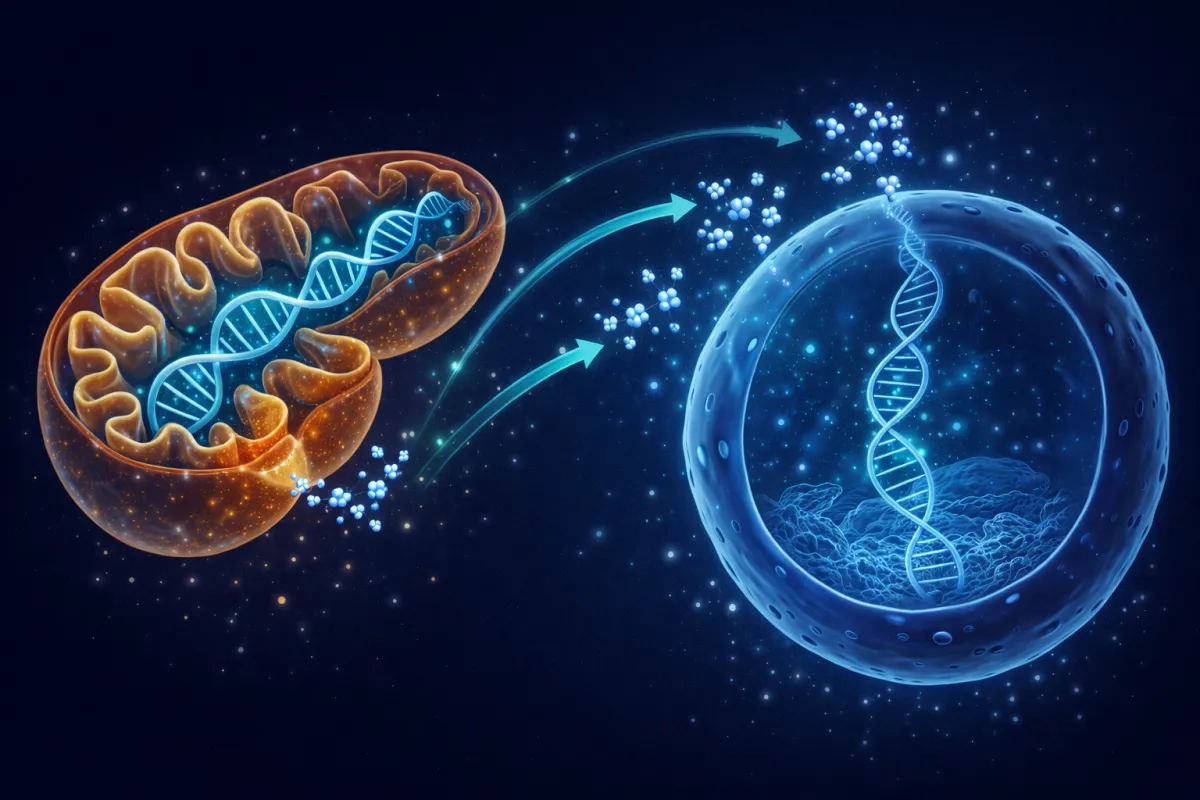
Humanin is a 24-amino acid peptide encoded directly within your mitochondrial DNA. It is one of the first identified mitochondrial-derived peptides, representing an ancient communication system your mitochondria use to signal the rest of your body. When cellular stress increases, healthy mitochondria produce more humanin. When mitochondria fail, humanin levels drop. This correlation is so reliable that researchers now use circulating humanin as a biomarker for mitochondrial health and biological aging.
The centenarian connection makes this personal. Children of centenarians have significantly higher humanin levels than age-matched controls. Naked mole rats, which live 30+ years with negligible senescence, maintain stable humanin throughout their entire lifespan while mice experience 40% decline in just 16 months. Humanin appears to be one of evolution's answers to aging itself.
KEY FACTS
Definition: Humanin is a 24-amino acid mitochondrial-derived peptide (MDP) encoded within the 16S ribosomal RNA region of mitochondrial DNA, functioning as a retrograde signal from mitochondria to nucleus and peripheral tissues
Primary Use: Longevity optimization, neuroprotection, metabolic enhancement, and cellular stress resistance in age-related decline
Mechanism: Binds BAX protein to prevent apoptosis, activates STAT3 and PI3K/AKT survival pathways through cell surface receptors, improves insulin sensitivity via AMPK activation
Typical Timeline: 4-8 weeks for subjective improvements in energy and cognition, 8-12 weeks for metabolic parameter shifts
Best For: Adults 50+ with declining metabolic health, mitochondrial dysfunction signs (chronic fatigue, poor recovery), neurodegenerative disease risk, cardiovascular disease prevention
Not For: Young healthy individuals with robust endogenous production, those expecting rapid transformations, anyone seeking quick-fix solutions to aging
What Is Humanin?
Humanin was discovered in 2001 by Japanese researchers investigating Alzheimer's disease. They found this small peptide in brain tissue samples and named it "humanin" because it appeared to protect neurons from amyloid-beta toxicity, essentially keeping human brain cells alive under toxic conditions.
What made this discovery revolutionary was the source. Humanin is not encoded in your nuclear DNA like most proteins. It comes from mitochondrial DNA, the small circular genome that mitochondria retain from their ancient bacterial origins. For decades, scientists believed mitochondrial DNA only coded for 13 proteins involved in energy production. Humanin revealed that mitochondria produce their own signaling molecules that communicate with the rest of the cell and body.
Think of humanin as your mitochondria's distress signal and repair request combined. When cellular stress increases, mitochondria increase humanin production. This signal travels to the nucleus, activates protective genes, and coordinates survival responses throughout the body. When mitochondria become too damaged to function properly, humanin production drops, and the protective signaling disappears.
This creates a feedback loop that explains much of biological aging. Healthy mitochondria produce humanin. Humanin protects cells and mitochondria. Protected mitochondria produce more humanin. When the cycle breaks, whether through accumulated damage, oxidative stress, or genetic factors, the protective system collapses and aging accelerates.
The most practical implication: circulating humanin levels function as a biomarker for your mitochondrial age, which may be more relevant to healthspan than chronological age.
The Science: Mechanisms of Protection
Humanin operates through multiple protective mechanisms that address the core drivers of cellular aging.
Anti-Apoptotic Protection
The most robust and well-documented effect of humanin involves blocking programmed cell death. When cells experience stress, they can trigger apoptosis through the intrinsic mitochondrial pathway. A protein called BAX moves to the outer mitochondrial membrane, creates pores, and releases cytochrome c into the cytoplasm. This initiates a cascade that destroys the cell.
Humanin directly binds to BAX in the cytoplasm, preventing it from reaching the mitochondria. No BAX translocation means no membrane pores, no cytochrome c release, and no cell death. Studies show humanin protects against apoptosis triggered by amyloid-beta (Alzheimer's pathology), ischemia-reperfusion injury (stroke and heart attack damage), oxidative stress, and even chemotherapy drugs.
Receptor-Mediated Survival Signaling
Beyond direct BAX binding, humanin activates survival pathways through cell surface receptors. It binds to a receptor complex including gp130, CNTFR (ciliary neurotrophic factor receptor), and WSX-1. This triggers PI3K/AKT and STAT3 signaling cascades that upregulate genes involved in cellular survival, stress resistance, and repair.
These pathways explain humanin's systemic effects. The peptide does not simply protect individual cells. It coordinates body-wide responses to metabolic stress, inflammation, and aging.
Metabolic Enhancement
Humanin improves insulin sensitivity through AMPK activation and glucose transporter upregulation. This matters because insulin resistance drives metabolic syndrome, cardiovascular disease, and accelerated aging. By improving how cells respond to insulin, humanin addresses one of the fundamental metabolic dysfunctions of aging.
Research shows humanin-treated mice have lower body weight, reduced visceral fat, and improved glucose tolerance. These effects mirror what scientists observe in long-lived species and caloric restriction studies.
Anti-Inflammatory Effects
Chronic low-grade inflammation (inflammaging) drives age-related disease. Humanin reduces pro-inflammatory cytokines including IL-6 and TNF-alpha while decreasing oxidative stress markers. This anti-inflammatory effect contributes to both neuroprotection and cardiovascular protection.
The mechanism involves humanin's interaction with formylpeptide receptor-like 1 (FPRL-1), which modulates immune cell activity. By shifting immune responses away from chronic inflammatory states, humanin may help resolve the persistent low-grade inflammation that accelerates tissue damage throughout the body.
The Mitochondrial-Nuclear Communication System
Understanding humanin requires appreciating the broader concept of mitochondrial retrograde signaling. Your mitochondria are not passive organelles waiting for instructions. They actively monitor cellular energy status, oxidative stress levels, and metabolic demands, then communicate this information back to the nucleus through peptide signals like humanin and MOTS-C.
This retrograde signaling (mitochondria to nucleus) allows coordinated responses to cellular challenges. When mitochondria detect stress, they increase production of protective peptides that activate nuclear genes for repair, survival, and stress resistance. When mitochondria are damaged beyond repair, these signals diminish, allowing the cell to proceed toward programmed death rather than becoming dysfunctional.
Humanin's decline with age therefore reflects not just mitochondrial damage but a progressive breakdown in cellular communication and coordination. Restoring humanin levels may help re-establish this signaling network even when underlying mitochondrial health is compromised.
Research Evidence: What the Studies Show
Humanin research spans over two decades with compelling evidence across multiple domains.
The Centenarian Studies
Research from the University of Southern California examined humanin levels in centenarians, their offspring, and age-matched controls. Centenarians and their children had significantly higher circulating humanin than controls. This was not a small difference. The centenarian offspring, who statistically are more likely to become centenarians themselves, showed elevated humanin that may reflect either higher baseline levels from birth or slower age-related decline.
Additional analysis of newborn cord blood samples suggests humanin differences may exist from birth, supporting a genetic component to this longevity marker.
Lifespan Extension
The same research team demonstrated that humanin overexpression extends lifespan in C. elegans (roundworms) through a mechanism dependent on daf-16/FOXO, the same pathway activated by caloric restriction and other longevity interventions. Transgenic mice with elevated humanin showed phenotypes overlapping with the worm studies and had increased protection against toxic insults.
Treating middle-aged mice twice weekly with HNG (a potent humanin analog) improved metabolic healthspan parameters and reduced inflammatory markers. The treated mice were lighter with less visceral fat compared to controls.
The Naked Mole Rat Connection
One of the most striking findings involves species comparisons. Short-lived mice show declining humanin levels over the first 16 months of life. Long-lived naked mole rats, which can live 30+ years with minimal aging signs, maintain stable humanin levels for decades. This correlation between humanin stability and exceptional longevity appears across multiple species.
Cardiovascular Protection
A 2025 review in Frontiers examined mitochondrial-derived peptides including humanin in cardiovascular aging. Researchers found that humanin modulates apoptosis, inflammation, and oxidative stress through AMPK, mTOR, and sirtuin pathways. In cardiac models, humanin reduced infarct size, preserved left ventricular function, and prevented arrhythmias during ischemia-reperfusion injury.
Research from 2018 demonstrated humanin prevented age-related cardiac fibrosis in mice by 40-50%, addressing the stiffening that compromises heart function with age.
Neuroprotection
Humanin's original discovery involved protecting neurons from amyloid-beta toxicity. Subsequent research confirmed neuroprotective effects across multiple models. Intranasal administration of HNG (humanin G analog) for three months significantly reduced amyloid-beta accumulation and improved cognitive performance in Alzheimer's disease mouse models.
CSF (cerebrospinal fluid) humanin levels are decreased in Alzheimer's patients compared to controls, suggesting the protective system fails in neurodegeneration. This creates a potential therapeutic window: restoring humanin levels might protect remaining neurons and slow disease progression.
Beyond Alzheimer's, humanin shows promise for other neurodegenerative conditions. Research indicates protective effects against Parkinson's disease models, stroke-induced damage, and general age-related cognitive decline. The mechanism involves both direct neuronal protection and indirect effects through improved mitochondrial function in brain tissue, which is particularly metabolically demanding.
2025 Research Updates
Recent publications continue expanding humanin's evidence base. A 2025 review examining mitochondrial peptides in regenerative medicine highlighted humanin as a key candidate for anti-aging therapeutics, noting its potential for addressing age-related decline at the cellular level rather than symptom management.
Research published in May 2025 examined humanin's role in inflammation regulation, demonstrating that it reduces pro-inflammatory cytokines (IL-1β, IL-6, TNF-α) through binding to the gp130 receptor complex and activating STAT3 pathways. This anti-inflammatory action adds another mechanism through which humanin may slow aging processes.
The field of mitochondrial-derived peptides has expanded significantly, with researchers identifying additional MDPs (SHLP1-6) in the same mitochondrial DNA region as humanin. SHLP2 in particular shows similar protective effects and declines with age, suggesting a family of longevity signals that work together.
Practical Protocols: Dosing and Administration
Humanin protocols remain investigational with dosing derived primarily from preclinical research and early clinical observations.
Understanding HNG
Most research uses HNG (humanin G), a potent analog with a serine-to-glycine substitution at position 14. This modification increases stability and potency approximately 1000-fold compared to native humanin. When reviewing research, "humanin" often refers to HNG for practical reasons since native humanin has very short half-life.
Standard Approach
Based on available research and clinical experience:
Conservative Starting Protocol:
1-2mg subcutaneous injection, 2-3 times weekly
Morning administration preferred
8-12 week initial cycles
Moderate Protocol:
2-4mg subcutaneous injection, 3 times weekly
Consistent timing important
Can extend to 16 weeks
PROTOCOL SUMMARY (TEXT): Typical dosing ranges from 1-4mg administered subcutaneously two to three times weekly for 8-16 week cycles. Morning administration aligns with natural circadian patterns. Most users start conservatively and adjust based on response.
Administration Notes
Subcutaneous injection in abdominal fat or thigh provides reliable absorption. Some research has explored intranasal delivery, particularly for neurological applications, though subcutaneous remains standard. Store reconstituted humanin refrigerated and use within 30 days.
What to Expect: Timeline of Effects
Humanin produces gradual, cumulative effects rather than immediate transformations. Expectations should align with its mechanism as a cellular protectant and metabolic optimizer.
Week 1-2 Minimal noticeable changes. The peptide is beginning to modulate cellular signaling pathways. Some users report subtle improvements in sleep quality or morning energy.
Week 3-4 Early subjective improvements may emerge: better sustained energy, improved recovery from exercise, enhanced mental clarity. These reflect improving mitochondrial function and reduced cellular stress.
Week 5-8 More consistent effects for responders. Energy levels stabilize, cognitive function improves, and exercise recovery accelerates. Metabolic parameters may begin shifting positively.
Week 9-12 Peak effects from initial cycle. Users with metabolic dysfunction often see improvements in fasting glucose, inflammatory markers, and body composition (reduced visceral fat). Subjective wellbeing typically reaches plateau.
Clinical Takeaway: Humanin is not a quick fix. It is a cellular optimization tool that produces meaningful results over months, not days. Those expecting dramatic rapid transformations will be disappointed. Those seeking fundamental improvements in metabolic resilience will find value.
Advanced Stacking: Strategic Combinations
Humanin synergizes with other mitochondrial and longevity-focused compounds.
The Mitochondrial Trilogy Stack
Humanin + MOTS-C + SS-31 (Elamipretide)
Three mitochondrial-derived or mitochondria-targeted peptides working through complementary mechanisms. MOTS-C enhances metabolic flexibility and exercise capacity through AMPK activation. SS-31 protects cardiolipin and stabilizes cristae structure. Humanin provides anti-apoptotic protection and survival signaling. Together, they address mitochondrial dysfunction from multiple angles.
The Longevity Foundation Stack
Humanin + Epithalon + NAD+ precursors
Epithalon supports telomere maintenance through telomerase activation. NAD+ precursors (NMN or NR) address the age-related decline in this essential coenzyme. Humanin adds mitochondrial protection and metabolic enhancement. This stack targets multiple hallmarks of aging simultaneously.
The Neuroprotection Stack
Humanin + Semax + P21
For those prioritizing cognitive function and brain health. Semax enhances BDNF and cognitive performance. P21 (a neurogenic peptide) supports neuroplasticity. Humanin provides the mitochondrial foundation that neurons require for optimal function.
The Metabolic Optimization Stack
Humanin + MOTS-C + 5-Amino-1MQ
For metabolic dysfunction and body composition goals. MOTS-C and humanin together powerfully address insulin sensitivity. 5-Amino-1MQ inhibits NNMT enzyme activity to enhance fat metabolism. This combination supports metabolic flexibility and energy utilization.
The Recovery and Resilience Stack
Humanin + BPC-157 + TB-500
Humanin provides the cellular protection foundation while BPC-157 and TB-500 handle tissue-level repair. This combination supports both systemic resilience and localized healing capacity.
Safety and Side Effects
Humanin demonstrates an excellent safety profile in research settings. As an endogenous peptide that your body naturally produces, it does not introduce foreign compounds.
Reported Side Effects
Side effects are minimal in available literature:
Occasional injection site reactions (redness, mild swelling)
Transient fatigue during initial dosing in some users
Rare reports of mild headache
Contraindications and Cautions
Cancer history: Humanin's anti-apoptotic effects theoretically could protect cancer cells. Those with active malignancy or recent cancer history should avoid use pending more research.
Pregnancy and breastfeeding: No safety data exists. Avoid use.
Autoimmune conditions: Effects on immune modulation require caution. Consult healthcare providers.
Young healthy individuals: May not benefit significantly given robust endogenous production. Cost-benefit analysis does not favor use in those under 40 without specific indications.
Drug Interactions
No significant drug interactions documented. However, those on immunosuppressants, diabetes medications, or chemotherapy should consult healthcare providers before use.
Who Should Consider Humanin
Humanin makes the most sense for specific populations:
Adults over 50 experiencing signs of metabolic decline (weight gain despite unchanged habits, declining energy, poor recovery)
Those with family history of neurodegenerative disease seeking proactive neuroprotection
Individuals with documented mitochondrial dysfunction (chronic fatigue, exercise intolerance, abnormal lactate response)
People committed to comprehensive longevity protocols looking to optimize cellular health
Those who have already addressed fundamentals (nutrition, exercise, sleep) and seek additional optimization
Who Should Avoid Humanin
Several groups should not use humanin:
Young healthy individuals under 40 with no specific indications (robust endogenous production makes supplementation unnecessary)
Those expecting rapid, dramatic results (humanin works gradually over months)
Anyone with active cancer or recent cancer history (anti-apoptotic effects require caution)
Pregnant or breastfeeding women (no safety data)
Those unwilling to commit to proper protocol duration (short cycles will not produce meaningful results)
Anyone looking for a shortcut around fundamentals (humanin enhances a healthy lifestyle, it does not replace one)
Trusted Sources
Quality matters with research peptides. Third-party testing, proper lyophilization, and cold-chain shipping make the difference between effective and degraded product.
Vetted suppliers with certificates of analysis:
LimitlessBioChem EU - Code: BHACK (10% off) - 10mg vials
Limitless Life Nootropics - Code: BHACK (15% off) - 5mg vials and MOTS-C/Humanin blend
For complete vendor comparison and community reviews: biohackblueprint.io
The Bigger Picture
Humanin represents a paradigm shift in understanding aging. For decades, mitochondria were viewed as passive ATP generators that accumulate damage over time. The discovery of mitochondrial-derived peptides revealed that mitochondria actively communicate their status to the rest of the cell and body.
This retrograde signaling (mitochondria to nucleus) is now recognized as critical for metabolic adaptation, cellular survival decisions, and healthspan maintenance. Humanin's correlation with longevity across species suggests it represents an evolutionarily conserved mechanism for extending lifespan in response to favorable conditions.
High humanin signals "cellular resilience is high, maintain function." Low humanin signals "stress is overwhelming, accelerate aging." Understanding and potentially modulating this signal opens new approaches to healthy aging.
The centenarian data suggests genetics play a role. Some people naturally produce more humanin throughout life, contributing to exceptional longevity. For those not genetically blessed, exogenous humanin may offer a way to approximate what centenarians achieve naturally.
However, expectations must remain grounded. Humanin is not immortality in a vial. It is one piece of a complex puzzle that includes nutrition, exercise, sleep, stress management, and likely other interventions we have not yet discovered. Used appropriately as part of a comprehensive longevity strategy, it offers genuine potential. Used as a replacement for fundamentals, it will disappoint.
Final Thoughts
Humanin occupies a unique position in peptide science. It is not a synthetic drug but an endogenous signal your body already produces. It is not a stimulant or performance enhancer but a cellular protectant. It does not produce immediate dramatic effects but supports the foundational processes that determine how well you age.
For those approaching or past middle age with signs of metabolic decline, mitochondrial dysfunction, or simply wanting to support healthy aging, humanin offers a compelling option backed by two decades of research. The centenarian connection, species longevity correlations, and mechanistic understanding provide stronger scientific foundation than most compounds in the peptide space.
The question is not whether humanin works. The research clearly demonstrates protective effects. The question is whether exogenous administration can meaningfully shift your aging trajectory. Early evidence suggests yes, but definitive answers require more human clinical data.
For now, humanin represents one of the most scientifically grounded approaches to longevity optimization available outside of caloric restriction and exercise.
Disclaimer: This content is for educational and research purposes only. Humanin is not FDA-approved for any indication. Peptides are not approved for general human use. Nothing here is medical advice. Consult a qualified professional for personalized guidance.
Discussion
What aspects of mitochondrial health concern you most as you age? Have you explored any mitochondrial-targeted interventions? Drop your questions and experiences below.
