LL-37: Complete Guide to the Human Antimicrobial Warrior Peptide
Category: Longevity Peptides Read Time: 12 minutes
Humans have only one cathelicidin. Just one. While pigs produce eleven different cathelicidin antimicrobial peptides, we evolved with a single, highly versatile defender: LL-37. This 37-amino acid peptide is your body's first-line defense against bacteria, fungi, and viruses. It kills pathogens, breaks up biofilms, accelerates wound healing, and coordinates immune responses.
Unlike antibiotics that target specific bacterial proteins and inevitably breed resistance, LL-37 attacks bacterial membranes directly through multiple mechanisms. Pathogens cannot easily evolve resistance to having their cell walls ripped apart.
The problem is that LL-37 production declines with age and is deficient in chronic wounds, recurring infections, and certain inflammatory conditions. Understanding how to support or supplement LL-37 function represents a significant opportunity in immune optimization and tissue regeneration.
KEY FACTS
Definition: LL-37 is a 37-amino acid cationic antimicrobial peptide (the only human cathelicidin) that kills pathogens by disrupting their membranes while simultaneously promoting wound healing and modulating immune responses.
Primary Use: Antimicrobial defense, chronic wound healing, biofilm disruption, and immune system support.
Typical Timeline: Antimicrobial effects are immediate upon contact. Wound healing acceleration becomes apparent within 1 to 2 weeks. Immune optimization requires 2 to 4 weeks of consistent use.
Best For: Individuals with recurrent infections, chronic non-healing wounds, biofilm-associated conditions, or those seeking immune defense optimization during high-risk periods.
Not For: Those with active rosacea (may worsen), active cancer (complex role), or anyone expecting antibiotic-like rapid symptom resolution from a single dose.
What It Actually Does
LL-37 operates through multiple mechanisms that make it fundamentally different from conventional antibiotics.
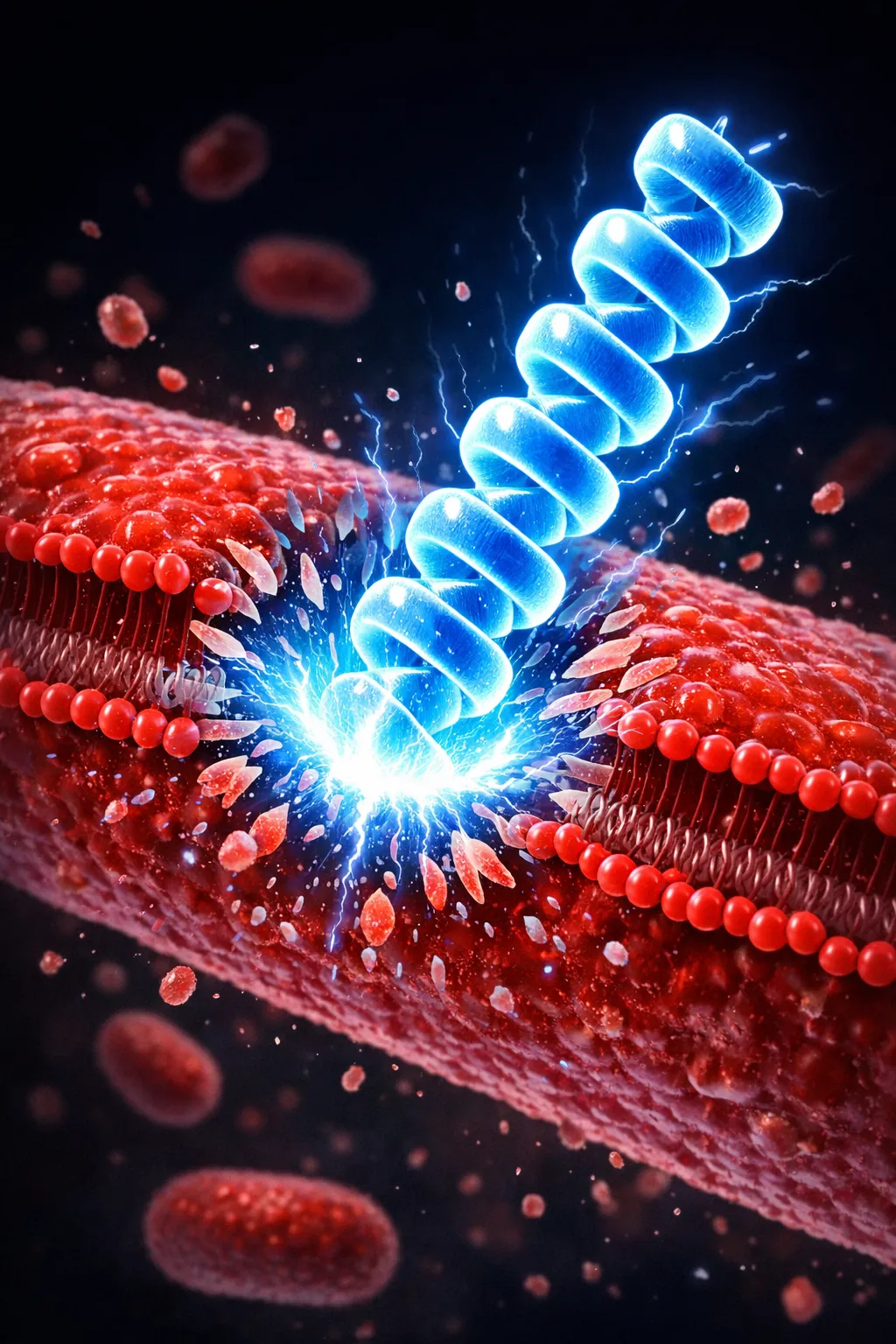
Membrane Disruption: LL-37 has a net positive charge that attracts it to negatively charged bacterial membranes. Once attached, it inserts into the membrane and creates pores, causing bacterial contents to leak out. This physical destruction is difficult for bacteria to evolve resistance against.
Biofilm Penetration: Bacteria form protective biofilms on surfaces (wounds, implants, teeth) that antibiotics struggle to penetrate. LL-37 disrupts these biofilms at concentrations lower than those needed to kill free-floating bacteria. Research shows it can eradicate preformed biofilms that protect bacteria from both antibiotics and immune cells.
Wound Healing Acceleration: LL-37 promotes re-epithelialization by stimulating keratinocyte migration via EGFR transactivation. Studies show it protects skin cells from apoptosis and increases granulation tissue formation. Chronic ulcers notably lack LL-37 in their wound edges, contributing to their failure to heal.
Immune Coordination: Beyond direct killing, LL-37 recruits immune cells to infection sites, promotes antigen presentation, enhances dendritic cell maturation, and stimulates T-cell responses. It bridges innate and adaptive immunity.
Think of LL-37 as a special forces operator rather than a conventional soldier. It doesn't just shoot the enemy. It breaches fortifications (biofilms), calls in reinforcements (immune cells), and helps rebuild infrastructure (wound healing) after the battle.
The Science
LL-37 is derived from the C-terminal end of human cationic antimicrobial protein (hCAP-18), an 18 kDa precursor stored in neutrophil granules. When immune activation occurs, the enzyme proteinase 3 cleaves hCAP-18 to release the active LL-37 peptide.
Molecular Structure: The name "LL-37" comes from the two leucine residues at the N-terminus and the total of 37 amino acids. The sequence is LLGDFFRKSKEKIGKEFKRIVQRIKDFLRNLVPRTES. It folds into an amphipathic alpha-helix with one water-attracting side and one fat-attracting side, allowing it to insert into bacterial membranes.
Broad Spectrum Activity: A 2025 study in the International Journal of Molecular Sciences confirmed LL-37 has potent antimicrobial, antiviral, antifungal, antiparasitic, and antitumor properties. Modified LL-37 analogs showed up to 35-fold enhanced antimicrobial potency against multiple pathogens including MRSA, Pseudomonas aeruginosa, and Klebsiella pneumoniae.
Wound Healing Evidence: Research published in the Journal of Investigative Dermatology demonstrated that hCAP-18/LL-37 is strongly expressed in healing skin epithelium, with levels peaking 48 hours post-injury and declining upon wound closure. Critically, chronic ulcers show low LL-37 levels with absent immunoreactivity in ulcer edge epithelium. Antibodies blocking LL-37 inhibited re-epithelialization in a dose-dependent manner.
Biofilm Destruction: Frontiers in Immunology research showed LL-37 has both antimicrobial and anti-biofilm properties, making it potentially effective for polymicrobially infected wounds. The combination of anti-biofilm effect and wound-healing properties addresses both the infection and tissue damage simultaneously.
Vitamin D Connection: LL-37 expression is regulated by vitamin D. Adequate vitamin D status (50-80 ng/mL) upregulates endogenous LL-37 production. This explains part of why vitamin D deficiency correlates with increased infection susceptibility.
The Protocol
Subcutaneous Administration (Systemic)
PROTOCOL SUMMARY: For immune support and systemic infections, the typical protocol is 100 to 200mcg administered subcutaneously once daily. Injection sites include abdominal fat or deltoid area. For acute infections, run 5 to 7 days. For chronic immune support, use cycling protocols of 5 days on, 2 days off, for 2 to 4 weeks during high-risk periods.
For Acute Infections:
Dose: 100-200mcg per injection
Frequency: Once daily
Duration: 5-7 days
Can combine with appropriate antibiotics when indicated
For Immune Optimization:
Dose: 100mcg per injection
Frequency: Once daily, 5 days on / 2 days off
Duration: 2-4 weeks during high-risk periods (travel, flu season, stress)
For Chronic Wound Support:
Dose: 100-200mcg subcutaneous near wound site
Frequency: Once daily
Duration: Until wound closure plus 1 additional week
Can combine with topical application
Topical Administration (Wounds)
For direct wound application, LL-37 can be applied topically to chronic or infected wounds:
Concentration: 1-5mcg/mL in appropriate wound care vehicle
Application: Once or twice daily after wound cleaning
Duration: Until wound closure
Reconstitution
Add 1ml bacteriostatic water to a 5mg vial for 5mg/ml concentration. Each 0.02ml (20 units on insulin syringe) delivers 100mcg. Store refrigerated and use within 14 days.
Optimizing Endogenous Production
Before considering exogenous LL-37, optimize natural production:
Vitamin D: Target 50-80 ng/mL (5,000-10,000 IU daily for most people)
Adequate protein intake (LL-37 requires amino acid substrates)
Zinc sufficiency (immune function cofactor)
Stress management (chronic stress suppresses LL-37 expression)
Quality sleep (immune system repair occurs during deep sleep)
What to Expect
Immediate (Hours): Antimicrobial effects begin upon contact with pathogens. If using for active infection, you may notice symptom improvement within 24-48 hours, though this varies by infection type and severity.
Week 1: For wound healing applications, granulation tissue formation accelerates. Wound edges show increased epithelial migration. Infection signs (redness, discharge) diminish if present.
Week 2: Wound closure accelerates measurably compared to baseline healing rate. Systemic immune markers may show improvement on bloodwork. Infection recurrence patterns begin shifting.
Week 3-4: For those using LL-37 for immune optimization, overall resilience improves. Recovery from minor illnesses shortens. For chronic wounds, significant closure progress should be evident.
Important Reality Check: LL-37 is not a replacement for antibiotics in serious bacterial infections. Pneumonia, sepsis, meningitis, and other severe infections require conventional medical treatment. LL-37 may serve as adjunct therapy or first-line for minor infections, but serious infections demand serious medicine.
Practitioner Insight
Clinical experience shows that LL-37 works best when the underlying vitamin D deficiency is addressed first. Many people running LL-37 protocols are simultaneously deficient in the very nutrient that regulates its endogenous production. Fix that before adding exogenous peptide.
For chronic wounds specifically, practitioners note that LL-37 addresses two problems simultaneously: the persistent biofilm that protects bacteria from antibiotics and the deficient healing signals in the wound edge. This dual action explains why LL-37 succeeds where antibiotics alone fail in biofilm-associated wound infections.
The cost consideration matters. LL-37 is a 37-amino acid peptide, making it more expensive to synthesize than shorter peptides. A typical vial runs $40-80 for 5mg. For wound healing specifically, combining subcutaneous LL-37 with topical application produces faster results than either alone.
Practitioners also emphasize the difference between LL-37 and KPV in immune applications. Thymosin Alpha-1 optimizes adaptive immunity (T-cells). KPV suppresses excessive inflammation. LL-37 provides first-line innate defense and wound healing. They serve different purposes and can be combined for comprehensive immune support.
CLINICAL TAKEAWAY: LL-37 represents the body's own antimicrobial defense system. Supplementing it makes most sense when endogenous production is compromised (aging, vitamin D deficiency, chronic wounds) or when facing biofilm-associated infections that resist conventional antibiotics.
Common Mistakes
Ignoring vitamin D status: If you're vitamin D deficient, your body already struggles to produce adequate LL-37. Fix the deficiency first. Exogenous LL-37 without vitamin D optimization is like adding fuel to an engine that's missing spark plugs.
Using for rosacea: LL-37 levels are actually elevated in rosacea lesions and may contribute to the inflammatory process. Supplementing LL-37 can worsen rosacea symptoms. This is a case where more is not better.
Expecting antibiotic-speed results: LL-37 works through multiple mechanisms including immune modulation and wound healing promotion. It's not a magic bullet that eliminates infections overnight. Give it appropriate time to work.
Stacking Strategies
Comprehensive Immune Stack
For robust immune defense:
LL-37: 100mcg daily (innate defense, antimicrobial)
Thymosin Alpha-1: 1.6mg twice weekly (adaptive immunity, T-cells)
KPV: 200-500mcg daily (inflammation control)
This combination addresses innate immunity, adaptive immunity, and inflammatory regulation.
Wound Healing Stack
For chronic or non-healing wounds:
LL-37: 100-200mcg daily subcutaneous near wound (antimicrobial, healing promotion)
BPC-157: 250-500mcg daily (tissue repair coordination)
TB-500: 2-5mg twice weekly (cellular repair machinery)
LL-37 handles infection and epithelial migration while BPC-157 and TB-500 provide repair signaling and cellular resources.
Biofilm Disruption Stack
For stubborn infections with biofilm component:
LL-37: 200mcg daily (biofilm disruption, direct antimicrobial)
NAC: 600-1200mg twice daily oral (mucolytic, biofilm disruption)
Appropriate antibiotic if prescribed (now can penetrate disrupted biofilm)
Seasonal Defense Stack
For high-risk periods (flu season, travel):
LL-37: 100mcg daily, 5 days on / 2 days off
Vitamin D: 5,000-10,000 IU daily (LL-37 expression support)
Zinc: 30-50mg daily (immune function)
Safety and Side Effects
LL-37 is an endogenous human peptide with established safety when used appropriately.
Common (mild):
Injection site redness (transient)
Mild warmth at injection site
Uncommon:
Local inflammatory response (especially in sensitive individuals)
Temporary increase in symptoms if treating rosacea (contraindicated)
Contraindications:
Active rosacea (LL-37 is elevated in rosacea and may worsen symptoms)
Active cancer (LL-37 has complex pro- and anti-cancer effects depending on cancer type)
Pregnancy and breastfeeding (insufficient safety data)
Drug Interactions:
Antibiotics: Generally synergistic, LL-37 disrupts biofilms allowing better antibiotic penetration
Immunosuppressants: May partially counteract LL-37's immune-activating effects
Other antimicrobial peptides: Additive effects expected
Cytotoxicity Note: At high concentrations, LL-37 can be cytotoxic to human cells, particularly erythrocytes and keratinocytes. Stay within established dosing ranges. More is not better with this peptide.
Regulatory Status
LL-37 is not FDA-approved for any indication. It is available through research chemical suppliers. The peptide has been extensively studied with strong mechanistic understanding, but large-scale human clinical trials for specific therapeutic indications are limited.
Research-grade LL-37 is legal to purchase for research purposes. Quality varies between suppliers. Third-party testing is particularly important for longer peptides like LL-37 where synthesis complexity increases impurity risk.
Trusted Sources
Quality matters significantly for a 37-amino acid peptide. Synthesis complexity means impurity risk is higher than shorter peptides.
Modern Aminos carries LL-37 5mg with third-party testing. Code "zach10" for 10% off.
LimitlessBioChem provides European researchers with LL-37 5mg. Code "BHACK" for 10% off.
BioSLab serves Canadian researchers with LL-37 5mg. Code "BHACK" for 10% off.
BioLongevity Labs carries LL-37 5mg. Code "BHACK" for 15% off.
Limitless Life Nootropics stocks LL-37 for US researchers. Code "BHACK" for 15% off.
The Bigger Picture
Antibiotic resistance is one of the most serious threats to modern medicine. The WHO estimates resistant infections could cause 10 million deaths annually by 2050. We are running out of effective antibiotics, and the development pipeline is nearly empty.
LL-37 represents a fundamentally different approach. Rather than targeting specific bacterial proteins that can mutate to confer resistance, it attacks bacterial membranes through physical disruption. Bacteria would need to completely restructure their cell walls to resist this mechanism, which is evolutionarily much harder than point mutations in target proteins.
Beyond antimicrobial activity, LL-37's wound healing and immune coordination functions address the reality that infection is only part of the problem. Chronic wounds fail to heal not just because of bacteria, but because of deficient healing signals and persistent inflammation. LL-37 addresses all three.
The vitamin D connection is clinically important. Widespread vitamin D deficiency in modern populations means widespread suboptimal LL-37 production. Before reaching for exogenous peptide, optimize the endogenous system. Get your vitamin D levels tested and corrected.
For those with specific indications (chronic wounds, recurrent infections, biofilm-associated conditions), exogenous LL-37 provides targeted support for a system that may be overwhelmed or deficient. It's not about replacing your immune system. It's about reinforcing the troops that are already there.
The human body evolved with one cathelicidin for good reason. LL-37 is versatile enough to handle multiple threats through multiple mechanisms. Supporting its function, whether through vitamin D optimization or targeted supplementation, represents a logical approach to immune resilience.
Frequently Asked Questions
Can LL-37 replace antibiotics?
No. For serious bacterial infections (pneumonia, sepsis, meningitis), antibiotics are life-saving and irreplaceable. LL-37 may serve as adjunct therapy or first-line for minor infections, but serious infections require serious medicine.
Why is LL-37 more expensive than other peptides?
Complex 37-amino acid synthesis. Longer peptides cost more to manufacture and have higher impurity risk. Typical pricing is $40-80 per 5mg vial.
Can I increase LL-37 naturally?
Yes. Optimize vitamin D (target 50-80 ng/mL), ensure adequate protein and zinc intake, manage stress, and prioritize sleep. These strategies upregulate endogenous LL-37 production before you need exogenous supplementation.
How does LL-37 compare to KPV?
Different mechanisms and purposes. KPV suppresses inflammation by inhibiting NF-kB and MAPK pathways. LL-37 provides direct antimicrobial action and wound healing promotion. KPV is for calming excessive inflammation. LL-37 is for fighting infection and promoting tissue repair. They can be combined.
Is LL-37 safe for long-term use?
Limited long-term human data exists. Most protocols are short-term (1-4 weeks) for specific indications. Extended use should be discussed with a knowledgeable practitioner. Optimizing endogenous production through vitamin D is safer for long-term immune support.
Can LL-37 help with acne?
Mixed results. LL-37's antimicrobial effects could theoretically help with P. acnes bacteria, but its role in skin inflammation is complex. Some may see improvement, others worsening. Not a first-line acne treatment.
Disclaimer: This content is for educational and research purposes only. LL-37 is not FDA-approved for any indication. Nothing in this guide constitutes medical advice. Consult a qualified healthcare professional before beginning any research protocol.
