LL-37: The Human Antimicrobial Defense Peptide
Humans evolved with a single cathelicidin antimicrobial peptide. Just one. While pigs produce eleven different cathelicidins and mice have over thirty, we rely entirely on a single 37 amino acid molecule called LL-37 as our first line of defense against microbial invasion.
This evolutionary simplification was not a weakness but a refinement. LL-37 became extraordinarily versatile, capable of killing bacteria, fungi, and viruses through multiple mechanisms while simultaneously coordinating immune responses, breaking up bacterial biofilms, and accelerating wound healing.
Unlike conventional antibiotics that target specific bacterial proteins and inevitably breed resistance, LL-37 attacks microbial membranes directly through physical disruption. Pathogens cannot easily evolve resistance to having their cell walls ripped apart. This mechanism explains growing research interest in LL-37 as antibiotic resistance threatens to render conventional treatments ineffective.
A comprehensive 2025 review in the International Journal of Molecular Sciences confirmed LL-37 demonstrates potent antimicrobial, antiviral, antifungal, antiparasitic, and antitumor properties. Research documented activity against over 38 bacterial species, 16 fungi, and 16 viruses through mechanisms including membrane rupture, biofilm suppression, and disruption of viral entry and replication.
The clinical relevance extends beyond fighting active infections. LL-37 levels decline with age and are deficient in chronic wounds, recurring infections, and certain inflammatory conditions. Understanding how to support or supplement LL-37 function represents significant opportunity in immune optimization and tissue regeneration.
KEY FACTS
Definition: LL-37 is a 37 amino acid cationic antimicrobial peptide, the only human cathelicidin, that kills pathogens by disrupting their membranes while promoting wound healing and modulating immune responses
Primary Use: Antimicrobial defense against bacteria, fungi, and viruses; chronic wound healing; biofilm disruption; immune system optimization during high-risk periods
Typical Timeline: Antimicrobial effects are immediate upon contact; wound healing acceleration becomes apparent within 1 to 2 weeks; immune optimization protocols typically run 2 to 4 weeks
Best For: Individuals with recurrent infections, chronic non-healing wounds, biofilm-associated conditions, or those seeking enhanced immune defense during travel, illness exposure, or high-stress periods
Not For: Those with active rosacea (LL-37 may worsen), active cancer (complex and context-dependent role), or anyone expecting antibiotic-like rapid symptom resolution from a single dose
What Is LL-37?
LL-37 derives its name from its structure: 37 amino acids beginning with two leucine residues. The full sequence is LLGDFFRKSKEKIGKEFKRIVQRIKDFLRNLVPRTES.
The peptide exists in the body as part of a larger precursor protein called hCAP-18 (human cationic antimicrobial protein, 18 kDa). When immune or epithelial cells detect infection or tissue damage, they cleave hCAP-18 to release active LL-37. This processing occurs in neutrophils, macrophages, epithelial cells of the skin, lungs, and gastrointestinal tract.
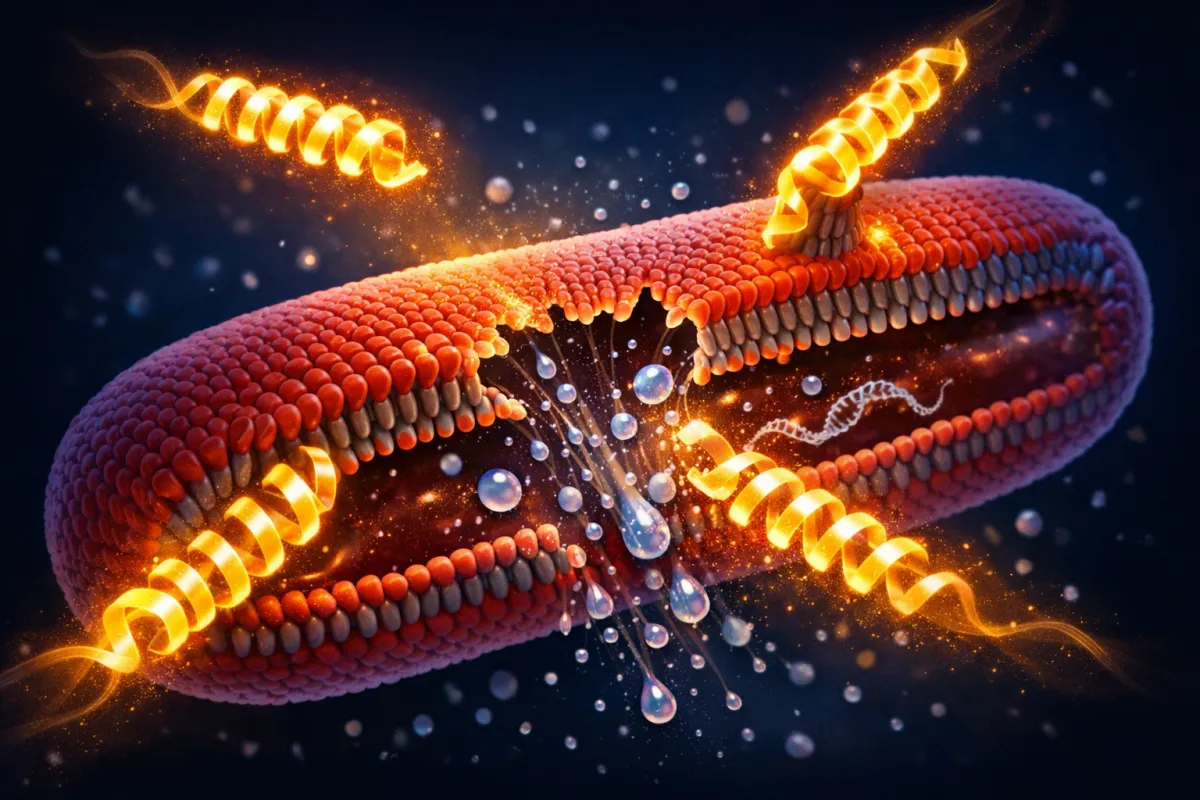
LL-37's structure creates an amphipathic alpha-helix, meaning one side attracts water while the other attracts fats. This amphipathic nature allows the peptide to insert into bacterial membranes, which are composed of lipid bilayers. The positive charge of LL-37 (cationic) attracts it preferentially to bacterial membranes, which carry negative charges, rather than human cell membranes, which are more neutrally charged.
Vitamin D directly regulates LL-37 expression. The cathelicidin gene contains a vitamin D response element, meaning adequate vitamin D status (generally 50 to 80 ng/mL) upregulates endogenous LL-37 production. This connection explains part of why vitamin D deficiency correlates with increased infection susceptibility across multiple studies.
The Science
LL-37 operates through multiple mechanisms that distinguish it fundamentally from conventional antibiotics.
Membrane Disruption
The primary antimicrobial mechanism involves direct physical attack on microbial membranes. LL-37's positive charge attracts it to negatively charged bacterial surfaces. Upon contact, the amphipathic helix inserts into the membrane, creating pores and destabilizing membrane integrity. This leads to leakage of cellular contents and rapid cell death.
Research demonstrates LL-37 can kill bacteria within minutes of contact through this mechanism. Importantly, pathogens cannot easily develop resistance to membrane disruption the way they develop resistance to antibiotics targeting specific proteins or enzymes.
Biofilm Destruction
Biofilms represent one of medicine's most challenging infection problems. These structured communities of bacteria encased in protective extracellular matrix resist both antibiotics and immune responses. Biofilms underlie chronic wounds, implant infections, chronic sinusitis, and many persistent infections.
LL-37 demonstrates both antimicrobial and anti-biofilm properties. Research in Frontiers in Immunology showed the peptide can eradicate preformed biofilms in vitro. The combination of anti-biofilm effect and wound healing properties makes LL-37 potentially effective for polymicrobially infected wounds when topically applied.
Studies on chronic wound infections found LL-37 effective against biofilm-positive MRSA and biofilm-positive MSSA strains. The peptide affects bacterial cell signaling systems that maintain biofilm structure, not just killing individual bacteria.
Immune Modulation
Beyond direct antimicrobial action, LL-37 coordinates immune responses. The peptide acts as a chemoattractant, recruiting neutrophils, monocytes, and T cells to infection sites. It activates dendritic cells, bridging innate and adaptive immunity.
LL-37 modulates inflammatory cytokine production, potentially reducing harmful inflammation while maintaining antimicrobial defenses. This immunomodulatory balance distinguishes LL-37 from simple antimicrobial agents.
Wound Healing Promotion
Research published in the Journal of Investigative Dermatology demonstrated that LL-37 is strongly expressed in healing skin epithelium, with levels peaking 48 hours post-injury and declining upon wound closure. Critically, chronic ulcers show low LL-37 levels with absent immunoreactivity in ulcer edge epithelium.
When researchers blocked LL-37 with antibodies, re-epithelialization was inhibited in a dose-dependent manner. This establishes LL-37 as not merely present during wound healing but functionally necessary for it.
The peptide promotes angiogenesis (new blood vessel formation), keratinocyte migration, and epithelial cell proliferation. These effects work alongside antimicrobial activity to address both infection and tissue damage simultaneously.
Research Evidence
Broad Spectrum Antimicrobial Activity
A comprehensive November 2025 review in ScienceDirect compiled data showing LL-37 effectively combats over 38 bacterial species, 16 fungi, and 16 viruses through various mechanisms. These include membrane rupture, intracellular targeting, biofilm suppression, cell wall destruction, oxidative stress induction, and disruption of viral envelopes and entry mechanisms.
The August 2025 International Journal of Molecular Sciences review on LL-37 modifications noted that modified LL-37 analogs showed up to 35-fold enhanced antimicrobial potency against multiple pathogens including MRSA, Pseudomonas aeruginosa, and Klebsiella pneumoniae.
Chronic Wound Applications
Research on diabetic foot ulcers, which affect 15 to 25 percent of diabetics during their lifetime, demonstrates particular relevance for LL-37. These wounds are typically infected by multiple biofilm-forming bacterial genera. Studies show that elimination of biofilm has proven highly successful in resolving such wounds.
Frontiers in Immunology research concluded that LL-37's combination of anti-biofilm effect and wound-healing properties may make it highly effective in resolving polymicrobially infected wounds when topically applied.
ESKAPE Pathogen Efficacy
The ESKAPE pathogens (Enterococcus faecium, Staphylococcus aureus, Klebsiella pneumoniae, Acinetobacter baumannii, Pseudomonas aeruginosa, and Enterobacter species) represent the most problematic antibiotic-resistant organisms in clinical settings.
A 2019 study published in Antimicrobial Agents and Chemotherapy designed modified LL-37 peptides that displayed differential potency against various ESKAPE pathogens in vitro and substantially reduced hemolysis. In vivo testing revealed that the modified peptide 17tF-W eliminated MRSA USA300 burden in both mouse-embedded catheters and surrounding tissues.
Antiviral Activity
LL-37 demonstrates antiviral properties through multiple mechanisms including disruption of viral envelopes, interference with viral entry, and inhibition of viral replication. While not a replacement for vaccines or antivirals, LL-37 may support general immune resilience against viral challenges.
Practical Protocols
Subcutaneous Administration (Systemic)
For immune support and systemic infection defense, subcutaneous injection provides systemic distribution.
Standard protocol: 100 to 200 mcg administered subcutaneously once daily. Injection sites include abdominal fat or deltoid area.
For acute infections: Run 5 to 7 days, potentially extending based on response. Can be combined with appropriate antibiotics when medically indicated.
For immune optimization: Use cycling protocols of 5 days on, 2 days off, for 2 to 4 weeks during high-risk periods such as travel, flu season, or high-stress periods.
Topical Administration (Wounds)
For direct wound application, LL-37 can be applied topically to chronic or infected wounds.
Concentration: 1 to 5 mcg/mL in appropriate wound care vehicle.
Application: Once or twice daily after wound cleaning.
Duration: Until wound closure plus one additional week.
Can combine with subcutaneous administration for comprehensive approach.
Reconstitution
Add 1 mL bacteriostatic water to a 5 mg vial for 5 mg/mL concentration. Each 0.02 mL (20 units on insulin syringe) delivers 100 mcg.
Store reconstituted solution refrigerated and use within 30 days.
Supporting Endogenous Production
Before or alongside exogenous LL-37, optimize factors that support natural production:
Vitamin D: Target 50 to 80 ng/mL through supplementation (typically 5,000 to 10,000 IU daily with monitoring).
Adequate protein intake for amino acid availability.
Zinc sufficiency (15 to 30 mg daily if deficient).
Sleep optimization and stress management, as chronic stress suppresses immune function including antimicrobial peptide production.
PROTOCOL SUMMARY (TEXT): LL-37 is typically administered subcutaneously at 100 to 200 mcg once daily. For acute infections, run 5 to 7 days. For immune optimization, cycle 5 days on, 2 days off, for 2 to 4 weeks during high-risk periods. Topical application for wounds uses 1 to 5 mcg/mL concentration applied once or twice daily. Supporting endogenous production through vitamin D optimization (50 to 80 ng/mL) enhances overall antimicrobial peptide status.
What to Expect
Immediate Effects
Antimicrobial effects occur upon contact with pathogens. You will not feel this directly. What you may notice is faster resolution of minor infections, reduced duration of illness, or improved wound healing trajectory.
Week 1 to 2
For wound healing applications, visible improvement in wound bed appearance and progression toward closure. Reduction in wound drainage or signs of infection.
For immune support during illness, potentially faster symptom resolution compared to previous experiences.
Week 2 to 4
Completion of typical immune optimization protocols. Assessment point for determining whether to continue, cycle off, or modify approach.
For chronic wound applications, continued progression toward closure. Some chronic wounds may require longer protocols.
Individual Variation
Response varies based on baseline immune status, vitamin D levels, severity of infection or wound, and presence of biofilm. Those with significant biofilm-associated conditions may require longer protocols. Those with adequate baseline immune function may notice more subtle benefits.
Advanced Stacking
Comprehensive Immune Stack
LL-37 100 to 200 mcg daily combined with Thymosin Alpha-1 1.6 mg twice weekly. LL-37 provides direct antimicrobial activity while Thymosin Alpha-1 modulates T-cell function and overall immune coordination. Duration 4 weeks during high-risk periods.
Wound Healing Stack
LL-37 100 to 200 mcg subcutaneous daily combined with BPC-157 250 to 500 mcg daily and TB-500 2 mg twice weekly. LL-37 addresses infection and promotes epithelialization. BPC-157 accelerates tissue repair through multiple mechanisms. TB-500 provides systemic healing support. Duration until wound closure plus one week.
Gut Restoration Stack
LL-37 100 mcg daily combined with BPC-157 500 mcg daily and KPV 200 to 500 mcg daily. LL-37 addresses potential gut infections and supports epithelial integrity. BPC-157 promotes gut healing. KPV reduces intestinal inflammation. Duration 4 to 8 weeks. Particularly relevant for SIBO or suspected gut biofilm issues.
Biofilm-Focused Stack
LL-37 200 mcg twice daily (higher dose for biofilm penetration) combined with NAC 600 mg twice daily (biofilm matrix disruption) and appropriate antimicrobials as medically indicated. Duration 2 to 4 weeks depending on biofilm severity.
Travel and Exposure Stack
LL-37 100 mcg daily combined with vitamin D 10,000 IU daily (short-term loading) and zinc 30 mg daily. Begin 3 days before travel, continue throughout exposure period, and 3 days after return. Supports immune readiness during high-exposure situations.
Safety and Side Effects
Generally Well-Tolerated
LL-37 is a naturally occurring human peptide, which provides inherent compatibility advantages over foreign compounds. Research and clinical experience suggest good tolerability at standard doses.
Potential Effects
Injection site reactions: Mild redness, swelling, or irritation at subcutaneous injection sites. Typically transient.
Transient headache: Occasionally reported, usually with initial doses.
Local warmth or flushing: Some users report mild warming sensation.
Rosacea Consideration
LL-37 plays a complex role in rosacea pathophysiology. Elevated LL-37 levels and altered LL-37 processing are associated with rosacea inflammation. Those with active rosacea should exercise caution, as exogenous LL-37 could potentially worsen symptoms. This is not a contraindication for systemic immune support but warrants awareness.
Cancer Considerations
LL-37's role in cancer is complex and context-dependent. Research shows both tumor-suppressing and tumor-promoting effects depending on cancer type and microenvironment. Those with active cancer should discuss any peptide use with their oncology team.
Drug Interactions
No significant drug interactions are well-documented for LL-37. However, theoretical interactions with immunosuppressive medications exist, as LL-37 activates immune function that immunosuppressants aim to reduce.
Comparing LL-37 to Alternatives
LL-37 vs KPV
Different mechanisms and purposes. KPV suppresses inflammation by inhibiting NF-kB and MAPK pathways. LL-37 provides direct antimicrobial action and wound healing promotion. KPV is for calming excessive inflammation. LL-37 is for fighting infection and promoting tissue repair. They can be effectively combined.
LL-37 vs Thymosin Alpha-1
Complementary immune peptides. Thymosin Alpha-1 modulates T-cell function and adaptive immunity. LL-37 provides direct antimicrobial activity and innate immune support. Thymosin Alpha-1 is better for chronic immune deficiency and viral challenges. LL-37 is better for acute infections and biofilm-associated conditions. Combined, they address both innate and adaptive immune arms.
LL-37 vs Conventional Antibiotics
Different mechanisms entirely. Antibiotics target specific bacterial proteins or processes, breeding resistance over time. LL-37 physically disrupts membranes, making resistance development difficult. Antibiotics are appropriate for diagnosed bacterial infections requiring rapid intervention. LL-37 is appropriate for immune support, chronic wounds, and biofilm disruption as part of comprehensive approaches.
LL-37 vs Silver-Based Antimicrobials
LL-37 is a naturally occurring human peptide with established research and safety data. Colloidal silver carries serious toxicity risks including permanent skin discoloration (argyria) and lacks comparable evidence base. LL-37 is the clearly superior choice for antimicrobial peptide applications.
Frequently Asked Questions
Can I increase LL-37 naturally without injections?
Yes. Optimize vitamin D (target 50 to 80 ng/mL through testing and supplementation), ensure adequate protein and zinc intake, manage stress, and prioritize sleep. These strategies upregulate endogenous LL-37 production and should be implemented regardless of whether exogenous LL-37 is used.
How does LL-37 compare to antibiotics for infections?
LL-37 is not a replacement for appropriate antibiotic therapy in diagnosed bacterial infections. It works through different mechanisms and is best viewed as immune support and adjunctive therapy rather than primary treatment. For serious infections, follow medical guidance on antibiotic use while considering LL-37 as supportive.
Is LL-37 effective against viral infections?
LL-37 demonstrates antiviral activity in laboratory studies through multiple mechanisms. However, no clinical trials demonstrate prevention of specific viral infections in humans. Consider it immune support during viral challenges rather than specific antiviral treatment.
How long should I use LL-37?
For acute infections: 5 to 7 days. For wound healing: Until closure plus one week. For immune optimization: Cycling protocols of 2 to 4 weeks during high-risk periods. Extended use should be discussed with a knowledgeable practitioner.
Can LL-37 help with chronic sinusitis?
Chronic sinusitis often involves biofilm-forming bacteria that resist conventional treatment. LL-37's anti-biofilm properties make it theoretically relevant for this application. Some practitioners use intranasal delivery for direct sinus application, though protocols are not well-standardized.
Trusted Sources
Quality matters with research peptides. Third-party testing and proper handling make the difference between effective research and wasted effort.
Vetted suppliers carrying LL-37:
Modern Aminos LL-37 5mg | Code: zach10 (10% off)
LimitlessBioChem EU LL-37 5mg | Code: BHACK (10% off)
BioSLab Canada LL-37 5mg | Code: BHACK (10% off)
BioSLab Canada LL-37 + Thymosin Alpha-1 + VIP Bundle | Code: BHACK (10% off)
Limitless Life Nootropics LL-37 | Code: BHACK (15% off)
BioLongevity Labs LL-37 5mg | Code: BHACK (15% off)
For complete vendor comparison and additional options: biohackblueprint.io
The Bigger Picture
Antibiotic resistance represents one of the most significant threats to modern medicine. The WHO projects antibiotic-resistant infections may cause up to 10 million deaths annually by 2050. Antimicrobial peptides like LL-37 represent a fundamentally different approach to infection control, one that pathogens cannot easily circumvent through resistance development.
Beyond the resistance crisis, LL-37 addresses gaps in conventional medicine's approach to chronic wounds and biofilm-associated infections. Standard antibiotics often fail against biofilms because they cannot penetrate the protective matrix. LL-37's combination of biofilm disruption and wound healing promotion addresses both problems simultaneously.
For individual users, LL-37 offers immune support that works with the body's natural defense systems rather than replacing them. Optimizing vitamin D to support endogenous production, then supplementing with exogenous LL-37 during high-risk periods or for specific challenges, represents a physiologically grounded approach to immune optimization.
The research trajectory suggests LL-37 and its modified analogs will become increasingly important in clinical medicine. Modified versions with enhanced stability, reduced toxicity, and improved potency are in development. Delivery systems including hydrogels, nanofibers, and wound dressings incorporating LL-37 are being designed for clinical application.
Understanding LL-37 now positions you to benefit from both current applications and future developments in this rapidly advancing field.
Final Thoughts
LL-37 occupies a unique position in the peptide landscape. It is not about optimization or enhancement in the typical biohacking sense. It is about supporting your body's fundamental defense system against microbial threats.
Humans evolved with a single cathelicidin for good reason. LL-37 became extraordinarily versatile through evolutionary pressure, capable of addressing diverse threats through multiple mechanisms. Supporting this system through vitamin D optimization and strategic supplementation aligns with rather than against your biology.
For those dealing with chronic wounds, recurring infections, or biofilm-associated conditions, LL-37 offers mechanisms that conventional approaches often lack. For those seeking immune resilience during high-risk periods, it provides support grounded in how human immunity actually functions.
The honest assessment: LL-37 is not a magic bullet. Serious infections require appropriate medical care. Chronic conditions require comprehensive approaches. But as part of a well-designed immune support strategy, LL-37 addresses real gaps in what conventional medicine offers.
The future of antimicrobial therapy may well include peptides like LL-37 as standard components. Understanding and utilizing this peptide now means staying ahead of that curve.
What has your experience been with LL-37 for immune support or wound healing? Have you noticed differences in infection frequency or duration? Share your protocols in the comments.
Disclaimer: This content is for educational and research purposes only. Peptides are not approved for human use. Nothing here is medical advice. Consult a qualified professional for personalized guidance.
