Melanotan II: Complete Guide to the Controversial Tanning Peptide
Category: Longevity Peptides Read Time: 14 minutes
A researcher at the University of Arizona injected himself with twice the intended dose of an experimental tanning compound. He got an eight-hour erection, along with nausea and vomiting. That accidental overdose in the 1980s launched Melanotan II from obscure lab compound to underground phenomenon.
Melanotan II (MT-II) is a synthetic analog of alpha-melanocyte-stimulating hormone that does two things no other single compound does: it triggers melanin production for a sunless tan AND crosses the blood-brain barrier to stimulate sexual arousal. The tanning happens through MC1 receptor activation on skin cells. The erections happen through MC4 receptor activation in the hypothalamus.
This dual action made MT-II wildly popular in fitness communities, bodybuilding circles, and among anyone seeking a deep tan without extended UV exposure. It also made it controversial. MT-II has never been approved by the FDA for any indication. It exists in a regulatory gray zone, sold as a "research chemical" with serious safety concerns that include potential links to melanoma, documented cases of rhabdomyolysis, and cardiovascular complications.
This guide covers everything: the mechanism, the protocols, the real risks, and the honest assessment of whether MT-II belongs in your research toolkit.
KEY FACTS
Definition: Melanotan II is a synthetic cyclic heptapeptide analog of alpha-melanocyte-stimulating hormone that non-selectively activates melanocortin receptors (MC1R, MC3R, MC4R, MC5R) to induce skin tanning, suppress appetite, and enhance sexual function.
Primary Use: Cosmetic skin tanning without extensive UV exposure, with secondary effects on libido and appetite suppression.
Typical Timeline: Visible skin darkening begins within 3 to 7 days. Peak tan achieved by 2 to 4 weeks. Libido effects occur within hours of each dose.
Best For: Individuals with fair skin seeking tanning with minimal UV exposure, those preparing for competitions or events requiring tanned appearance, researchers studying melanocortin receptor systems.
Not For: Anyone with history of melanoma or dysplastic nevi, those with uncontrolled cardiovascular conditions, individuals unwilling to accept significant regulatory and safety uncertainties.
What It Actually Does
Melanotan II works through the melanocortin receptor system, binding to multiple receptor subtypes with different effects at each.
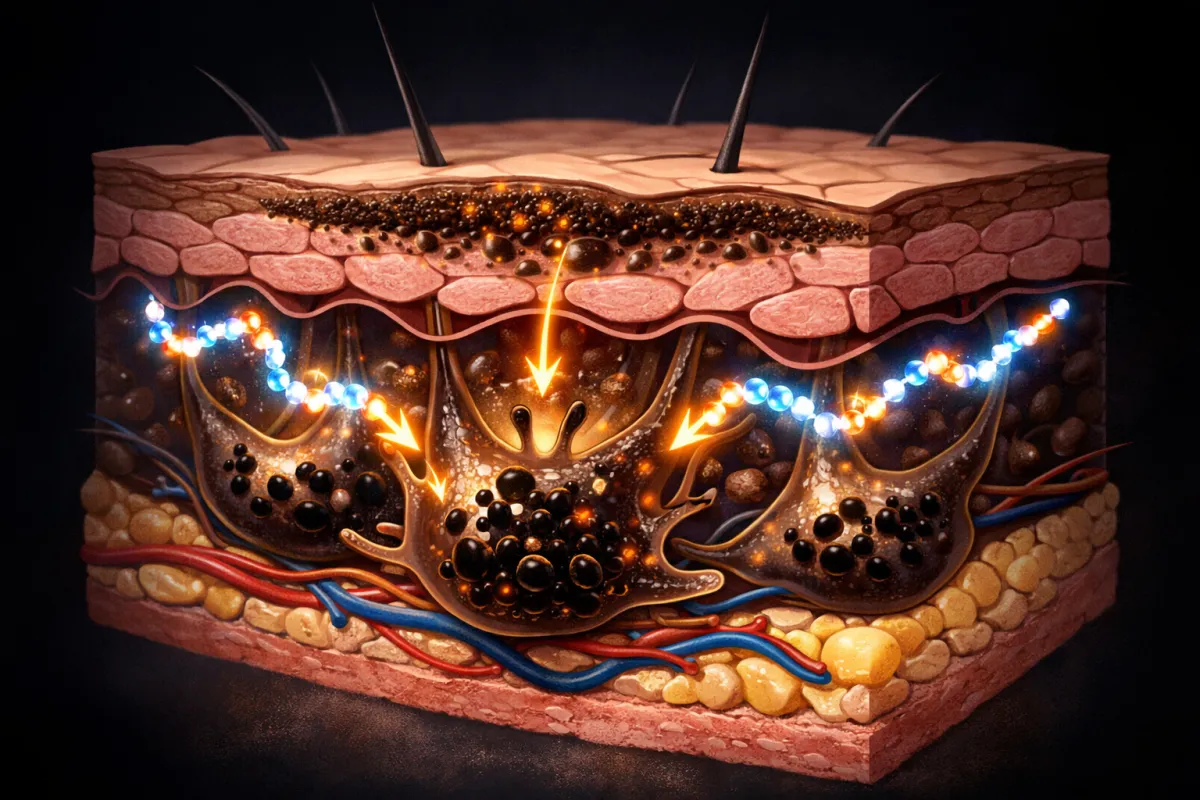
MC1R Activation (Tanning): When MT-II binds to melanocortin-1 receptors on melanocytes in the skin, it triggers a signaling cascade through cAMP that activates melanin synthesis. This produces eumelanin (brown/black pigment) that darkens skin independent of UV exposure. The effect is cumulative. Each dose adds more melanin. UV exposure accelerates and deepens the tan but isn't strictly required.
MC4R Activation (Sexual Function): MT-II crosses the blood-brain barrier and binds to MC4 receptors in the hypothalamus. This triggers dopamine release in brain regions governing sexual arousal, producing spontaneous erections in men and increased sexual desire in both sexes. This mechanism is identical to how PT-141 (Bremelanotide) works. In fact, PT-141 was developed specifically to isolate the sexual effects of MT-II while minimizing the tanning.
MC3R/MC4R Activation (Appetite Suppression): Melanocortin receptors in the hypothalamus also regulate feeding behavior. MT-II activation reduces appetite, which is why many users report decreased hunger during loading phases. This effect is not dramatic but is consistently reported.
Non-Selective Binding: Unlike PT-141 which was refined for selectivity, MT-II hits all melanocortin receptors. This produces the full spectrum of effects (tanning, libido, appetite changes) but also increases side effect potential.
Think of MT-II as the original multi-tool. PT-141 is the refined screwdriver extracted from it. Melanotan I (afamelanotide, FDA-approved for erythropoietic protoporphyria) is the selective tanning agent that doesn't cross the blood-brain barrier.
The Science
Melanotan II was developed at the University of Arizona in the 1980s as a potential photoprotective agent for people with extreme sun sensitivity. The goal was sunless tanning that could reduce skin cancer risk in vulnerable populations.
Molecular Structure: MT-II is a cyclic heptapeptide with the sequence Ac-Nle-cyclo[Asp-His-D-Phe-Arg-Trp-Lys]-NH2. The cyclic structure provides stability against enzymatic degradation. The D-phenylalanine residue improves receptor binding. The N-acetylnorleucine increases lipophilicity, enabling blood-brain barrier penetration.
Potency: MT-II is up to 1000 times more potent than endogenous alpha-MSH at stimulating melanogenesis.
Clinical Studies (Tanning): A pilot Phase I study (Dorr et al., 1996) demonstrated that subcutaneous MT-II given every other day for 2 weeks produced measurable skin darkening in subjects. Two of three subjects showed increased pigmentation in face, upper body, and buttocks one week after dosing ended.
Clinical Studies (Erectile Function): Wessells et al. (1998) administered MT-II to 20 men with erectile dysfunction. 17 out of 20 experienced penile erections. The erections occurred spontaneously, without sexual stimulation, typically 1-5 hours post-dose depending on dosage.
Melanoma Risk Assessment: A 2013 scientific review found no conclusive evidence that MT-II causes melanoma. A 2021 review concluded that increased melanoma risk in MT-II users can probably be explained by greater UV exposure (sunbed use) rather than the peptide itself. A 2020 in vivo study actually found MT-II suppressed melanoma progression. However, case reports exist associating MT-II use with melanoma development, creating ongoing uncertainty.
2025 Research Context: A January 2025 review in the Journal of the European Academy of Dermatology noted that while chronic MC1R activation through MT-II may theoretically provide photoprotection, safety has not been proven for this unlicensed drug. The authors emphasized thorough skin examinations may lead to earlier melanoma diagnosis in MT-II users.
The Protocol
CRITICAL WARNING: Melanotan II is not FDA-approved for any indication. It is sold as an unregulated research chemical with documented serious adverse events including rhabdomyolysis, renal infarction, and potential melanoma associations. The following protocols represent anecdotal community practices, not medical recommendations.
Standard Tanning Protocol
PROTOCOL SUMMARY (TEXT): The typical approach involves a loading phase of 0.25 to 0.5mg daily for 10 to 14 days, followed by a maintenance phase of 0.25 to 0.5mg once or twice weekly. Minimal UV exposure (10-15 minutes daily or 1-2 short sunbed sessions per week) accelerates tanning. Evening dosing is common to sleep through the nausea peak.
Loading Phase (10-14 days):
Dose: 0.25-0.5mg subcutaneously daily
Timing: Evening administration (to sleep through nausea)
UV exposure: Minimal (10-15 minutes daily or 1-2 short sunbed sessions weekly)
Location: Abdominal fat or thigh
Maintenance Phase:
Dose: 0.25-0.5mg once or twice weekly
Duration: Ongoing as long as tan desired
UV exposure: Optional minimal maintenance exposure
Expected Timeline:
Days 1-3: Minimal visible change, potential nausea and flushing
Days 3-7: Noticeable darkening of freckles and moles
Days 7-14: Progressive overall skin darkening
Week 3+: Peak tan achieved
Low-Dose Conservative Protocol
For those prioritizing safety over speed:
Loading: 0.1-0.25mg every other day for 3-4 weeks
Maintenance: 0.1-0.25mg once weekly
Significantly reduced side effects but slower tanning
Reconstitution: Add 2ml bacteriostatic water to a 10mg vial for 5mg/ml concentration. Each 0.1ml (10 units on insulin syringe) delivers 0.5mg. Store refrigerated and use within 21 days.
Critical Dose Warning: The case report of rhabdomyolysis and renal dysfunction involved a 6mg dose (12x the typical starting dose). Dose-dependent toxicity is real. Stay within established ranges.
What to Expect
Immediately (0-4 hours):
Facial flushing (very common)
Nausea (40%+ of users, usually mild)
Fatigue and yawning
Spontaneous erections in men (can last 1-5 hours)
Decreased appetite
Days 1-7:
Darkening of existing freckles and moles (often first sign)
Mild overall skin tone change beginning
Nausea typically decreases with repeated dosing
Sexual effects continue with each dose
Days 7-14:
Visible tan developing
Freckles and moles significantly darker
Side effects generally diminishing as body adjusts
Week 3+:
Peak tan achieved
Maintenance dosing sufficient to preserve color
Sexual effects persist with each dose
Side Effect Reality:
The most common side effects in order of frequency:
Nausea (40%+): Usually peaks 30-60 minutes post-dose, resolves within 2-4 hours
Facial flushing (30%+): Due to vasodilation
Fatigue/yawning (20%+): Central nervous system effect
Spontaneous erections (men, 20%+): Can be inconvenient
Darkened moles (common): Requires monitoring for changes
Serious Adverse Events (Documented):
Rhabdomyolysis with renal dysfunction (case report at 6mg dose)
Renal infarction (case report)
Melanoma (case reports, causation uncertain)
Sympathomimetic toxicity at high doses
Practitioner Insight
Clinical experience and community reports reveal several important patterns.
First, fair-skinned individuals (Fitzpatrick Type I-II) often see the most dramatic results because they start from a lower baseline. However, they also require more careful UV management since their underlying skin remains UV-sensitive despite the artificial tan.
Second, the mole darkening is real and requires attention. MT-II doesn't create new moles, but it dramatically darkens existing ones. This can mask early melanoma changes, which is why dermatological evaluation before starting MT-II and regular monitoring during use is important. Any mole that changes in shape, border irregularity, or color variation beyond simple darkening should be evaluated immediately.
Third, the nausea management matters. Taking MT-II with food reduces nausea but may slow absorption. Taking it at bedtime allows users to sleep through the peak nausea period. Starting with lower doses (0.1-0.25mg) and gradually increasing allows tolerance to develop.
Fourth, the tan persists longer than expected. Even after stopping MT-II, the accumulated melanin takes weeks to months to fade naturally through skin cell turnover. This is different from a UV tan which fades more quickly.
Fifth, regarding the PT-141 comparison: if sexual enhancement is the primary goal without interest in tanning, PT-141 is the more appropriate choice. It's FDA-approved (for women with HSDD), has a cleaner side effect profile, and doesn't produce the skin pigmentation effects.
CLINICAL TAKEAWAY: Melanotan II delivers legitimate tanning effects through a well-understood mechanism. The risk-benefit calculation depends heavily on individual factors including skin type, family melanoma history, willingness to undergo regular skin checks, and acceptance of regulatory uncertainty. It is not a casual decision.
Common Mistakes
Overdosing for faster results: The 6mg rhabdomyolysis case demonstrates clear dose-dependent toxicity. More MT-II does not equal faster tanning. It equals more severe side effects and genuine medical risk. Stick to established dose ranges.
Combining with excessive UV exposure: MT-II produces tanning with minimal UV. Users who combine MT-II with heavy sunbed use or prolonged sun exposure may be increasing melanoma risk. The UV-protective benefit of melanin doesn't justify UV overexposure.
Ignoring mole changes: MT-II darkens all melanocytes, including those in moles. Changes in shape, border, or color variation within a mole require immediate dermatological evaluation. Don't assume it's "just the MT-II."
Stacking Strategies
Tanning + Skin Quality Stack
For comprehensive cosmetic skin enhancement:
Melanotan II: 0.25-0.5mg during loading, maintenance as needed
GHK-Cu: 1-2mg daily (collagen synthesis, skin quality)
Minimal UV exposure as needed
GHK-Cu supports skin regeneration and collagen production while MT-II handles pigmentation.
Competition Prep Stack
For bodybuilding or fitness competition preparation:
Melanotan II: Standard loading 2-3 weeks before competition
Consider adding PT-141: On-demand for any photoshoot situations
Timing: Peak tan should coincide with competition date
Sexual Enhancement Focus
If sexual effects are the primary interest:
Consider PT-141 instead of MT-II (FDA-approved, cleaner profile)
If using MT-II: Lower doses (0.25mg) still produce sexual effects
Timing: Dose 1-2 hours before anticipated activity
Fair Skin Protection Stack
For those with extreme sun sensitivity:
Melanotan II: Low-dose protocol (0.1-0.25mg every other day)
Astaxanthin: 4-12mg daily oral (additional photoprotection)
Vitamin D: Maintain levels since UV exposure will be minimized
Note: Afamelanotide (Melanotan I) is FDA-approved for erythropoietic protoporphyria and may be appropriate for medical UV sensitivity
Safety and Side Effects
Melanotan II carries significant safety concerns that require honest assessment.
Common (mild to moderate):
Nausea (40%+): Usually transient, dose-dependent
Facial flushing (30%+): From vasodilation
Fatigue and yawning (20%+): CNS effects
Spontaneous erections (20%+ in men): Can last hours
Decreased appetite: MC3/MC4 activation
Mole darkening: Expected pharmacological effect
Serious (documented case reports):
Rhabdomyolysis: Muscle breakdown causing kidney damage (6mg overdose case)
Renal infarction: Blood clot in kidney (case report)
Sympathomimetic toxicity: Tachycardia, hypertension, tremors at high doses
Melanoma: Case reports exist, causation uncertain but temporal association
Melanoma Risk Assessment: The melanoma question remains unresolved. Scientific reviews have not found conclusive evidence that MT-II causes melanoma. The increased melanoma incidence in MT-II users may be explained by concurrent heavy UV exposure (sunbed use). However, MT-II stimulates melanocyte activity and darkens existing moles, which could theoretically promote malignant transformation or mask early changes. Anyone with personal or family history of melanoma should avoid MT-II.
Contraindications:
Personal or family history of melanoma
History of dysplastic nevi (atypical moles)
Uncontrolled cardiovascular disease
Pregnancy (inadequate safety data)
Concurrent use with drugs affecting cardiovascular function
Regulatory Status: MT-II is not approved by the FDA or any major regulatory body for any indication. The FDA has issued warnings against "tanning injections" and classifies them as potentially dangerous unapproved drugs.
Comparison: Melanotan I vs Melanotan II vs PT-141
Understanding the differences between these related compounds helps inform appropriate selection.
Melanotan I (Afamelanotide):
MC1R selective
Does not cross blood-brain barrier
Tanning effects without sexual side effects
FDA-approved for erythropoietic protoporphyria
Minimal side effect profile
Not available through gray market
Melanotan II:
Non-selective (MC1R, MC3R, MC4R, MC5R)
Crosses blood-brain barrier
Tanning + sexual effects + appetite suppression
Not FDA-approved for any indication
Significant side effect profile
Available through research chemical suppliers
PT-141 (Bremelanotide):
Refined from MT-II for selectivity
Targets sexual function, minimal tanning
FDA-approved for HSDD in women
Cleaner side effect profile than MT-II
Available by prescription and research chemical suppliers
For tanning: MT-II is more effective than PT-141. For sexual enhancement: PT-141 is safer than MT-II. For medical UV protection: Afamelanotide is the only approved option.
Trusted Sources
Quality and purity are critical concerns for research peptides, particularly those with narrow safety margins.
Modern Aminos carries Melanotan 2 10mg with third-party testing. Code "zach10" for 10% off.
Optimum Formula stocks Melanotan 2 for researchers. Code "BHACK" for 10% off.
ResearchChemHQ offers Melanotan 2 10mg. Code "BHACK".
LimitlessBioChem serves European researchers with Melanotan 2 10mg. Code "BHACK" for 10% off.
BioSLab provides Melanotan 2 10mg for Canadian researchers. Code "BHACK" for 10% off.
BioLongevity Labs carries Melanotan 1 10mg. Code "BHACK" for 15% off.
The Bigger Picture
Melanotan II exists in a unique space. It's a well-characterized compound with clear mechanisms, documented clinical effects, and a long track record of gray market use. It's also unapproved, unregulated, and carries genuine safety concerns that cannot be dismissed.
The appeal is obvious. Fair-skinned individuals can achieve tans they could never develop naturally. The time and UV exposure required for tanning drops dramatically. The sexual enhancement effects are a bonus many users appreciate.
The risks are equally real. The regulatory void means quality control is uncertain. Documented serious adverse events, while rare, include rhabdomyolysis and renal complications. The melanoma question, while not definitively answered, creates persistent uncertainty for anyone with relevant risk factors.
For those who choose to research MT-II, the path forward involves informed consent to uncertainty, conservative dosing, regular dermatological monitoring, and honest assessment of whether the cosmetic benefits justify the known and unknown risks.
The compound works. The question is whether it's worth it for you.
Frequently Asked Questions
Is Melanotan II the same as melatonin?
No. Completely different compounds despite similar names. Melatonin is a sleep hormone. Melanotan II is a melanocortin receptor agonist that affects skin pigmentation and sexual function. They have no pharmacological relationship.
Does Melanotan II cause melanoma?
Uncertain. Scientific reviews have not found conclusive causal evidence. Case reports exist showing melanoma in MT-II users, but these typically involved concurrent heavy UV exposure. MT-II does stimulate melanocytes and darken moles, which could theoretically promote malignant changes or mask early detection. Anyone with melanoma history or risk factors should avoid MT-II.
How long does the tan last after stopping?
The accumulated melanin persists for weeks to months, fading gradually through natural skin cell turnover. Most users report significant tan retention for 4-8 weeks after stopping, with gradual return to baseline over 2-4 months.
Is Melanotan II legal?
MT-II is not FDA-approved and is sold as a "research chemical" not intended for human consumption. Possession is generally not illegal, but sale for human use violates FDA regulations. The legal gray zone varies by jurisdiction.
How does MT-II compare to PT-141 for sexual effects?
Both work through MC4R activation in the brain. PT-141 was specifically refined from MT-II to isolate sexual effects while minimizing tanning. PT-141 is FDA-approved (for women), has a cleaner side effect profile, and doesn't produce skin pigmentation. If sexual enhancement is the primary goal, PT-141 is the better choice.
Can I use MT-II without any UV exposure?
Yes, MT-II produces melanin synthesis independent of UV. However, results are slower and typically less dramatic without any UV exposure. Minimal UV accelerates and deepens the tan but isn't strictly required.
Disclaimer: This content is for educational and research purposes only. Melanotan II is not FDA-approved for any indication and the FDA has warned against "tanning injections." Documented serious adverse events include rhabdomyolysis and renal complications. Nothing in this guide constitutes medical advice. Consult a qualified healthcare professional and dermatologist before considering any research protocol.
