Peptide Storage Guide: How to Store Peptides Properly
Published: January 8, 2026
Category: Beginner Guides
Author: The Peptide Index
AI SUMMARY
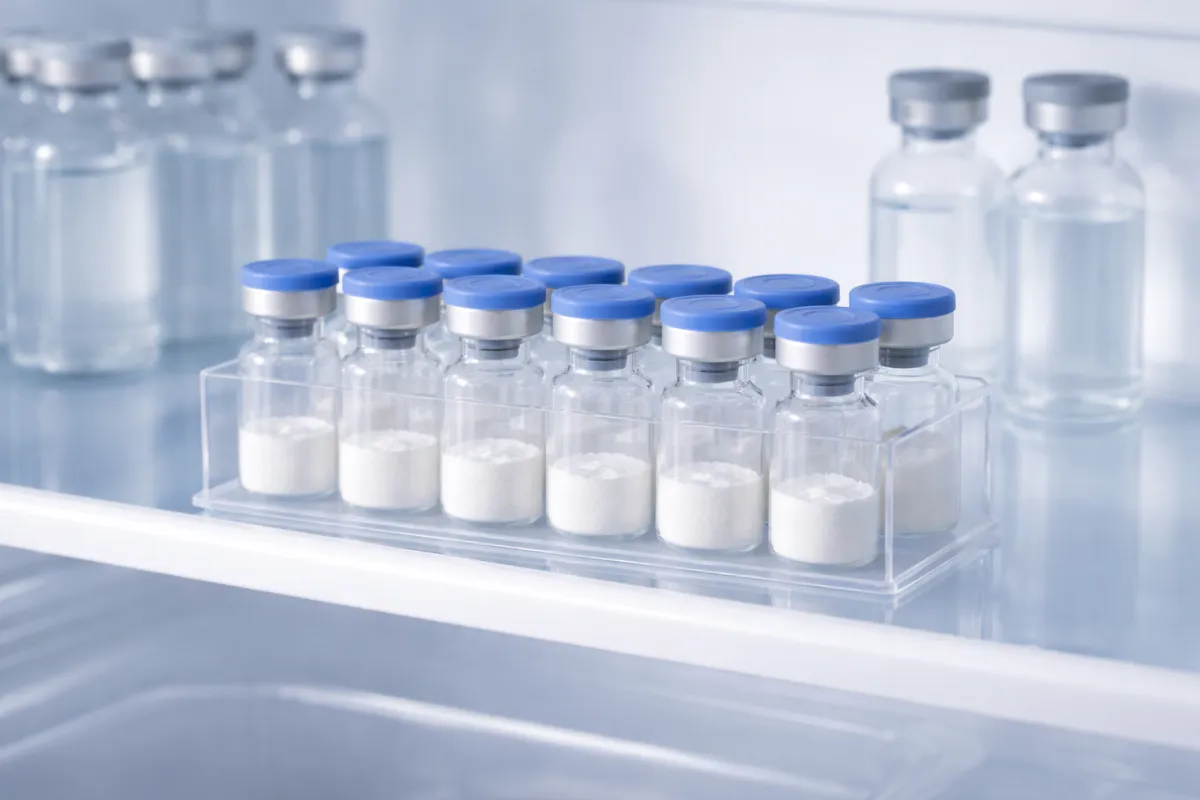
Lyophilized (powder) peptides: Store refrigerated (36-46°F / 2-8°C) for up to 12 months, or frozen for 2+ years. Can tolerate room temperature for short periods during shipping.
Reconstituted peptides: Must be refrigerated immediately. Use within 3-4 weeks. Never freeze reconstituted peptides.
Key enemies of peptides: Heat, light, moisture, bacteria, and repeated freeze-thaw cycles all degrade peptide stability and potency.
Bacteriostatic water matters: The benzyl alcohol preservative in bacteriostatic water prevents bacterial growth in reconstituted peptides, extending usable life compared to sterile water.
Signs of degradation: Cloudiness, particles, color change, unusual smell, or failure to dissolve properly indicate a peptide should be discarded.
Why Peptide Storage Matters
Peptides are fragile molecules. Unlike many medications that remain stable for years at room temperature, peptides break down when exposed to heat, light, moisture, or contamination. Improper storage doesn't just reduce effectiveness—it can render peptides completely inactive or potentially harmful.
The difference between proper and improper storage can mean:
Full potency vs. partial or zero activity
12-month shelf life vs. weeks
Safe use vs. bacterial contamination
Accurate dosing vs. unpredictable results
Understanding storage requirements protects both your investment and your research outcomes.
Lyophilized (Powder) Peptide Storage
Lyophilization, or freeze-drying, removes water from peptides to create a stable powder. This is why peptides ship as powder—it's far more stable than liquid form.
Optimal Storage Conditions
Refrigerated (Recommended for Most Situations)
Temperature: 36-46°F (2-8°C)
Shelf life: 6-12 months for most peptides
Keep in original sealed vial
Store away from light
Frozen (Long-Term Storage)
Temperature: -4°F (-20°C) or colder
Shelf life: 2+ years for most peptides
Best for peptides you won't use for months
Avoid repeated freeze-thaw cycles
Room Temperature (Short-Term Only)
Acceptable for: Shipping, brief storage
Duration: Days to a few weeks maximum
Not recommended for ongoing storage
Potency loss accelerates above 77°F (25°C)
Storage Tips for Powder Peptides
Keep vials sealed until ready to reconstitute
Store in original packaging when possible (protects from light)
Avoid temperature fluctuations - don't move between fridge and freezer repeatedly
Keep away from light - store in a dark area of refrigerator or in a box
Check desiccant packets - if included, leave them in the packaging
Don't store in refrigerator door - temperature fluctuates more there
What About Shipping?
Peptides can tolerate room temperature shipping for several days without significant degradation. Reputable vendors use insulated packaging and sometimes ice packs for longer shipments. A few days at room temperature during transit is generally acceptable for lyophilized peptides.
If your package sat in a hot mailbox or delivery area for an extended period (especially in summer), there may be some potency loss, but the peptide likely isn't ruined unless exposed to extreme heat for prolonged periods.
Reconstituted Peptide Storage
Once you add bacteriostatic water to your peptide powder, storage requirements become stricter.
Refrigeration Is Mandatory
Temperature: 36-46°F (2-8°C)
Location: Main compartment of refrigerator, not the door
Position: Upright if possible to keep the rubber stopper from prolonged contact with solution
Timeline: Use within 3-4 weeks
Why the Stricter Requirements?
Reconstituted peptides face challenges that powder doesn't:
Bacterial growth potential - Liquid solutions can harbor bacteria
Peptide degradation - Peptides break down faster in solution
Oxidation - Dissolved peptides oxidize more readily
Contamination risk - Each needle puncture introduces potential contaminants
Never Freeze Reconstituted Peptides
Freezing reconstituted peptides causes:
Ice crystal formation that damages peptide structure
Potential cracking of the vial
Separation of components
Unpredictable potency after thawing
If you have more reconstituted peptide than you'll use in 3-4 weeks, it's better to accept some waste than to freeze and damage the entire vial.
Bacteriostatic Water vs. Sterile Water
Bacteriostatic Water (BAC Water)
Contains 0.9% benzyl alcohol preservative
Prevents bacterial growth
Allows multi-use over 3-4 weeks
Recommended for all research peptides
Sterile Water for Injection
No preservative
Single-use only
Bacteria can grow after first needle puncture
Use entire vial immediately or discard remainder
Always use bacteriostatic water for peptides you'll draw from multiple times.
Shelf Life Reference Chart
Peptide State Storage Method Expected Shelf Life Lyophilized (powder) Room temperature 1-3 months Lyophilized (powder) Refrigerated 6-12 months Lyophilized (powder) Frozen 2+ years Reconstituted Refrigerated 3-4 weeks Reconstituted Room temperature Hours only Reconstituted Frozen Not recommended
Note: These are general guidelines. Some peptides are more stable than others. GLP-1 agonists and some growth hormone secretagogues may have different specific requirements.
Signs of Peptide Degradation
Knowing when to discard a peptide prevents using ineffective or potentially contaminated products.
Visual Signs (Reconstituted)
Cloudiness
Fresh reconstituted peptide should be clear
Cloudy or hazy solution indicates degradation or contamination
Discard immediately
Particles or Floaters
Visible particles that don't dissolve indicate problems
May be degraded peptide, contamination, or precipitation
Do not use
Color Change
Most peptides are colorless when reconstituted
Yellow, brown, or other color changes suggest oxidation or degradation
Some peptides have slight natural color—know what's normal for yours
Separation
Layers or separation in the solution
Should be uniform throughout
Discard if separation occurs
Other Warning Signs
Won't Dissolve
Powder that refuses to dissolve after 30+ minutes of gentle rolling
May indicate degraded or damaged peptide
Don't force it with shaking
Unusual Smell
Peptide solutions should have minimal odor
Strong or unusual smells indicate contamination
Don't use
Vial Damage
Cracked vials or damaged stoppers
Vacuum loss (stopper not properly sealed)
Any compromise to sterility
When in Doubt, Throw It Out
Peptides aren't worth risking contamination or injection of degraded products. If anything seems off, discard the vial and use a fresh one.
Storage Mistakes to Avoid
1. Storing in the Refrigerator Door
The door experiences the most temperature fluctuation every time you open the fridge. Store peptides in the main compartment, toward the back where temperature is most stable.
2. Repeated Freeze-Thaw Cycles
If you freeze powder peptides, thaw only what you'll reconstitute. Every freeze-thaw cycle damages peptide structure. Don't move vials back and forth between freezer and refrigerator.
3. Leaving Reconstituted Peptides at Room Temperature
Even an hour at room temperature accelerates degradation. Return reconstituted peptides to the refrigerator immediately after drawing your dose.
4. Storing Near Strong Light
Light degrades peptides. Don't store vials on windowsills or under bright lights. Keep them in the dark interior of your refrigerator or in opaque containers.
5. Not Labeling Reconstitution Dates
Without labels, you won't know when 3-4 weeks have passed. Always write the reconstitution date on the vial.
6. Ignoring Temperature During Travel
If you travel with peptides, maintain cold chain. A cooler with ice packs works for short trips. Extended travel without refrigeration will degrade reconstituted peptides.
7. Using Old Bacteriostatic Water
BAC water also has a shelf life. Check expiration dates. Don't use expired or previously opened BAC water vials that have been sitting for months.
Traveling with Peptides
Short Trips (Few Hours)
Insulated lunch bag with ice pack
Keep peptides in a sealed container to prevent direct ice contact
Reconstituted peptides can handle a few hours in a cooler
Longer Travel
For trips over a day, maintaining proper temperature becomes challenging:
Option 1: Don't Travel with Reconstituted Peptides
Bring lyophilized (powder) peptides instead
They tolerate temperature variation better
Reconstitute at your destination
Option 2: Portable Medical Cooler
Insulin travel cases work well
Some have built-in cooling elements
More reliable than ice packs for extended periods
Option 3: Refrigerator Access
Hotel mini-fridges work for storage
Verify temperature if possible (some run warmer than ideal)
Air Travel Considerations
Peptides for personal research use may raise questions at security
Keeping them in original labeled vials helps
Consider shipping to your destination instead
Research destination country's regulations on importing peptides
Organizing Your Peptide Storage
Suggested System
Separate Powder from Reconstituted
Keep unreconstituted vials in one area
Keep reconstituted vials in another
Prevents confusion about what's ready to use
First In, First Out
Use older peptides before newer ones
Rotate stock to prevent expiration
Clear Labeling
Peptide name (especially if transferred from original vial)
Reconstitution date
Concentration (mg/mL or mcg per unit)
Expiration date (for powder)
Storage Container
Small plastic container or box keeps vials organized
Protects from light
Prevents vials from rolling or falling
Frequently Asked Questions
Can I store peptides in a mini-fridge?
Yes, as long as the mini-fridge maintains proper temperature (36-46°F). Some mini-fridges run warmer than full-size refrigerators. Use a thermometer to verify.
Do peptides go bad if left out overnight?
Powder: Likely fine. Room temperature exposure for one night shouldn't significantly affect lyophilized peptides.
Reconstituted: Potentially compromised. One night probably won't cause visible contamination, but degradation has occurred. Use caution and consider potency may be reduced.
How do I know if my peptide lost potency?
Unfortunately, you often can't tell visually if a peptide has lost partial potency (as opposed to total degradation). If your peptide looks fine but results seem weaker than expected, storage issues or old stock may be the cause.
Should I store peptides in the freezer or refrigerator?
For powder you'll use within months: Refrigerator is fine and more convenient.
For long-term storage (6+ months): Freezer preserves potency better.
For reconstituted peptides: Always refrigerator, never freezer.
What if my peptide arrived warm during shipping?
Lyophilized peptides can handle warm shipping for several days without major issues. If the package was in extreme heat (like a hot car in summer) for extended periods, some potency loss may have occurred, but the peptide is likely still usable.
Can I combine leftover peptides from different vials?
Not recommended. Combining vials increases contamination risk and makes tracking reconstitution dates impossible. Use one vial at a time.
How long does bacteriostatic water last?
Unopened BAC water lasts until its expiration date (typically 2+ years). Once opened and punctured with a needle, use within 28 days and keep refrigerated.
Key Takeaways
Lyophilized peptides are stable - refrigerate for up to 12 months, freeze for 2+ years
Reconstituted peptides are fragile - must be refrigerated and used within 3-4 weeks
Never freeze reconstituted peptides - ice crystals damage peptide structure
Store in main refrigerator compartment - not the door where temperature fluctuates
Protect from light - store in dark areas or opaque containers
Label everything - especially reconstitution dates
When in doubt, discard - cloudy, discolored, or particles = throw it out
Use bacteriostatic water - the preservative enables safe multi-use
Related Guides
Disclaimer: This content is for educational and research purposes only. Peptides discussed are not FDA-approved for human use. Nothing in this article constitutes medical advice. Consult qualified professionals for guidance.
Last updated: January 8, 2026
