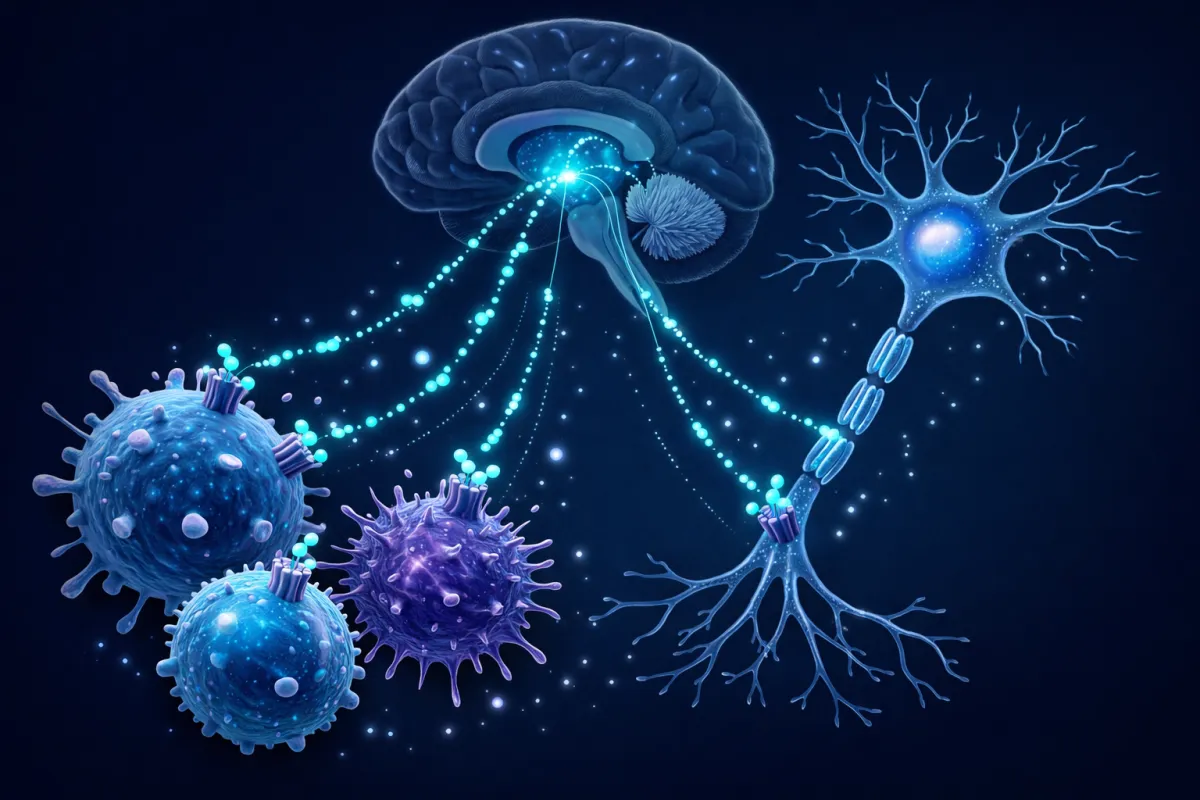
Pinealon: Complete Guide to the Circadian Reset Peptide
You wake up exhausted despite eight hours in bed. Your brain feels foggy until noon. You get a second wind at 10pm when you should be winding down. Your sleep tracker shows fragmented patterns that look nothing like the clean waves of deep and REM cycles you see in health articles. You have tried melatonin, sleep hygiene, blue light blockers, and every supplement on the market. Nothing has restored the effortless sleep you remember from your twenties.
The problem may not be your sleep. The problem may be your clock.
Your pineal gland is a pine cone shaped structure deep in your brain that functions as your body's master timekeeper. It produces melatonin, synchronizes circadian rhythms, and coordinates the hormonal cascades that govern sleep, wakefulness, metabolism, and cellular repair. With age, the pineal gland calcifies and its function declines. By age 60, most people have lost significant pineal capacity. The internal clock that once ran with precision now drifts, stutters, and fails to keep accurate time.
Pinealon is a tripeptide bioregulator designed to restore pineal gland function at the cellular level. Rather than replacing melatonin from outside, Pinealon supports the gland's ability to produce its own rhythmic signals. This represents a fundamentally different approach to circadian health: rebuilding the clock rather than manually setting it each night.
KEY FACTS
Definition: Pinealon is a synthetic tripeptide (Glu-Asp-Arg) classified as a bioregulator peptide that interacts directly with DNA to modulate gene expression in neural tissue, particularly the pineal gland and cerebral cortex
Primary Use: Circadian rhythm restoration, neuroprotection, cognitive support, and sleep architecture optimization in age-related decline
Mechanism: Crosses blood-brain barrier due to small size, penetrates cell and nuclear membranes, binds specific DNA sequences to influence gene expression, supports pineal gland function and melatonin production pathways
Typical Timeline: 2-4 weeks for initial sleep improvements, 4-8 weeks for circadian rhythm stabilization, cumulative benefits over 2-3 month cycles
Best For: Adults 40+ with disrupted circadian rhythms, shift workers, frequent travelers, those recovering from chronic melatonin supplementation, age-related sleep deterioration
Not For: Young healthy individuals with intact circadian function, those seeking immediate sedation, anyone expecting overnight results
What Is Pinealon?
Pinealon belongs to a class of compounds called bioregulator peptides, developed through decades of research at the St. Petersburg Institute of Bioregulation and Gerontology under Professor Vladimir Khavinson. These peptides are characterized by their small size (typically 2-4 amino acids) and their ability to interact directly with DNA to influence gene expression.
The concept is elegant: each organ in your body naturally produces short peptides that help regulate its own function. As you age, production of these regulatory peptides declines, contributing to organ dysfunction. By providing the specific peptide externally, you can support the organ's ability to maintain normal function.
Pinealon (sequence: Glutamic acid-Aspartic acid-Arginine, or Glu-Asp-Arg) was isolated from brain tissue extracts, specifically from the pineal gland and cerebral cortex. Its three amino acid structure gives it a molecular weight of only 418 daltons, making it one of the smallest bioactive peptides studied. This tiny size allows it to cross the blood-brain barrier, penetrate cell membranes, and enter the nucleus where it can interact with DNA.
Think of Pinealon as a software update for your pineal gland. Rather than forcing the gland to behave differently through external hormones, it provides the regulatory signals that help the gland remember how to function properly. The goal is restoration of natural function, not replacement or override.
This distinguishes Pinealon from melatonin supplementation. Melatonin provides the hormone directly, which can suppress your body's own production over time. Pinealon supports the machinery that produces melatonin, potentially allowing natural rhythms to re-establish themselves.
The Science: How Pinealon Works
Pinealon operates through mechanisms distinct from most peptides, which typically work through cell surface receptors. Its small size and specific amino acid composition allow direct interaction with genetic material.
Nuclear Penetration and DNA Binding
Research demonstrates that Pinealon can cross lipid bilayers including cell membranes and nuclear membranes. Once inside the nucleus, it binds to specific DNA sequences through complementary interactions. Molecular modeling studies have identified binding sites where Pinealon interacts with genetic material to influence transcription.
This direct DNA interaction is unusual for peptides and explains why Pinealon's effects are regulatory rather than stimulatory. It does not force immediate responses but rather modulates which genes are expressed and at what levels.
Gene Expression Modulation
Studies show Pinealon influences expression of genes involved in:
Serotonin synthesis (precursor to melatonin)
Antioxidant defense systems
Cell survival and anti-apoptotic pathways
Inflammatory regulation (particularly NF-κB pathway)
Neuronal proliferation and protection
In brain cortex cell cultures, Pinealon stimulated serotonin expression, providing substrate for downstream melatonin production. This upstream support of neurotransmitter synthesis represents a fundamentally different approach than simply providing melatonin directly.
Neuroprotection Under Stress
Multiple studies demonstrate Pinealon's protective effects on neurons under hypoxic (low oxygen) conditions. The peptide increases cell viability by suppressing free radical levels and activating proliferative processes. In models of oxidative stress, Pinealon-treated cells showed significantly better survival than controls.
Research on prenatal stress models showed Pinealon protected offspring from hyperhomocysteinemia damage, indicating protective effects that extend beyond acute stress situations to developmental contexts.
Anti-Inflammatory Effects
Aged animal models treated with Pinealon showed reduced activation of the NF-κB inflammatory pathway and microglial cells in calmer, ramified states rather than the overactivated neurotoxic configurations typical of aging brains. This anti-inflammatory action may contribute to both neuroprotection and improved sleep, since neuroinflammation disrupts sleep architecture.
CREB Pathway Activation
Pinealon activates CREB (cAMP Response Element-Binding protein), a transcription factor crucial for memory formation, neuronal survival, and circadian rhythm regulation. CREB activation links Pinealon's effects on sleep with its cognitive benefits.
Research Evidence: What Studies Show
Pinealon research spans laboratory studies, animal models, and limited human observations, primarily from Russian institutions.
Cell Culture Studies
Khavinson and colleagues demonstrated that Pinealon increases cell viability by 15-25% under oxidative stress conditions by suppressing free radical generation and activating proliferative pathways. The peptide showed selective affinity for neural tissue, consistent with its origin from brain extracts.
Fluorescence-labeled peptide studies confirmed that Pinealon penetrates into the nucleus of HeLa cells and interacts specifically with deoxyribooligonucleotides and DNA, validating the proposed mechanism of direct gene regulation.
Animal Studies on Circadian Function
Research on professional truck drivers (a population with severe circadian disruption) found that bioregulator peptide treatment restored adaptive potential, supported various physiological indices, intensified stress resistance, and reduced occupational risk of behavioral and neurological disorders. While this study used peptide combinations, it demonstrates the principle of circadian restoration through bioregulation.
Animal models show Pinealon normalizes sleep, eating, and waking behaviors under stress conditions. The peptide helps reset pineal gland function when circadian rhythms have been disrupted, leading to more regulated sleep patterns, behavioral stability, and blood pressure normalization.
Neuroprotection Studies
Studies on aged rats demonstrated Pinealon reduced markers of neuroinflammation (activated microglia, NF-κB pathway activity) while preserving neuronal health. Memory and cognitive function improved in aged animals receiving Pinealon compared to controls.
Research examining hypoxic brain injury showed Pinealon-treated tissue maintained better cellular integrity and function than untreated controls, indicating protective effects against oxygen deprivation damage.
Comparison with Epitalon
Pinealon is often discussed alongside Epitalon (Ala-Glu-Asp-Gly), another pineal-related peptide. While both support circadian function, they work through different mechanisms. Epitalon is known for telomerase activation and systemic anti-aging effects. Pinealon focuses more specifically on neuroprotection and brain tissue gene regulation. Many protocols combine both for comprehensive pineal and circadian support.
2025 Research Updates
Recent publications continue validating the bioregulator peptide approach. A February 2025 paper in the International Journal of Molecular Sciences provided comprehensive overview of Epitalon's geroprotective and neuroendocrine effects, supporting the broader Khavinson peptide research paradigm. Research on Alzheimer's disease models showed related peptides (EDR sequence) may influence pathogenesis through gene expression and protein synthesis regulation.
Practical Protocols: Dosing and Administration
Pinealon protocols follow the bioregulator peptide model: moderate doses over defined cycles rather than continuous daily use.
Standard Bioregulator Protocol
Based on established bioregulator research:
Dose: 5-10mg daily
Timing: Evening, 1-2 hours before bed
Duration: 10-30 day cycles
Frequency: 2-3 cycles per year for maintenance
PROTOCOL SUMMARY (TEXT): Typical dosing ranges from 5-10mg administered once daily in the evening for 10-30 day cycles. Most users complete 2-3 cycles per year for circadian maintenance. Subcutaneous injection is standard, though some research explores intranasal delivery for direct CNS access.
Administration Methods
Subcutaneous injection provides reliable absorption. The small peptide size allows good bioavailability. Evening administration aligns with circadian biology since you are supporting the gland during its active melatonin-producing period.
Some practitioners explore intranasal delivery for more direct CNS access, though subcutaneous remains the established route.
Cycling Rationale
Bioregulator peptides work through gene expression modulation, which produces effects that persist beyond the active dosing period. The peptide essentially "reminds" cells how to function properly, and this regulatory effect continues after the peptide clears. This is why cycling works: you provide the regulatory signal, cells adjust their function, and the benefits persist for weeks to months.
Continuous daily use is unnecessary and may be counterproductive. The goal is periodic recalibration, not constant supplementation.
Storage
Lyophilized powder stores at -20°C (freezer) for long-term stability. After reconstitution, store refrigerated (2-8°C) and use within 30 days.
What to Expect: Timeline of Effects
Pinealon produces gradual, cumulative effects consistent with its gene-regulatory mechanism.
Week 1-2 Subtle improvements in sleep onset may emerge. Some users notice easier transition to sleep or less racing thoughts at bedtime. Effects are mild initially as gene expression patterns begin shifting.
Week 3-4 More noticeable improvements in sleep quality. Users often report feeling more refreshed upon waking, even if total sleep time remains similar. Sleep architecture may begin normalizing with better transitions between sleep stages.
Week 5-8 Circadian rhythm stabilization becomes apparent. Natural sleepiness emerges at appropriate evening hours. Morning alertness improves. The "second wind" at 10pm that kept you awake may diminish as the clock realigns.
Post-Cycle (Weeks 9-16) Benefits typically persist for 2-4 months after completing a cycle. This extended effect reflects the gene-regulatory mechanism. Cells have been "reprogrammed" toward healthier function and maintain this state until environmental stress or aging gradually shifts them back.
Clinical Takeaway: Pinealon is not a sleeping pill. It will not knock you out tonight. It works by restoring the biological systems that regulate sleep naturally. Those seeking immediate sedation will be disappointed. Those seeking genuine circadian restoration will find value over time.
Advanced Stacking: Strategic Combinations
Pinealon synergizes with other sleep, circadian, and neuroprotective compounds.
The Circadian Reset Stack
Pinealon + Epitalon + Low-Dose Melatonin (0.5mg)
Comprehensive pineal support combining Pinealon's gene regulation with Epitalon's telomerase activation and structural pineal support. Low-dose melatonin provides immediate circadian signaling while the peptides rebuild underlying function. Run as a 10-20 day reset protocol for severe circadian disruption.
The Deep Sleep Stack
Pinealon + DSIP
DSIP (Delta Sleep-Inducing Peptide) enhances slow-wave sleep architecture while Pinealon supports the broader circadian framework. This combination targets both sleep depth and timing. Excellent for those who fall asleep but wake unrefreshed due to poor sleep architecture.
The Neuroprotection Stack
Pinealon + Semax + NAD+
For cognitive optimization alongside sleep improvement. Semax provides BDNF support and acute cognitive enhancement. NAD+ supports mitochondrial function in demanding neural tissue. Pinealon adds circadian regulation and neuroprotection. This stack addresses brain health comprehensively.
The Longevity Foundation Stack
Pinealon + Epitalon + Humanin
Three peptides addressing different aspects of biological aging. Epitalon for telomere maintenance. Humanin for mitochondrial protection. Pinealon for circadian and neural support. Run as periodic optimization cycles (10-20 days) 2-3 times yearly.
The Shift Worker Recovery Stack
Pinealon + DSIP + Glycine (3g)
For those with chronically disrupted schedules. Pinealon helps recalibrate the master clock. DSIP improves sleep quality during available sleep windows. Glycine (an amino acid, not peptide) supports sleep onset and quality through NMDA receptor modulation. Use during recovery periods between shift rotations.
Safety and Side Effects
Pinealon demonstrates an excellent safety profile consistent with bioregulator peptides generally.
Reported Side Effects
Side effects are minimal in available research:
Occasional vivid dreams during initial use (may reflect improved REM sleep)
Rare reports of mild headache
Transient drowsiness if taken too early in evening
Contraindications and Cautions
Pregnancy and breastfeeding: No safety data. Avoid use.
Children and adolescents: Developing circadian systems should not be externally modulated. Avoid use.
Active psychiatric conditions: Effects on neurotransmitter systems warrant caution. Consult healthcare providers.
Seizure disorders: Any compound affecting brain function requires medical oversight.
Drug Interactions
No significant interactions documented. However, Pinealon may enhance effects of other sleep-promoting substances. Those using prescription sleep medications should consult healthcare providers before adding Pinealon.
Theoretical synergy with melatonin exists since Pinealon supports melatonin production pathways. If combining, reduce melatonin dose to avoid excessive sedation.
Who Should Consider Pinealon
Adults over 40 with declining sleep quality despite good sleep hygiene
Shift workers seeking to minimize circadian damage
Frequent travelers dealing with chronic jet lag
Those recovering from long-term melatonin or sleep medication use
Individuals with age-related cognitive concerns wanting neuroprotection alongside sleep support
Who Should Avoid Pinealon
Young healthy individuals with intact circadian function
Those seeking immediate sleep induction
Anyone expecting results within days
Pregnant or nursing women
Those with unstable psychiatric conditions
Trusted Sources
Quality matters with bioregulator peptides. Proper synthesis, lyophilization, and storage determine whether you receive active peptide or degraded powder.
Vetted suppliers with certificates of analysis:
Modern Aminos - Code: zach10 (10% off) - 20mg vials
LimitlessBioChem EU - Code: BHACK (10% off) - 10mg vials
BioSLab Canada - Code: BHACK (10% off) - 20mg vials
BioLongevity Labs - Code: BHACK (15% off) - 20mg vials
For complete vendor comparison and community reviews: biohackblueprint.io
The Bigger Picture
Pinealon represents a paradigm shift from symptom management to biological restoration. Most sleep interventions either sedate the brain (medications) or replace missing signals (melatonin). Pinealon attempts something more ambitious: rebuilding the regulatory systems that produce healthy sleep naturally.
This approach aligns with the broader bioregulation philosophy developed by Khavinson and colleagues over four decades. Rather than forcing biological systems to behave differently through external chemicals, bioregulators provide the informational signals that help cells remember their optimal function. The body does the actual work of restoration.
The pineal gland occupies a unique position in human biology. Ancient traditions called it the "third eye" and attributed spiritual significance to it. Modern science recognizes it as the master circadian regulator, coordinating sleep, hormones, metabolism, and cellular repair according to the light-dark cycle. When the pineal fails, these systems lose coordination. Sleep fragments. Hormones misfire. Metabolism stumbles. Cellular repair becomes inconsistent.
Calcification of the pineal gland increases dramatically with age, correlating with declining melatonin production and circadian dysfunction. Environmental factors including fluoride exposure, electromagnetic fields, and chronic light pollution may accelerate this process. Supporting pineal function addresses a fundamental vulnerability of modern aging.
Pinealon offers a tool for this support. Not a magic solution, but a biological signal that may help aging pineal tissue maintain function longer and recover function that has been lost. Combined with circadian hygiene (morning light exposure, evening light reduction, consistent sleep timing), Pinealon provides the internal support while behavioral changes provide the external cues.
The combination of internal restoration and external alignment represents the most comprehensive approach to circadian health currently available.
Final Thoughts
Pinealon fills an important gap in sleep and circadian optimization. Melatonin supplementation helps but can create dependency. Sleep medications provide sedation but not restoration. Light therapy addresses external cues but not internal dysfunction. Pinealon targets the regulatory machinery itself, supporting the pineal gland's ability to coordinate circadian biology naturally.
This is not a quick fix. Pinealon works through gene expression modulation over weeks, not neurotransmitter flooding over hours. Those expecting immediate knockout sedation will look elsewhere. Those understanding that genuine circadian restoration requires rebuilding biological systems will find Pinealon a valuable tool.
The research base, while primarily from Russian institutions, spans decades and demonstrates consistent findings across cell cultures, animal models, and limited human applications. The safety profile is excellent. The mechanism is plausible and supported by molecular studies. The clinical observations align with theoretical predictions.
For adults experiencing the circadian decline that accompanies aging, for shift workers whose schedules assault biological rhythms, for anyone whose internal clock no longer keeps accurate time, Pinealon offers a path toward restoration rather than mere management.
Disclaimer: This content is for educational and research purposes only. Pinealon is not FDA-approved for any indication. Peptides are not approved for general human use. Nothing here is medical advice. Consult a qualified professional for personalized guidance.
Discussion
How has your sleep quality changed with age? Have you tried melatonin or other circadian interventions? What has worked and what has disappointed? Drop your questions and experiences below.
