Sermorelin: The Original Growth Hormone Releasing Peptide That Still Holds Up in 2025
Growth hormone decline starts earlier than most people realize. By age 30, natural GH output drops roughly 14% per decade. By 50, most adults are producing half the growth hormone they made at 25. The downstream effects are predictable: slower recovery, stubborn body fat, poor sleep quality, thinning skin, and a general sense that the engine is losing power.
Sermorelin was the first peptide designed to fix this at the source. Rather than injecting synthetic growth hormone directly, Sermorelin tells your pituitary gland to make more of its own. It was FDA-approved in 1997, used safely in clinical settings for over a decade, and remains one of the most well-studied growth hormone secretagogues available today.
In 2025, Sermorelin is experiencing a resurgence for a reason nobody predicted: it may be the best tool for protecting muscle mass during GLP-1 weight loss. Millions of people on semaglutide and tirzepatide are losing weight fast but also losing muscle. Sermorelin addresses that gap directly.
This guide covers the mechanism, the research, practical protocols, and why Sermorelin still deserves a place in any growth hormone optimization strategy.
KEY FACTS
Definition: Sermorelin is a synthetic 29-amino-acid peptide identical to the first 29 residues of natural growth hormone releasing hormone (GHRH), stimulating the pituitary gland to produce and release its own growth hormone.
Primary Use: Growth hormone optimization, anti-aging support, body composition improvement, and muscle preservation during caloric restriction or GLP-1 therapy.
Typical Timeline: Initial sleep improvements within 1-2 weeks; measurable body composition and recovery changes by weeks 8-12.
Best For: Adults over 30 experiencing GH decline, individuals on GLP-1 medications concerned about muscle loss, or anyone seeking natural GH restoration without exogenous hormone replacement.
Not For: Individuals expecting rapid, dramatic results comparable to synthetic HGH, or those unwilling to commit to multiple daily injections due to Sermorelin's short half-life.
What Is Sermorelin?
Sermorelin acetate is a truncated analog of growth hormone releasing hormone. Your hypothalamus naturally produces GHRH as a 44-amino-acid peptide. Researchers discovered that only the first 29 amino acids are required for full biological activity. Sermorelin is those 29 amino acids, synthesized identically.
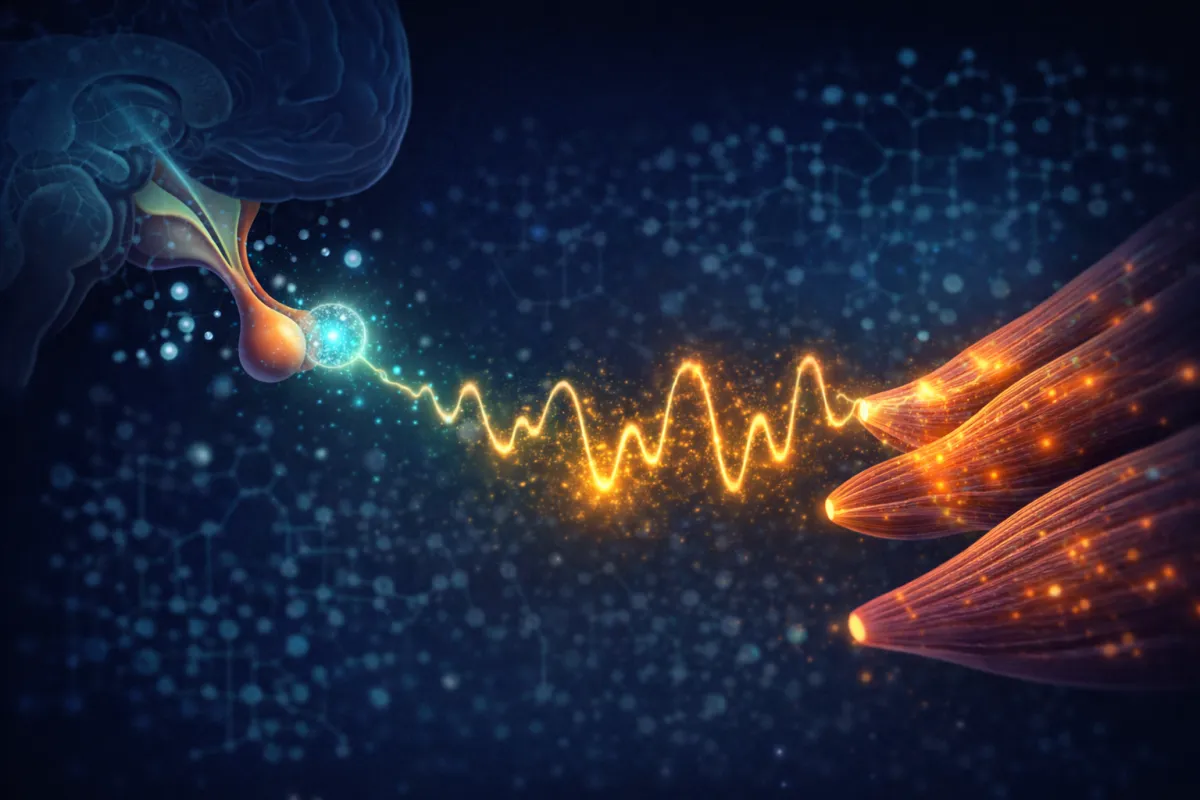
When injected, Sermorelin binds to GHRH receptors on the anterior pituitary gland and triggers the release of stored growth hormone. The critical distinction from synthetic HGH: your body's feedback systems remain intact. The pituitary still responds to somatostatin (the "off switch" for GH), so the system self-regulates. You cannot accidentally overshoot into supraphysiological GH levels the way you can with direct HGH injection.
Sermorelin was marketed as Geref by Serono Laboratories and received FDA approval in 1997 for diagnosing and treating growth hormone deficiency in children. The product was voluntarily discontinued in 2008 for manufacturing and commercial reasons, not safety concerns. The FDA specifically listed it as discontinued for reasons other than safety or effectiveness. Today, Sermorelin remains available through compounding pharmacies for off-label adult use, and its legal status is more favorable than synthetic HGH, which carries federal restrictions on off-label prescribing.
The Science: How Sermorelin Restores GH Pulsatility
Growth hormone is not released in a steady stream. It pulses. Your pituitary sends out GH in discrete bursts, with the largest pulses occurring during deep sleep (stages 3 and 4) and smaller pulses throughout the day. This pulsatile pattern is essential for proper function. Continuous GH exposure (as with some HGH protocols) actually downregulates GH receptors and reduces tissue sensitivity.
Sermorelin preserves natural pulsatility because it works through the existing GHRH receptor system. Think of it like upgrading the signal strength on a radio transmitter rather than replacing the entire broadcast system. The pituitary still receives its normal regulatory inputs, still responds to somatostatin feedback, and still produces GH in the burst pattern your tissues expect.
The mechanism unfolds in three stages:
Stage 1: Receptor activation. Sermorelin binds GHRH receptors on somatotroph cells in the anterior pituitary. This triggers intracellular cAMP signaling, which opens calcium channels and initiates GH granule release.
Stage 2: Pulsatile amplification. Rather than creating new GH pulses, Sermorelin amplifies existing ones. The amplitude of each pulse increases, meaning more GH per burst without disrupting the timing pattern your body expects.
Stage 3: Feedback preservation. Somatostatin, released from the hypothalamus, still functions normally. When GH levels rise sufficiently, somatostatin dampens the signal. This prevents the runaway GH elevation that makes synthetic HGH risky at higher doses. It also means Sermorelin becomes less effective at higher doses, which is actually a safety feature.
The downstream effects of restored GH pulsatility include increased IGF-1 production in the liver, enhanced protein synthesis in skeletal muscle, improved lipolysis (fat mobilization), and better collagen turnover in connective tissues. Sleep architecture also improves because GH and deep sleep exist in a bidirectional relationship: more GH supports deeper sleep, and deeper sleep triggers more GH release.
Research Evidence: What the Data Actually Shows
Foundational Clinical Studies
The earliest controlled trial of Sermorelin in aging adults was published in 1993 by Corpas and colleagues. Fourteen healthy older men (ages 60-78) received nightly Sermorelin injections for 14 days. The study demonstrated a clear reversal of age-related GH decline, with significant increases in both GH pulse amplitude and 24-hour integrated GH concentration. IGF-1 levels rose in parallel.
A larger 1997 trial extended the protocol to 16 weeks and documented measurable improvements in body composition, including a 1.26 kg increase in lean body mass in male subjects and measurable increases in skin thickness. Participants also reported improvements in energy levels and libido.
The Vittone study examined nightly 2 mg Sermorelin injections in elderly men (ages 64-76) over six weeks and confirmed dose-dependent increases in GH and IGF-1, with the growth hormone response maintained throughout the study period without tachyphylaxis (tolerance).
GHRH and Cognitive Function
One of the most underreported benefits of GHRH analogs is their effect on brain function. A 2013 study published examined the effects of tesamorelin (a closely related GHRH analog) on cognition in healthy older adults and adults with mild cognitive impairment (MCI). Over 20 weeks, subjects receiving GHRH showed significant improvements in executive function, including working memory, verbal learning, and processing speed.
The proposed mechanism involves GH's effects on GABA metabolism in the brain. Growth hormone influences GABA receptor density and signaling, which affects inhibitory neurotransmission. Improved GABA regulation may explain why many Sermorelin users report better mental clarity, reduced anxiety, and improved focus before noticing physical body composition changes.
The 2025 GLP-1 Muscle Preservation Connection
The most significant clinical development for Sermorelin in 2025 has nothing to do with anti-aging. It is being prescribed alongside GLP-1 receptor agonists to counteract their primary side effect: muscle loss.
Semaglutide and tirzepatide cause rapid weight reduction, but a meaningful percentage of that weight loss comes from lean tissue. A September 2025 study published in the Journal of Physiology demonstrated that semaglutide impacts skeletal muscle composition to a similar extent as caloric restriction alone, suggesting the muscle loss is inherent to the weight loss mechanism rather than a secondary effect.
Multiple clinical practices and telehealth platforms began offering Sermorelin specifically for GLP-1 patients throughout 2025. The rationale is straightforward: Sermorelin-stimulated GH promotes protein synthesis and reduces protein breakdown, directly opposing the catabolic state created by aggressive caloric restriction. GH also enhances lipolysis preferentially over proteolysis, meaning the body favors burning fat over muscle when GH levels are adequate.
Practitioners report combining Sermorelin with GLP-1 therapy creates a dual-action approach: the GLP-1 agonist manages appetite and glucose metabolism for fat loss, while Sermorelin preserves lean tissue and supports recovery. This is not theoretical. Compounding pharmacies reported significant increases in Sermorelin prescriptions specifically for this indication throughout 2025.
The supporting mechanisms include direct muscle preservation through increased protein synthesis, preferential fat oxidation through GH-mediated lipolysis, improved recovery during caloric deficit through enhanced mitochondrial function, and better sleep quality that independently supports muscle preservation and metabolic health.
Practical Protocols
Standard Sermorelin Protocol
Dosing: 200-300 mcg per injection, administered subcutaneously.
Frequency: Once daily, administered 30-60 minutes before bedtime on an empty stomach. Some practitioners recommend twice daily (morning and evening) for more pronounced effects, though the bedtime dose is considered most important because it amplifies the natural nocturnal GH surge.
Administration: Subcutaneous injection in the abdominal area, rotating injection sites. Sermorelin should be injected on an empty stomach, as food intake (especially carbohydrates and fats) blunts GH release through insulin and somatostatin interference.
Cycle length: 8-16 weeks on, followed by a 4-8 week break. Some practitioners run continuous low-dose protocols (100-200 mcg nightly) for extended periods, though cycling is generally recommended to prevent receptor desensitization.
Reconstitution: Standard bacteriostatic water reconstitution. Sermorelin is relatively stable once reconstituted but should be refrigerated and used within 4-6 weeks.
GLP-1 Combination Protocol
For individuals on semaglutide, tirzepatide, or retatrutide who want to protect lean mass:
Dosing: 200-300 mcg Sermorelin nightly, beginning when GLP-1 therapy starts or as soon as weight loss exceeds 5% of body weight.
Timing: 30-60 minutes before bed, on an empty stomach. This is straightforward to implement since most GLP-1 patients experience reduced evening appetite.
Duration: Continue throughout GLP-1 therapy and for 4-8 weeks after discontinuation to support metabolic recovery.
Monitoring: Track body composition (not just scale weight), grip strength, and subjective recovery markers. The goal is to maintain or minimize losses in lean mass while fat loss continues.
The GHRH + GHRP Synergy Stack
Sermorelin's most powerful application is in combination with growth hormone releasing peptides (GHRPs) like Ipamorelin or GHRP-2. The synergy is not additive. It is multiplicative.
Research by Veldhuis and colleagues demonstrated that GHRH alone produces approximately a 20-fold increase in pulsatile GH release. Adding GHRP-2 to GHRH increased that to a 54-fold increase. The mechanism is complementary: GHRH activates the "accelerator" (cAMP signaling in somatotrophs) while GHRPs suppress the "brake" (reducing somatostatin tone through ghrelin receptor activation).
Protocol: Sermorelin 200 mcg + Ipamorelin 200 mcg, combined injection, 30-60 minutes before bed. This stack is widely available as a pre-mixed blend from compounding pharmacies and research suppliers.
Why Ipamorelin over GHRP-2 or GHRP-6: Ipamorelin is the cleanest GHRP available. It does not significantly raise cortisol or prolactin (unlike GHRP-2), does not cause intense hunger spikes (unlike GHRP-6), and has the most favorable side effect profile for long-term use.
What to Expect: Realistic Timeline
Week 1-2: Improved sleep quality is typically the first noticeable change. Deeper sleep, easier time falling asleep, and waking feeling more restored. Some users report more vivid dreams. These effects reflect enhanced GH release during slow-wave sleep.
Week 3-4: Recovery from exercise begins to improve. Workouts that previously required 48-72 hours of recovery may need only 24-36 hours. Skin may begin to look slightly fuller or more hydrated. Energy levels often stabilize.
Week 5-8: Body composition shifts become measurable. Gradual reduction in subcutaneous fat, particularly around the midsection. Lean mass begins to increase if training stimulus is adequate. Joint comfort may improve as collagen synthesis increases.
Week 9-12: Full effects are typically realized by this point. IGF-1 levels should be measurably elevated on bloodwork. Hair and nail growth often increases. Cognitive improvements (focus, memory, processing speed) become more apparent. Recovery times are consistently shorter.
Important context: Sermorelin produces gradual, physiological changes. It is not synthetic HGH. Results are real but build slowly. Users expecting dramatic transformation within 2-3 weeks will be disappointed. The trajectory is steady improvement that compounds over months.
Advanced Stacking Strategies
Stack 1: The Complete GH Optimization Stack
Sermorelin 200 mcg + Ipamorelin 200 mcg + CJC-1295 (no DAC) 100 mcg, nightly before bed.
This combination hits the GH axis from three angles: GHRH receptor activation (Sermorelin), ghrelin receptor activation (Ipamorelin), and extended GHRH signaling duration (CJC-1295). The result is the most comprehensive natural GH elevation achievable without synthetic HGH.
Stack 2: The Anti-Aging and Recovery Stack
Sermorelin 200 mcg nightly + BPC-157 250 mcg twice daily + GHK-Cu 200 mcg daily.
This stack combines systemic GH optimization with targeted tissue repair (BPC-157) and extracellular matrix remodeling (GHK-Cu). Particularly effective for individuals over 40 seeking comprehensive regenerative support.
Stack 3: The Body Recomposition Stack
Sermorelin 300 mcg + Ipamorelin 200 mcg nightly, combined with Tesamorelin 1 mg daily (separate injection, morning or evening).
Tesamorelin adds a longer-acting GHRH signal and has specific evidence for reducing visceral adipose tissue (the deep abdominal fat associated with metabolic disease). This combination targets both subcutaneous and visceral fat while supporting lean mass.
Stack 4: The Cognitive Enhancement Stack
Sermorelin 200 mcg nightly + Semax 300 mcg intranasal daily + DSIP 100 mcg before bed.
This stack pairs GH-mediated GABA modulation with direct neurotrophic stimulation (Semax, which increases BDNF) and enhanced deep sleep architecture (DSIP). Designed for individuals prioritizing mental performance, memory, and neuroprotection.
Stack 5: The GLP-1 Muscle Shield Stack
Sermorelin 300 mcg + Ipamorelin 200 mcg nightly, running concurrently with any GLP-1 agonist protocol.
Add L-Carnitine 500 mg injectable 3-5 times weekly to enhance fatty acid oxidation and further shift the body's fuel preference toward fat over muscle protein. This represents the most comprehensive approach to preserving lean mass during aggressive GLP-1 weight loss.
Safety, Side Effects, and Contraindications
Common Side Effects
Sermorelin is one of the best-tolerated peptides in clinical use. The most frequently reported side effects include injection site reactions (redness, mild swelling, or itching), transient facial flushing immediately after injection, and headache during the first few days of use. These typically resolve within the first week.
Some users experience increased water retention during the initial weeks as GH levels rise. This is physiological and generally stabilizes. Tingling or numbness in the extremities (paresthesia) can occur and usually indicates the dose is slightly high for the individual.
Serious Considerations
Sermorelin is contraindicated in individuals with active malignancy or a history of cancer. Growth hormone promotes cell proliferation, which is beneficial for healthy tissue repair but potentially harmful in the context of existing tumors or cancer predisposition. Anyone with a personal or strong family history of cancer should discuss the risk-benefit ratio with their physician before using any GH secretagogue.
Individuals with hypothalamic or pituitary dysfunction may not respond adequately to Sermorelin, since its mechanism depends on functional somatotroph cells. If the pituitary is damaged or depleted, stimulating it with GHRH will produce minimal results.
Drug Interactions
Glucocorticoids (prednisone, dexamethasone) suppress GH release and can reduce Sermorelin's effectiveness. Insulin and oral hypoglycemic medications may require dose adjustment as GH affects glucose metabolism. Thyroid hormone levels should be monitored, as GH can alter T4-to-T3 conversion rates.
Monitoring Recommendations
Baseline and follow-up bloodwork should include IGF-1, fasting glucose, HbA1c, thyroid panel (TSH, free T3, free T4), and a comprehensive metabolic panel. For males, monitoring testosterone and SHBG is also recommended, as GH optimization can influence androgen metabolism.
Regulatory Status
Sermorelin is not a controlled substance. It is available by prescription through compounding pharmacies for off-label adult use. Unlike synthetic HGH, there are no federal restrictions on off-label prescribing of Sermorelin. For competitive athletes, Sermorelin is prohibited by WADA under the category of growth hormone releasing factors.
Sermorelin vs. CJC-1295: The Honest Comparison
This comparison matters because CJC-1295 (with or without DAC) has largely replaced Sermorelin in many optimization protocols, and understanding why helps inform the right choice.
Half-life: Sermorelin has a half-life of approximately 10-12 minutes. CJC-1295 without DAC has a half-life of approximately 30 minutes. CJC-1295 with DAC extends to 6-8 days. This difference is the primary reason CJC-1295 is more popular: Sermorelin requires multiple daily injections for sustained effect, while CJC-1295 (no DAC) works well with once-daily dosing.
GH pulse pattern: Sermorelin produces a sharp, short GH pulse that closely mimics natural physiology. CJC-1295 (no DAC) produces a slightly broader pulse. CJC-1295 with DAC produces a sustained elevation that may reduce pulsatility, which some practitioners consider less physiological.
Cost: Sermorelin is generally the most affordable GHRH analog, making it accessible for longer-term protocols or for stacking where budget is a consideration.
Clinical evidence: Sermorelin has the longest clinical track record of any GHRH analog, with over 25 years of human data. CJC-1295 has less published clinical data but a strong mechanistic rationale based on the same GHRH receptor system.
Practical verdict: For most users, CJC-1295 (no DAC) paired with Ipamorelin is the more practical choice due to convenient once-daily dosing. Sermorelin remains an excellent option for those who prefer the most physiological GH pulse pattern, want the most well-studied option, or are combining it into a pre-mixed blend with Ipamorelin. The Sermorelin + Ipamorelin combination is also widely available as a ready-made blend, which simplifies administration.
Trusted Sources
Quality matters with research peptides. Third-party testing and proper handling make the difference between effective research material and degraded product.
Vetted suppliers with certificates of analysis:
Modern Aminos - Code: zach10 (10% off)
LimitlessBioChem EU - Code: BHACK (10% off)
BioSLab Canada - Code: BHACK (10% off)
Limitless Life Nootropics - Code: BHACK (15% off)
Pre-mixed Sermorelin + Ipamorelin blends:
BioSLab Canada - Sermorelin + Ipamorelin Blend - Code: BHACK (10% off)
BioSLab Canada - Sermorelin 2.5mg + Ipamorelin 5mg Bundle - Code: BHACK (10% off)
The Bigger Picture
Sermorelin occupies a unique position in the peptide landscape. It is not the most potent growth hormone secretagogue available. CJC-1295 provides longer-lasting GHRH signaling. Tesamorelin has stronger evidence for visceral fat reduction. MK-677 offers oral convenience.
But Sermorelin has something none of them do: a 25-year clinical track record, FDA history, and a mechanism that works entirely within your body's existing regulatory framework. It cannot push GH levels into dangerous territory because your own somatostatin system prevents it. That built-in safety ceiling makes it one of the most conservative entry points into growth hormone optimization.
Its 2025 resurgence as a muscle-protective adjunct to GLP-1 therapy reflects a broader shift in how practitioners think about weight loss. The question is no longer just "how do we help people lose weight?" It is "how do we help people lose fat while keeping the muscle that protects their metabolism, mobility, and long-term health?" Sermorelin answers that question.
For anyone beginning their journey into growth hormone optimization, Sermorelin paired with Ipamorelin remains one of the most well-validated, well-tolerated starting points available. The results are not flashy. They build gradually. And they last.
Frequently Asked Questions
Is Sermorelin the same as HGH? No. Sermorelin stimulates your pituitary gland to produce its own growth hormone. HGH is synthetic growth hormone injected directly into the body. Sermorelin preserves natural feedback mechanisms. HGH bypasses them entirely.
Why was Sermorelin discontinued by the FDA? Geref (branded Sermorelin) was voluntarily discontinued in 2008 for manufacturing and commercial reasons. The FDA specifically noted it was not discontinued for safety or efficacy concerns. It remains available through compounding pharmacies.
Can I take Sermorelin orally? Sermorelin is a peptide and is destroyed by digestive enzymes when taken orally. Subcutaneous injection is the standard administration route. Some compounding pharmacies offer sublingual troches, though absorption is significantly lower than injectable forms.
How does Sermorelin compare to MK-677? MK-677 (Ibutamoren) is an oral GH secretagogue that works through the ghrelin receptor, not the GHRH receptor. MK-677 provides 24-hour GH elevation (less pulsatile), can significantly increase appetite and water retention, and may raise fasting glucose. Sermorelin provides more physiological pulsatile GH release with fewer metabolic side effects but requires injection.
Will Sermorelin show up on a drug test? Standard workplace drug panels do not test for Sermorelin. However, WADA-regulated athletic drug testing does include growth hormone releasing factors. Competitive athletes should not use Sermorelin during testing periods.
Disclaimer: This content is for educational and research purposes only. Peptides are not approved for human use. Nothing here is medical advice. Consult a qualified professional for personalized guidance.
