SS-31 (Elamipretide): Complete Guide to the Mitochondrial Armor Peptide
Your mitochondria are under constant attack. Every second, the process of generating ATP produces reactive oxygen species that damage the very structures responsible for keeping you alive. Over time, this damage accumulates. Energy production declines. Cells struggle. Aging accelerates.
Most antioxidants float aimlessly through your body, hoping to encounter free radicals by chance. SS-31 takes a different approach. It goes directly to the source of the problem, binding to cardiolipin in the inner mitochondrial membrane where oxidative damage originates.
In September 2025, SS-31 received FDA approval for Barth syndrome under the brand name Forzinity. This was not a marginal approval for a fringe compound. This was recognition that mitochondrial medicine has arrived, and SS-31 is leading the way.
AI SUMMARY: • Definition: SS-31 (Elamipretide) is a synthetic tetrapeptide that selectively binds cardiolipin in the inner mitochondrial membrane, stabilizing structure and optimizing ATP production. • Primary Use: Mitochondrial protection and restoration in heart failure, neurodegenerative conditions, aging, and exercise performance. • Typical Timeline: Subtle improvements in 1-2 weeks, noticeable benefits by 3-4 weeks, peak effects at 8-12 weeks. • Best For: Those with confirmed mitochondrial dysfunction, chronic fatigue, cardiovascular concerns, or pursuing aggressive longevity optimization. • Not For: Those seeking immediate stimulant-like effects. SS-31 is protective and restorative, not acutely energizing.
What It Actually Does
SS-31 operates through mechanisms distinct from any other peptide or supplement. Understanding these mechanisms explains why it has generated such intense clinical interest.
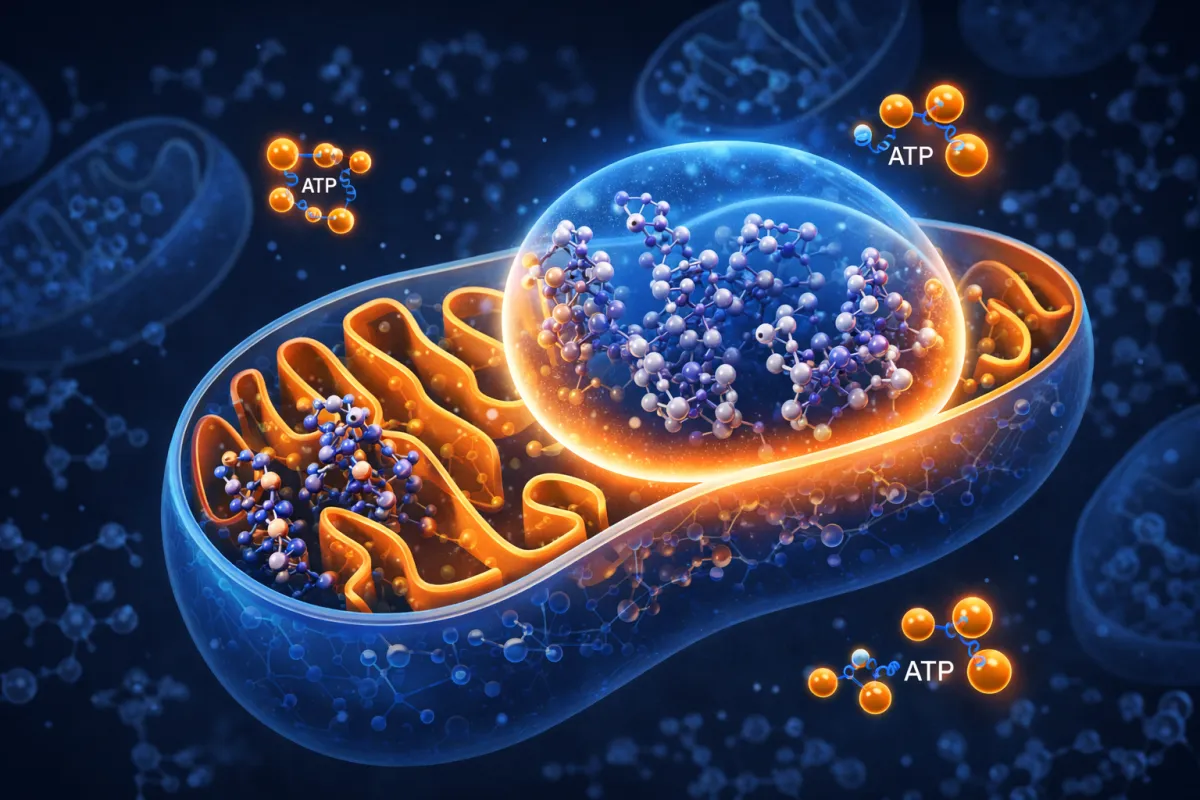
First, it binds cardiolipin with remarkable specificity. Cardiolipin is a unique phospholipid found almost exclusively in the inner mitochondrial membrane. It anchors the protein complexes of the electron transport chain in perfect configuration for efficient energy transfer. When cardiolipin becomes oxidized, the entire system destabilizes. SS-31 shields cardiolipin from oxidation, maintaining structural integrity.
Second, it stabilizes cristae architecture. The inner mitochondrial membrane folds into structures called cristae where ATP synthesis occurs. Damaged cristae mean less surface area for ATP production. A January 2025 review in the International Journal of Molecular Sciences confirmed that SS-31 preserves cristae structure by stabilizing cardiolipin-dependent protein assemblies.
Third, it reduces electron leak at the source. Unlike antioxidants that scavenge free radicals after they form, SS-31 prevents excessive reactive oxygen species generation by optimizing electron transport chain efficiency. Less leak means less damage means more clean ATP.
Fourth, it demonstrates targeted accumulation. The peptide has positive charges that attract it to the negatively charged inner mitochondrial membrane. It concentrates exactly where protection is needed most, rather than dispersing randomly throughout the body.
The targeted rescue mission analogy fits here. SS-31 does not enhance healthy mitochondria that do not need help. It preferentially accumulates in damaged mitochondria where cardiolipin has become compromised.
The Research Evidence
SS-31 has one of the most robust clinical trial portfolios of any peptide in development. This is not preliminary data from cell studies.
The TAZPOWER trial led to FDA approval in September 2025. In patients with Barth syndrome, a rare mitochondrial disorder, participants showed an average improvement of 96.1 meters on the six-minute walk test. Cardiac stroke volume improved. Cardiolipin levels normalized. Participants reported significantly reduced fatigue. Johns Hopkins researchers who conducted the foundational cell modeling experiments described patients stating that symptoms that once controlled everything they did no longer limited them.
The PROGRESS-HF trial examined heart failure with preserved ejection fraction. Three months of subcutaneous SS-31 therapy significantly increased stroke volume, ejection fraction, and cardiac output while decreasing left ventricular end-diastolic pressure and systemic vascular resistance. Heart failure biomarkers normalized. ATP synthesis improved and reactive oxygen species formation decreased.
A 2019 study published in Free Radical Biology and Medicine demonstrated that eight weeks of SS-31 treatment reversed age-related decline in maximum mitochondrial ATP production in aged mice. Exercise tolerance improved significantly. The glutathione redox status became more reduced, indicating restored antioxidant capacity. These results translated to increased treadmill endurance compared to both pretreatment values and untreated controls.
A 2024 Scientific Reports study showed SS-31 restored mitochondrial morphology in tafazzin-deficient hearts by affecting specific proteins involved in mitochondrial dynamics and mitophagy. The peptide corrected defective removal of damaged mitochondria.
An April 2025 review in Biomedicine and Pharmacotherapy synthesized findings across 18 human clinical trials, noting consistent benefits in Barth syndrome, heart failure, and primary mitochondrial myopathy while acknowledging mixed results in some acute care applications.
The Protocol
PROTOCOL SUMMARY (TEXT): Research protocols typically use 10-40mg administered subcutaneously once daily. Most clinical trials use the 40mg dose. Injection sites include abdominal fat or thigh. Protocol duration in clinical trials ranges from 4 weeks to 48 weeks, with longer protocols showing sustained benefits. Some researchers use loading phases of higher frequency dosing during the first 1-2 weeks before transitioning to daily maintenance.
Reconstitution: Add 1-2ml bacteriostatic water to the vial depending on concentration. Swirl gently until dissolved. Store refrigerated and use within 14 days.
Timing: Morning administration is common. Some researchers report better subjective energy when dosed early in the day, though SS-31 is not a stimulant.
Cycling: Clinical trials have run continuously for up to 48 weeks without safety concerns. For optimization purposes rather than disease treatment, some researchers cycle 8-12 weeks on with 4-week breaks to assess baseline function.
What to Expect
Week 1-2: Changes occur at the cellular level. Mitochondrial membrane potential stabilizes. Cardiolipin protection begins. You may notice subtle improvements in recovery or reduced post-exercise fatigue, but nothing dramatic.
Week 3-4: Energy improvements become more noticeable. Exercise capacity begins increasing. Those with chronic fatigue often report the first meaningful shifts during this period. Sleep quality may improve as cellular energy production normalizes.
Week 5-8: Clinical markers show measurable changes if tracking. Athletic performance improvements become apparent. Cardiovascular function improves in those with baseline dysfunction. Cognitive clarity often improves as brain mitochondria benefit.
Week 9-12: Full protocol benefits establish. Those with heart conditions may see improved echocardiogram findings. Exercise tolerance continues improving. The protective effects compound over time as damaged mitochondria are replaced with healthier ones.
Important: SS-31 is not a stimulant. It does not provide the immediate energy surge of caffeine or other compounds. The benefits are foundational, improving the capacity for energy production rather than forcing output from depleted systems.
Practitioner Insight
Clinical experience positions SS-31 as the defensive component of mitochondrial optimization. While other compounds drive mitochondrial biogenesis (creating more mitochondria) or bypass damaged electron transport chain components, SS-31 protects existing infrastructure.
The fortress analogy applies. Building more factories means nothing if they keep getting destroyed. SS-31 builds the walls that protect the factories you have while simultaneously improving their efficiency.
Practitioners report that patients with chronic fatigue, particularly post-viral syndromes, often respond well to SS-31 when other interventions have failed. The mechanistic rationale is clear: if mitochondrial dysfunction underlies the fatigue, protecting and restoring mitochondrial function addresses the cause rather than masking symptoms.
The combination with methylene blue has generated particular interest. SS-31 protects the mitochondrial membrane while methylene blue can bypass damaged electron transport chain components. Together they provide both defense and optimized function.
CLINICAL TAKEAWAY: SS-31 protects mitochondria at the structural level by stabilizing cardiolipin, making it uniquely valuable for aging, cardiovascular conditions, and any state involving mitochondrial dysfunction where preservation of existing function matters as much as enhancement.
Common Mistakes
Expecting stimulant effects: SS-31 is protective and restorative, not acutely energizing. Those expecting to feel wired or hyper will be disappointed. The benefits are foundational and cumulative.
Inadequate protocol duration: Meaningful mitochondrial remodeling takes time. Running SS-31 for two weeks and declaring it ineffective misses the point. Eight to twelve weeks minimum for proper evaluation.
Ignoring synergistic compounds: SS-31 works best as part of a comprehensive mitochondrial strategy. Using it in isolation while ignoring factors that damage mitochondria (poor sleep, chronic inflammation, metabolic dysfunction) limits results.
Advanced Stacking Strategies
Mitochondrial Fortress Stack: SS-31 (20-40mg daily) paired with MOTS-C (5mg 2-3x/week). SS-31 protects existing mitochondria while MOTS-C improves metabolic signaling and insulin sensitivity. Addresses both structural and functional aspects of mitochondrial health.
Cognitive Enhancement Stack: SS-31 (20-40mg daily) with Semax (200-600mcg daily) and Methylene Blue (0.5-1mg/kg). Targets brain mitochondrial function from multiple angles. SS-31 protects neuronal mitochondria, Semax increases BDNF, Methylene Blue optimizes electron transport.
Cardiovascular Optimization Stack: SS-31 (40mg daily) with NAD+ (100-250mg 2-3x/week) and CoQ10 (200-400mg daily). Comprehensive cardiac mitochondrial support. SS-31 provides structural protection, NAD+ supports sirtuin function, CoQ10 supplies electron transport chain cofactor.
Athletic Performance Stack: SS-31 (20-40mg daily) with L-Carnitine (1-2g daily) and MOTS-C (5mg 2-3x/week). Optimizes energy production for training and recovery. SS-31 protects against exercise-induced mitochondrial stress.
Longevity Foundation Stack: SS-31 (20-40mg daily) with Epithalon (1mg daily for 10-day cycles) and NAD+ (100-250mg 2-3x/week). Addresses multiple aging pathways. SS-31 protects mitochondria, Epithalon supports telomeres, NAD+ maintains cellular repair mechanisms.
Safety and Side Effects
SS-31 has demonstrated excellent safety across clinical trials lasting up to 48 weeks. The peptide is synthetic but mimics naturally occurring peptide sequences.
Common effects: Injection site reactions (mild redness, temporary discomfort) in some users. Generally well tolerated.
Rare effects: Some users report transient headache during initial dosing. Typically resolves within days.
Theoretical concern: Overly aggressive mitochondrial optimization could theoretically cause imbalances. This is sometimes called overspin, where pushing mitochondrial function too hard creates instability. Start conservatively and assess response.
Contraindications: Limited data in pregnancy and breastfeeding. Those on immunosuppressive therapy should consult specialists. Caution with compounds that also affect mitochondrial function to avoid excessive effects.
Drug interactions: May have additive effects with other mitochondrial-targeting compounds. Monitor when combining with multiple agents affecting electron transport chain function.
Trusted Sources
Quality sourcing is critical for mitochondrial peptides. Third-party testing ensures you receive actual SS-31 at stated potency.
US Vendors:
Modern Aminos carries SS-31 in 10mg vials with COA verification. Use code "zach10" for 10% off.
BioLongevity Labs stocks SS-31 in 10mg vials with third-party testing. Use code "BHACK" for 15% off.
Canadian Vendors:
BioSLab offers SS-31 in larger 50mg vials with Canadian shipping. Use code "BHACK" for 10% off.
European Vendors:
LimitlessBioChem provides SS-31 in 50mg vials with EU-based shipping. Use code "BHACK" for 10% off.
All vendors listed provide certificates of analysis. Verify purity before use.
The Bigger Picture
SS-31 represents a paradigm shift in how we approach cellular health. Traditional antioxidants scatter throughout the body hoping to neutralize free radicals after damage occurs. SS-31 goes to the source, protecting the machinery that generates both energy and oxidative stress.
Compared to CoQ10 or PQQ, SS-31 is far more specific. It binds cardiolipin with high affinity rather than providing general antioxidant or cofactor support. This specificity translates to targeted effects.
Compared to MOTS-C, SS-31 serves a complementary rather than redundant function. MOTS-C activates AMPK and improves metabolic signaling. SS-31 protects mitochondrial structure. Together they address different aspects of mitochondrial health.
The FDA approval for Barth syndrome in September 2025 marked a milestone. SS-31 crossed from experimental biohacking compound into legitimate medicine. The clinical trial data is compelling. The safety profile is strong. The mechanistic understanding is robust.
For those pursuing serious longevity optimization, cardiovascular health, or recovery from conditions involving mitochondrial dysfunction, SS-31 offers a tool with genuine clinical validation. It is not inexpensive, and it requires injection, but the specificity of its mechanism and the breadth of its applications make it a standout compound.
Frequently Asked Questions
Can I take SS-31 orally?
No. SS-31 must be injected subcutaneously to reach mitochondria. Oral bioavailability is negligible due to digestive breakdown.
How does SS-31 compare to traditional antioxidants?
SS-31 is far more targeted. Rather than scavenging free radicals throughout the body, it binds cardiolipin specifically in the inner mitochondrial membrane where oxidative damage originates. This precision targeting makes it more effective for mitochondrial protection.
Can I combine SS-31 with other mitochondrial peptides?
Yes, but thoughtfully. SS-31 plus MOTS-C is a well-established combination. Adding multiple compounds simultaneously makes it difficult to assess what is working. Start with one, establish response, then add others.
Is SS-31 safe for long-term use?
Clinical trials up to 48 weeks show favorable safety. Longer-term data continues to be collected. The peptide is synthetic but based on naturally occurring sequences.
Does SS-31 work for chronic fatigue syndrome?
Promising anecdotal reports and strong mechanistic rationale exist, as mitochondrial dysfunction is implicated in CFS. However, large-scale trials specifically for CFS have not been completed.
What is the difference between SS-31, Elamipretide, and Bendavia?
These are all names for the same compound. SS-31 is the research designation. Elamipretide is the generic name. Bendavia was an earlier brand name. Forzinity is the current FDA-approved brand name for Barth syndrome.
Related Guides:
Disclaimer: This content is for educational and research purposes only. SS-31 (Elamipretide) is FDA-approved for Barth syndrome but remains investigational for other uses. Peptides are not approved for general human use. Nothing here is medical advice. Consult a qualified professional for personalized guidance.
