What Are Peptides? A Beginner's Guide to Peptide Research
Published: January 8, 2026
Category: Beginner Guides
Author: The Peptide Index
AI SUMMARY
What are peptides: Peptides are short chains of amino acids (2-50 amino acids) that act as signaling molecules in the body, triggering specific biological responses like tissue repair, hormone release, or immune activation.
How they differ from proteins: Proteins contain 50+ amino acids and perform structural functions. Peptides are smaller, act as messengers, and are typically used for targeted biological effects.
Why people research them: Peptides are studied for healing injuries, improving body composition, enhancing cognitive function, supporting immune health, and promoting longevity.
Legal status: Most peptides are not FDA-approved for human use. They are sold as "research chemicals" and exist in a legal grey area.
Key categories: Healing peptides (BPC-157, TB-500), growth hormone secretagogues (CJC-1295, Ipamorelin), cognitive peptides (Semax, Selank), and metabolic peptides (semaglutide, tirzepatide).
What Exactly Is a Peptide?
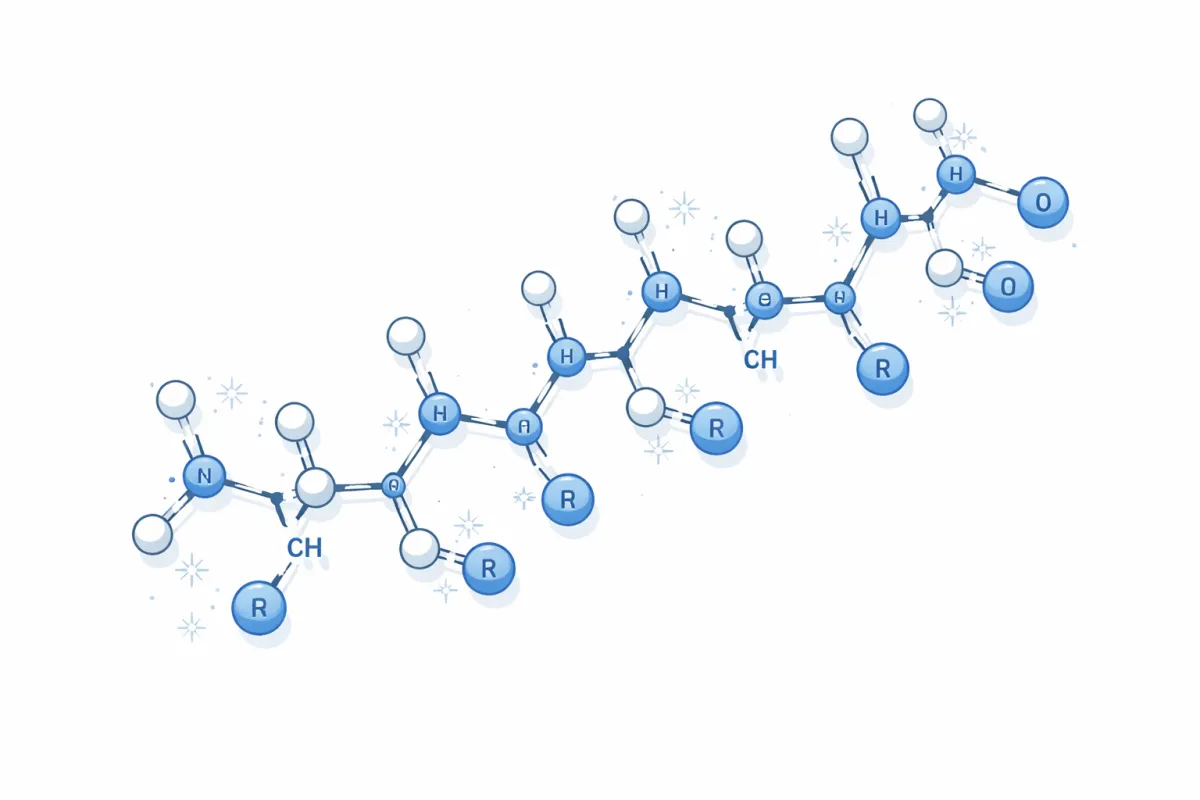
A peptide is a short chain of amino acids linked together by peptide bonds. Amino acids are the building blocks of all proteins in your body. When you string together between 2 and 50 amino acids, you get a peptide. String together more than 50, and it's classified as a protein.
Your body produces thousands of peptides naturally. Insulin is a peptide. Oxytocin is a peptide. The growth hormone releasing hormones your pituitary gland produces are peptides.
These molecules act as chemical messengers. They travel through your bloodstream, bind to specific receptors on cells, and trigger biological responses. Think of them as keys that fit into specific locks throughout your body.
Peptides vs. Proteins: What's the Difference?
The distinction matters for understanding how peptides work:
Size: Peptides contain 2-50 amino acids. Proteins contain 50+ amino acids, often hundreds or thousands.
Function: Proteins typically serve structural roles (collagen in skin, actin in muscles) or act as enzymes. Peptides primarily act as signaling molecules that trigger responses.
Stability: Peptides are generally less stable than proteins and break down more easily, which affects how they're administered and stored.
Specificity: Because peptides are smaller, they often have very targeted effects. A single peptide might bind to one specific receptor type, while proteins can have broader interactions.
How Do Peptides Work in the Body?
Peptides work through receptor binding. Here's the simplified process:
A peptide enters the bloodstream (through injection, oral administration, or nasal spray)
It travels to target tissues where matching receptors exist
The peptide binds to its receptor like a key fitting a lock
This binding triggers a cascade of cellular responses
The body produces a specific effect (tissue repair, hormone release, etc.)
Different peptides bind to different receptors, which is why each peptide has distinct effects. BPC-157 interacts with growth factor receptors involved in tissue repair. Ipamorelin binds to ghrelin receptors that stimulate growth hormone release. Semax affects brain-derived neurotrophic factor pathways.
The specificity of peptide-receptor interactions is what makes peptides attractive for research. Unlike broad-acting drugs that affect multiple systems, peptides can theoretically target specific biological processes.
The Main Categories of Research Peptides
Healing and Recovery Peptides
These peptides are studied for tissue repair, injury recovery, and reducing inflammation.
BPC-157 (Body Protection Compound-157)
15 amino acids derived from human gastric juice
Researched for tendon, ligament, muscle, and gut healing
Animal studies show accelerated wound healing and tissue repair
TB-500 (Thymosin Beta-4 Fragment)
43 amino acids, naturally occurring in human cells
Studied for systemic tissue repair and inflammation reduction
Research focuses on cardiac tissue, muscle recovery, and wound healing
GHK-Cu (Copper Peptide)
3 amino acids bound to copper
Researched for skin regeneration, collagen production, and wound healing
Available in both injectable and topical forms
Growth Hormone Secretagogues
These peptides stimulate the body's natural growth hormone production rather than introducing external hormones.
CJC-1295
Synthetic analog of growth hormone releasing hormone (GHRH)
Stimulates pituitary gland to release growth hormone
Available with or without DAC (Drug Affinity Complex) which extends half-life
Ipamorelin
5 amino acids, acts as a ghrelin mimetic
Stimulates growth hormone release without significantly affecting cortisol or prolactin
Often combined with CJC-1295 in research protocols
Tesamorelin
FDA-approved for HIV-associated lipodystrophy (one of few approved peptides)
Stimulates growth hormone release
Studied for reducing visceral fat
Cognitive and Neurological Peptides
These peptides are researched for brain function, memory, and neuroprotection.
Semax
7 amino acids, developed in Russia
Studied for cognitive enhancement, neuroprotection, and stroke recovery
Administered as nasal spray
Selank
7 amino acids, also Russian-developed
Researched for anti-anxiety effects and cognitive function
Works on GABA system and brain-derived neurotrophic factor
Dihexa
6 amino acids
Studied for cognitive enhancement and potential Alzheimer's applications
Extremely potent in animal studies
Metabolic and Weight Loss Peptides
These peptides affect appetite, metabolism, and body composition.
Semaglutide
GLP-1 receptor agonist
FDA-approved as Ozempic (diabetes) and Wegovy (weight loss)
One of the few peptides with full regulatory approval
Tirzepatide
Dual GLP-1 and GIP receptor agonist
FDA-approved as Mounjaro (diabetes) and Zepbound (weight loss)
Shows stronger weight loss effects than semaglutide in trials
Retatrutide
Triple agonist (GLP-1, GIP, and glucagon receptors)
Currently in Phase 3 clinical trials
Early data shows up to 24% body weight reduction
Immune Support Peptides
These peptides are studied for immune system modulation.
Thymosin Alpha-1
28 amino acids, naturally produced by thymus gland
FDA-approved in some countries for hepatitis B and C
Researched for immune enhancement and infection response
LL-37
37 amino acids, part of the cathelicidin family
Natural antimicrobial peptide produced by immune cells
Studied for fighting bacterial, viral, and fungal infections
Longevity and Mitochondrial Peptides
These peptides are researched for anti-aging and cellular health.
Epithalon
4 amino acids
Studied for telomerase activation and potential anti-aging effects
Research focuses on telomere length preservation
MOTS-c
Mitochondria-derived peptide
Researched for metabolic regulation and exercise mimetic effects
Studies suggest it may improve insulin sensitivity
SS-31 (Elamipretide)
Targets mitochondrial function
In clinical trials for mitochondrial diseases
Studied for improving cellular energy production
How Peptides Are Administered
Subcutaneous Injection
Most research peptides are administered via subcutaneous (under the skin) injection. This method provides consistent absorption and bioavailability.
Advantages:
Predictable absorption rates
Bypasses digestive system breakdown
Can be administered near target tissue
Considerations:
Requires reconstitution with bacteriostatic water
Proper storage (refrigeration) essential
Sterile technique necessary
Oral Administration
Some peptides can survive stomach acid and be absorbed through the digestive system.
Advantages:
No injection required
Convenient for daily use
Considerations:
Lower bioavailability for most peptides
Higher doses often required
Best for peptides targeting gut tissue (like BPC-157 for GI issues)
Nasal Spray
Certain peptides, particularly cognitive enhancers, are administered intranasally.
Advantages:
Non-invasive
Potential for blood-brain barrier crossing
Rapid absorption through nasal mucosa
Considerations:
Dosing less precise
May irritate nasal passages
Limited to specific peptide types
Topical Application
Some peptides, particularly GHK-Cu, can be applied to skin.
Advantages:
Targeted local effects
No systemic exposure
Easy application
Considerations:
Limited to skin and superficial tissue effects
Variable absorption depending on formulation
Important Considerations for Peptide Research
Legal Status
Most peptides exist in a regulatory grey area:
Not FDA-approved: The majority of research peptides have not completed FDA approval processes for human use
"Research only" labels: Vendors sell peptides labeled "for research purposes only" or "not for human consumption"
Category 2 restrictions: As of 2024, the FDA placed many peptides (BPC-157, TB-500, MOTS-c, and others) on the Category 2 list, prohibiting compounding pharmacies from producing them
Prescription peptides: A few peptides (semaglutide, tirzepatide, tesamorelin) are FDA-approved and available by prescription
Quality and Sourcing
Peptide quality varies significantly between sources:
Purity concerns: Studies have found 60%+ of online peptides are mislabeled or impure
No GMP requirements: Research chemical companies are not required to follow pharmaceutical manufacturing standards
Testing verification: Reputable sources provide certificates of analysis (COAs) with third-party testing results
Storage requirements: Peptides degrade without proper refrigeration and handling
Safety Considerations
Peptide research carries inherent uncertainties:
Limited human data: Most peptide research comes from animal studies or small human trials
Long-term effects unknown: Multi-year safety profiles don't exist for most peptides
Individual variation: Responses vary significantly between individuals
Interaction risks: Effects when combined with medications or other peptides are often unstudied
Frequently Asked Questions
Are peptides steroids?
No. Peptides are chains of amino acids that act as signaling molecules. Steroids are a different class of compounds based on a four-ring carbon structure. They work through completely different mechanisms.
Are peptides safe?
Safety depends on the specific peptide, source quality, dosing, and individual factors. FDA-approved peptides like semaglutide have established safety profiles from clinical trials. Research peptides lack this level of validation.
Do peptides require a prescription?
FDA-approved peptides (Ozempic, Wegovy, Mounjaro, Zepbound) require prescriptions. Research peptides sold as "not for human consumption" do not require prescriptions but exist in a legal grey area.
How long do peptides take to work?
Timelines vary by peptide and goal. Some effects (like appetite suppression from GLP-1 agonists) occur within hours or days. Others (like tissue healing or body composition changes) may take weeks to months.
Can peptides be taken orally?
Some peptides survive digestion and can be taken orally (BPC-157 for gut issues, certain GLP-1 formulations). Most peptides are destroyed by stomach acid and digestive enzymes, requiring injection for systemic effects.
How should peptides be stored?
Most peptides require refrigeration after reconstitution. Unreconstituted (lyophilized) peptides can often be stored at room temperature short-term but last longer refrigerated or frozen. Heat, light, and contamination degrade peptides.
What's the difference between pharmaceutical peptides and research peptides?
Pharmaceutical peptides (Ozempic, Mounjaro) have completed FDA approval with extensive clinical trials proving safety and efficacy. Research peptides have not completed this process and are sold for laboratory research only.
Where to Learn More
This guide provides a foundation for understanding peptides. For detailed information on specific compounds, see our individual peptide guides:
Additional peptide guides coming soon.
Key Takeaways
Peptides are amino acid chains that act as signaling molecules, triggering specific biological responses
Different categories serve different purposes: healing, growth hormone release, cognitive enhancement, metabolism, immunity, and longevity
Most peptides are not FDA-approved and exist in a legal grey area as "research chemicals"
Quality varies dramatically between sources, making third-party testing verification essential
Administration methods matter: subcutaneous injection provides best bioavailability for most peptides, but oral and nasal options exist for specific applications
Safety profiles are incomplete for most research peptides due to limited human clinical data
Disclaimer: This content is for educational and research purposes only. Most peptides discussed are not FDA-approved for human use. Nothing in this article constitutes medical advice. Consult qualified professionals before making any health-related decisions. The regulatory landscape continues to evolve.
Last updated: January 8, 2026
